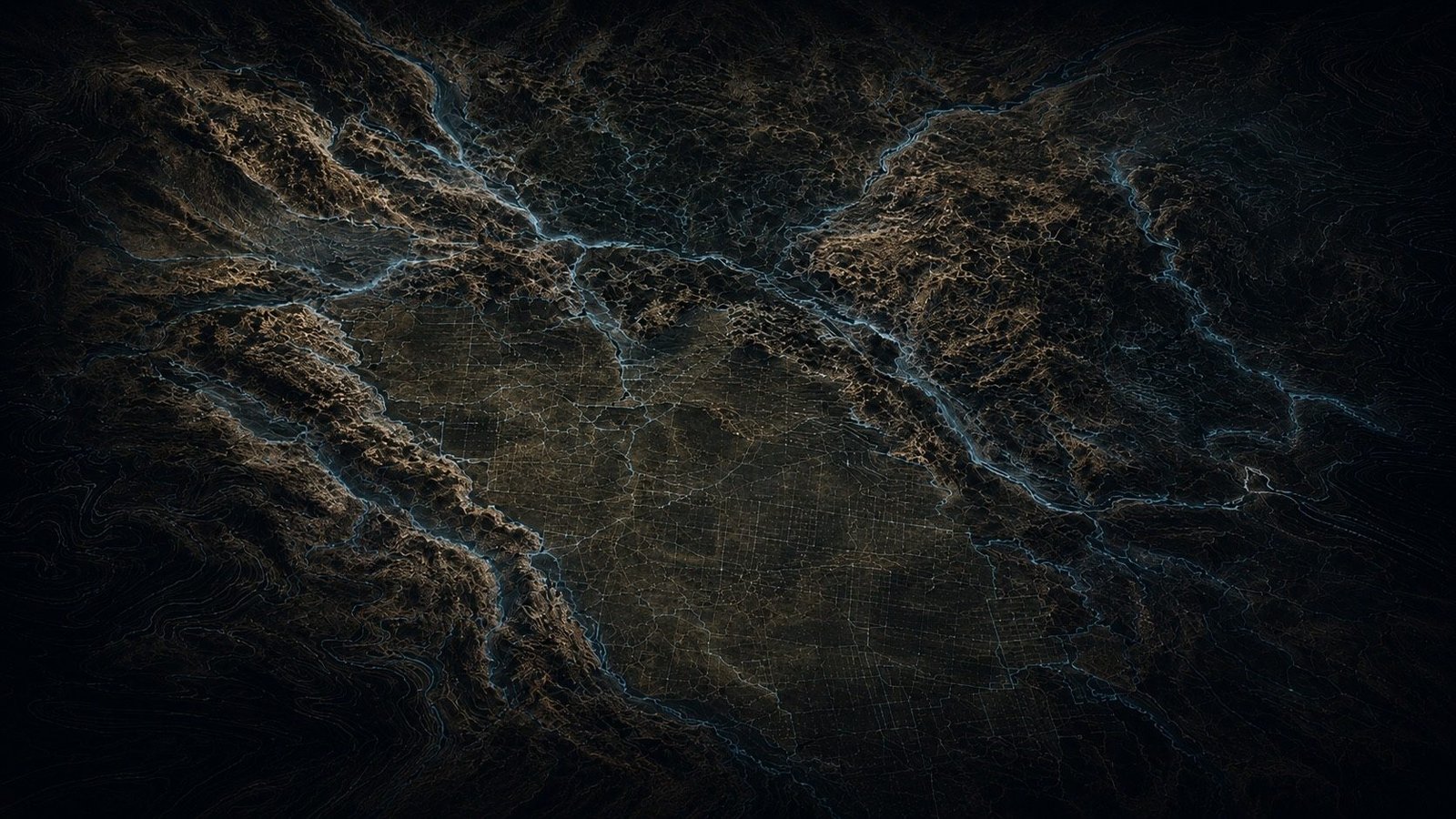
Şanlıurfa Province · Southeastern Türkiye
Rings of carved T-shaped pillars — older than the pyramids — raised by hunter-gatherers, then buried.
The evidence
Göbekli Tepe in depth
For decades the hill called Göbekli Tepe — 'Potbelly Hill' — was walked over and written off. A 1960s survey noted broken limestone and assumed a medieval cemetery. Only in 1994–95 did the German archaeologist Klaus Schmidt, recognising the worked flint scattered across the summit, grasp that the slabs poking through the soil were not gravestones but the tops of carved monoliths.
What he had found reset the timeline of civilisation. On a bare hilltop overlooking the Harran plain, hunter-gatherers had raised rings of enormous T-shaped pillars — beginning around 9600 BCE, more than six thousand years before Stonehenge and long before farming, writing, metal or the wheel.
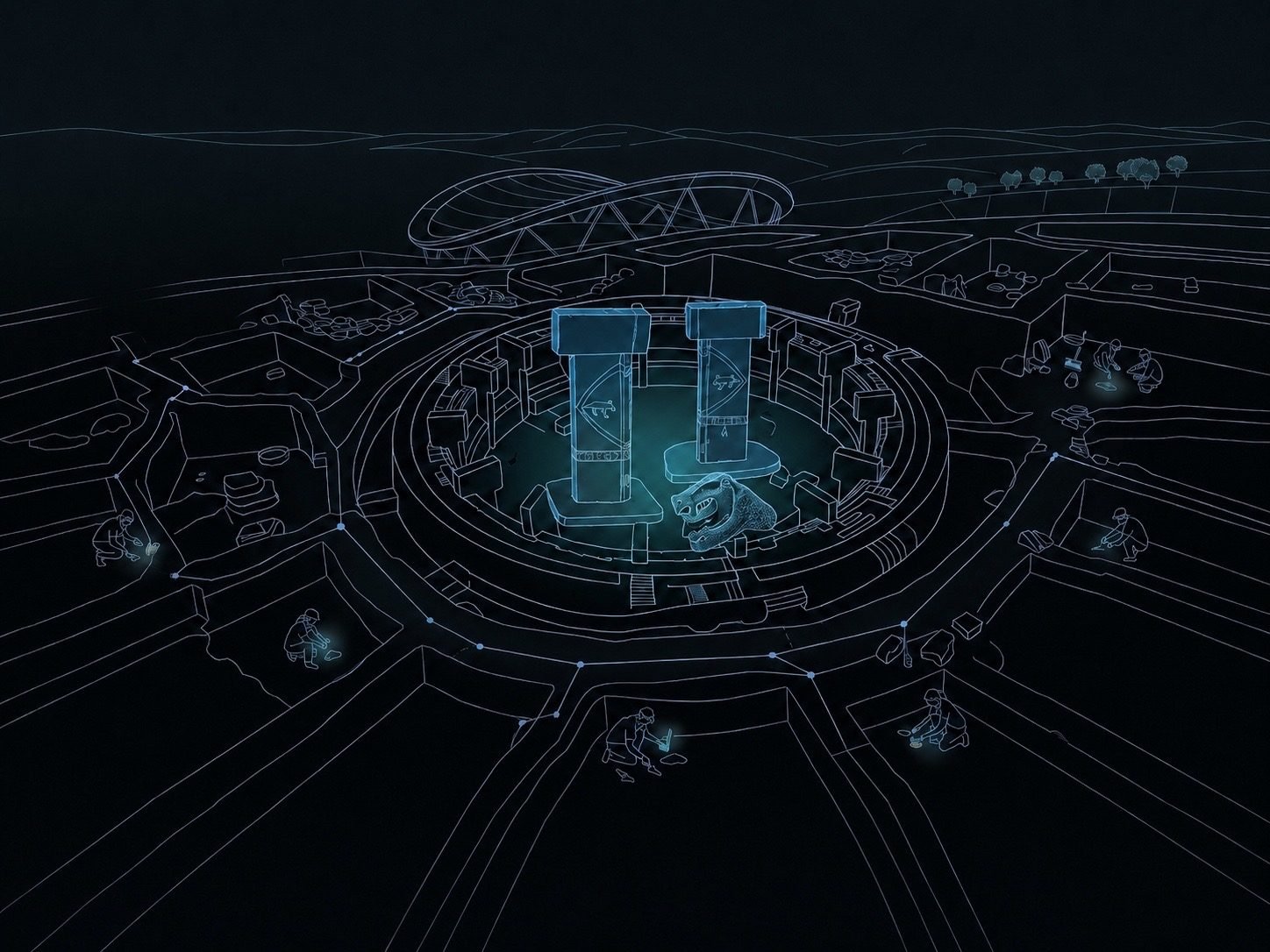
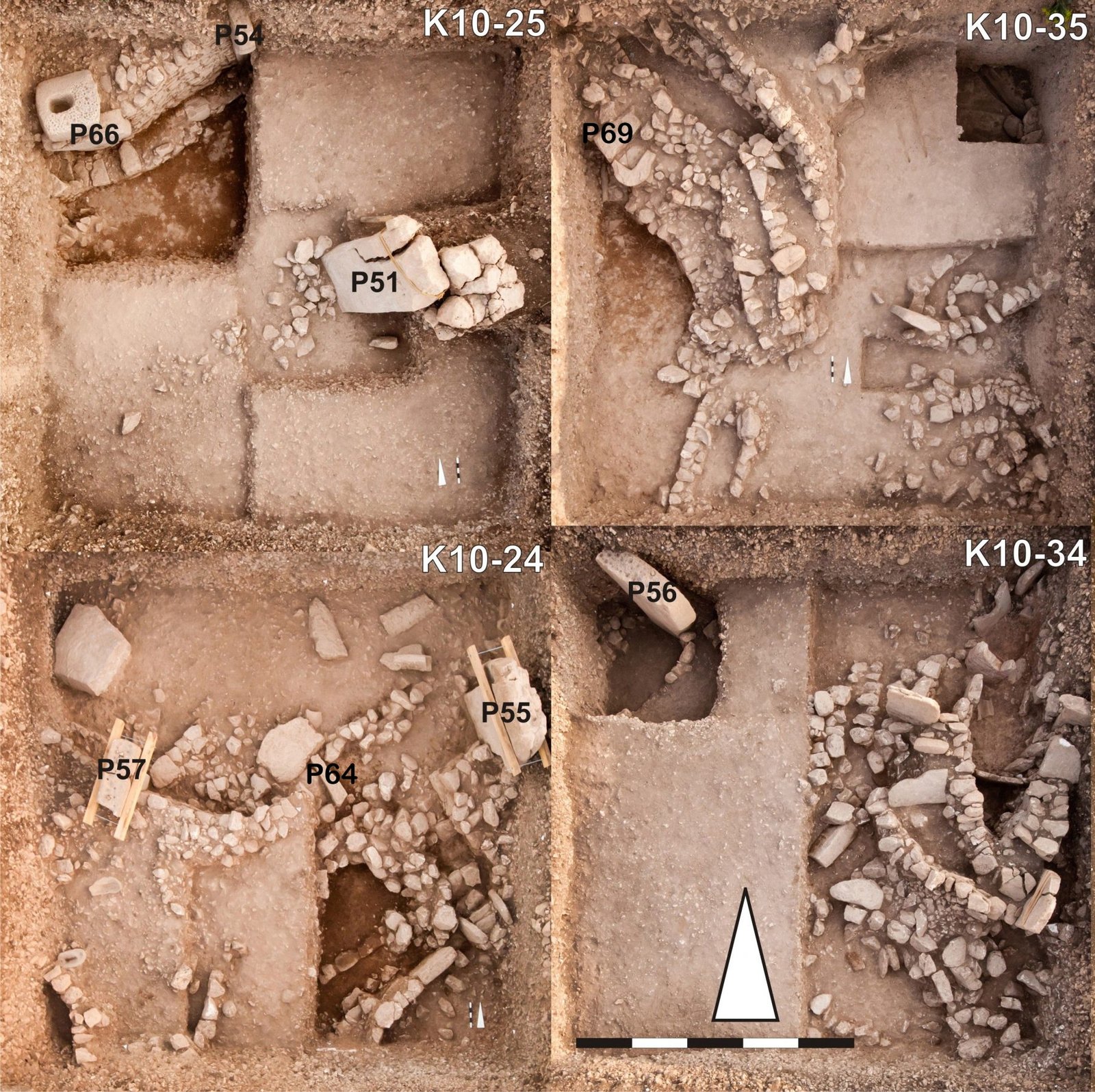
Göbekli Tepe's older layer is built from circular and oval enclosures, each ringed by a wall and a bench, with T-pillars set into that ring and a pair of taller pillars standing free at the centre. Excavation and geophysics have now identified many of them — the great Enclosures A, B, C, D and H, the fox-rich Building F, the rock-cut Enclosure E, the Lion Pillars Building — and buried survey shows more still waiting in the hill.
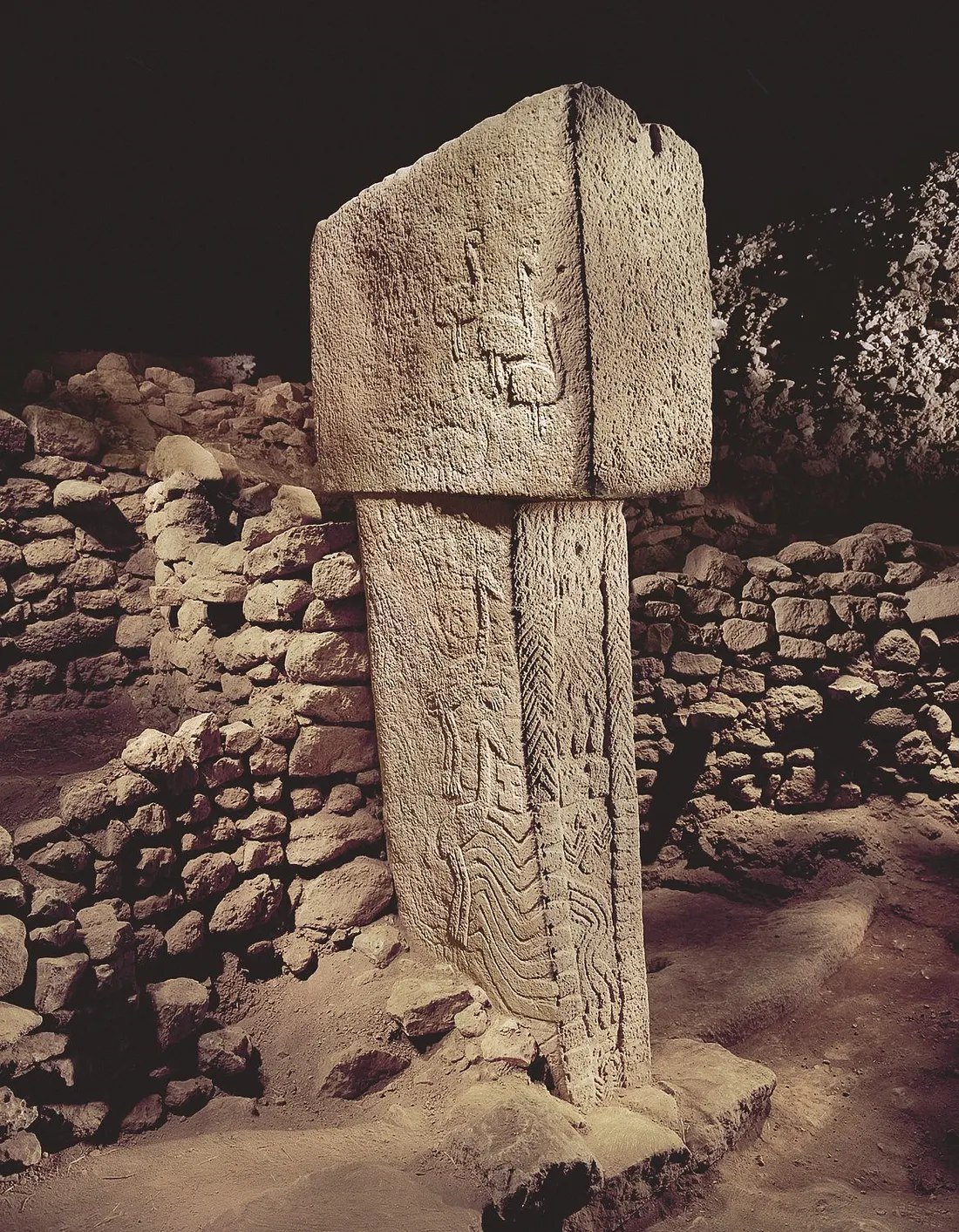
The scale is extraordinary. The central pillars of Enclosure D stand over 5 metres tall and weigh several tonnes each; they were quarried from the surrounding bedrock — one unfinished pillar still lies in the quarry — and levered upright with nothing but stone tools, timber, rope and muscle.
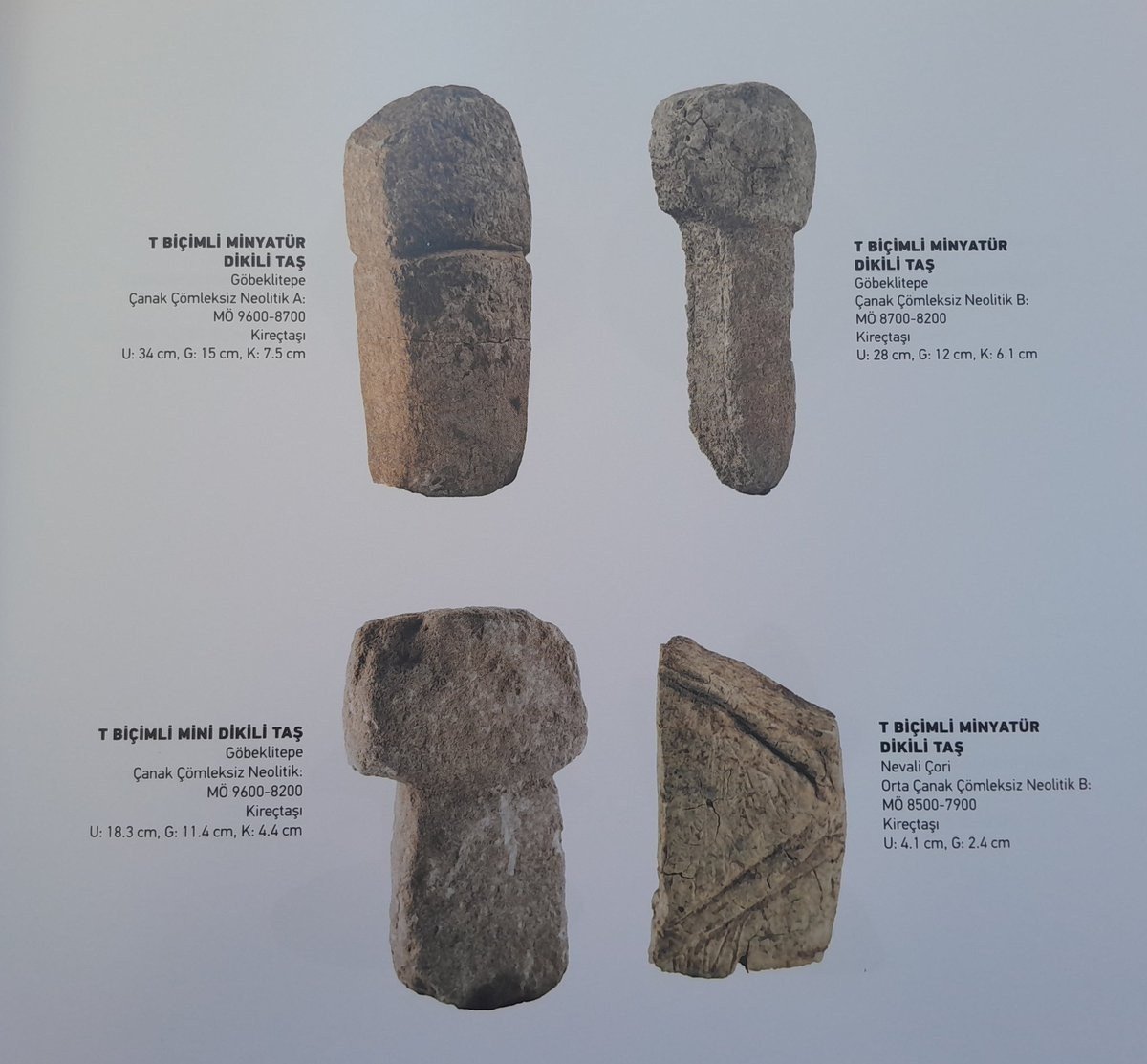
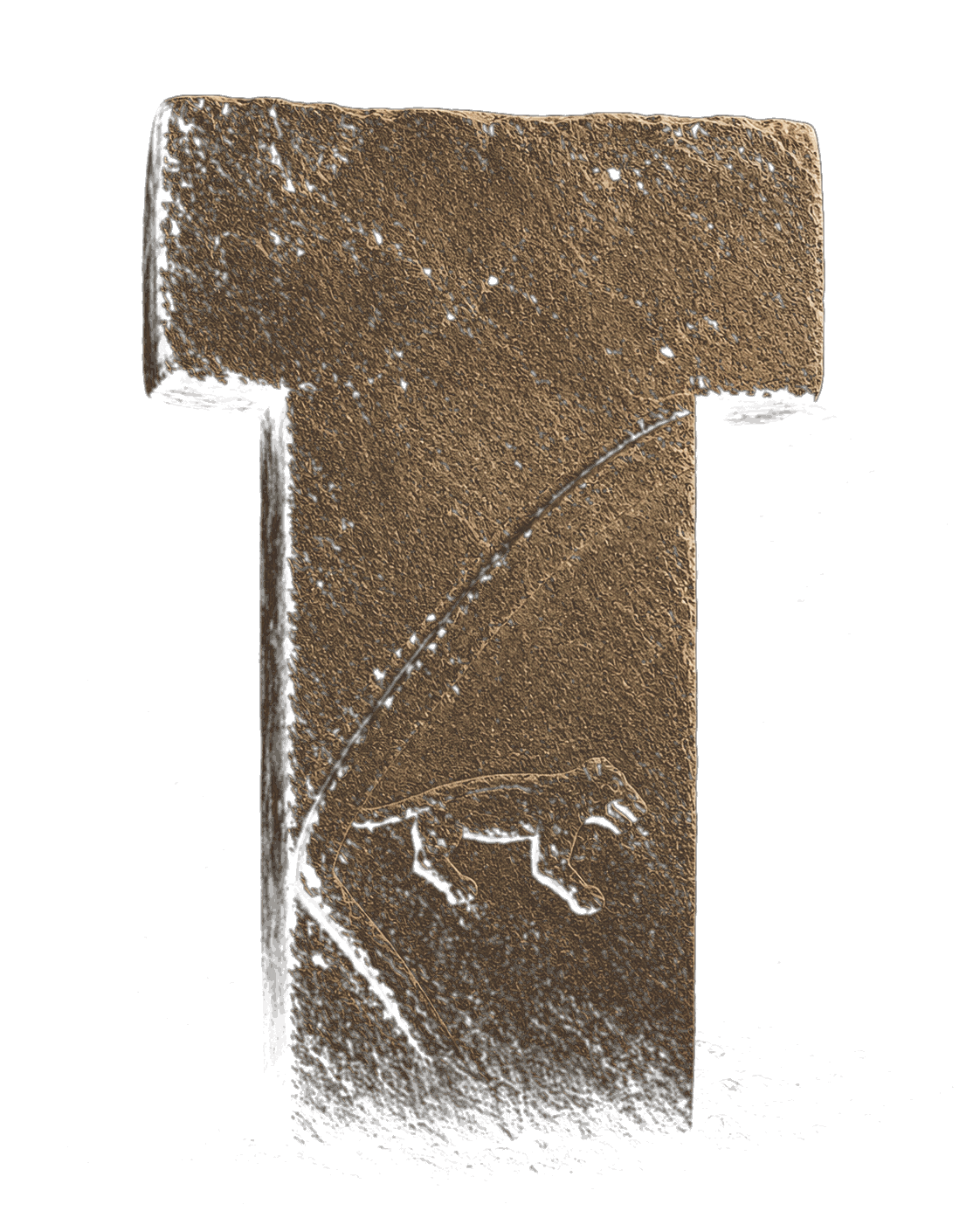
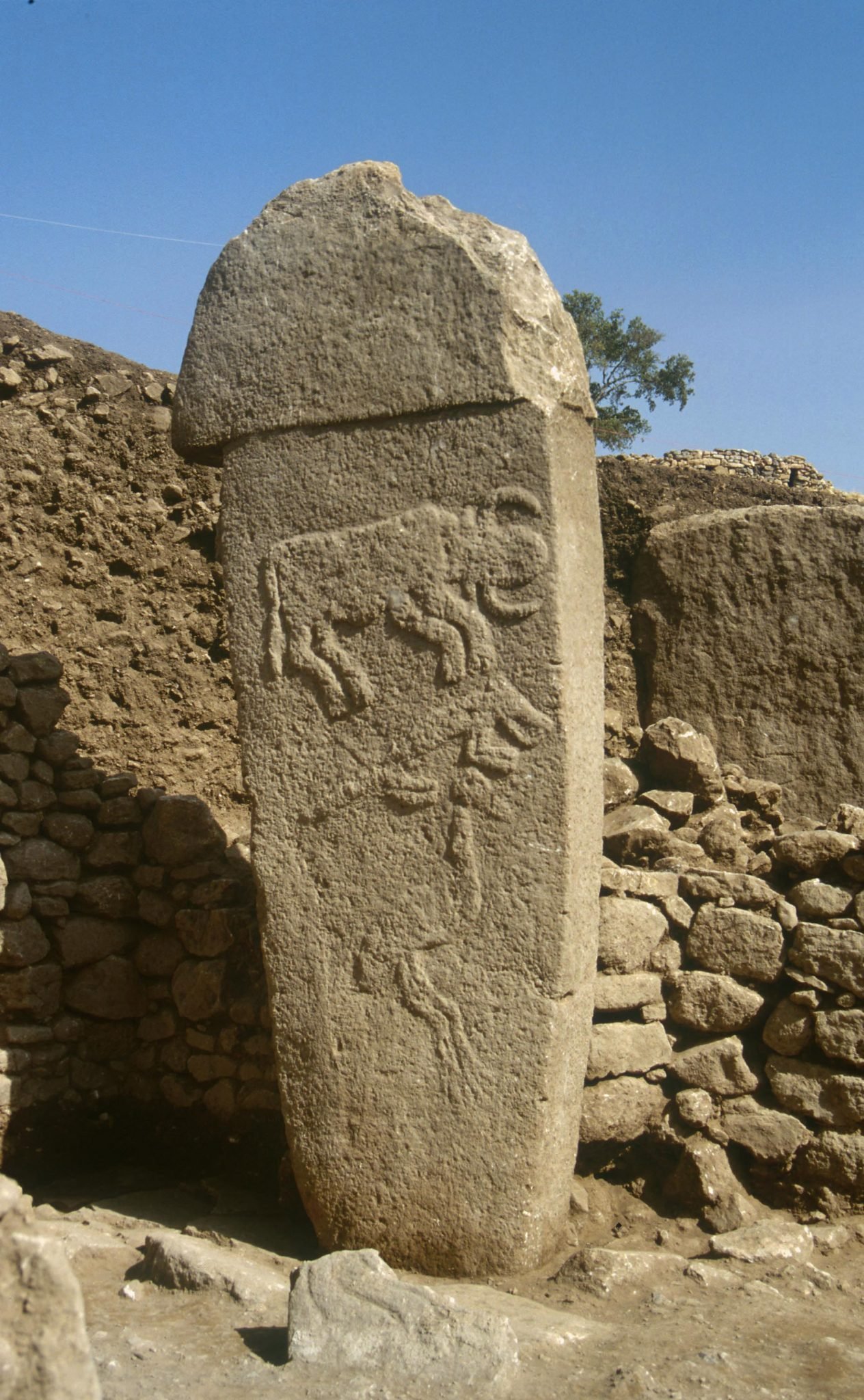
The T-pillars are not columns. They are stylised human beings. The clue is on the stone itself: arms run down the sides of the great central pillars, ending in hands that meet at the front above a belt, sometimes with a fox-pelt loincloth hanging below. The flat T-top reads as an abstracted head, faceless and towering.
That reading, first argued by Schmidt, turns each enclosure into a gathering of monumental stone beings — ancestors, spirits or gods — standing in a ring, watching inward. It is the single idea that unlocks the whole site, and the whole Taş Tepeler world.
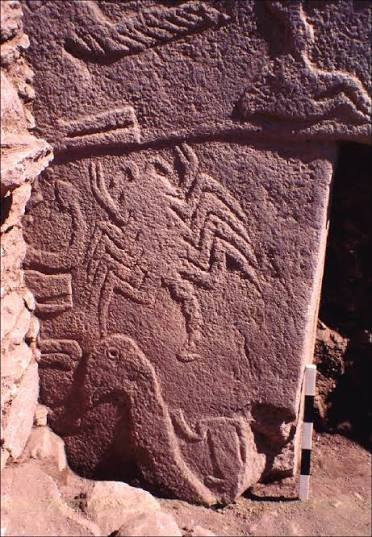
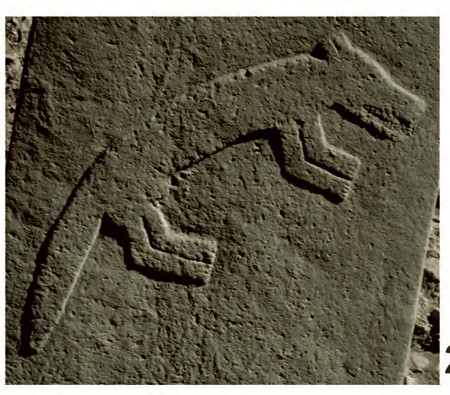
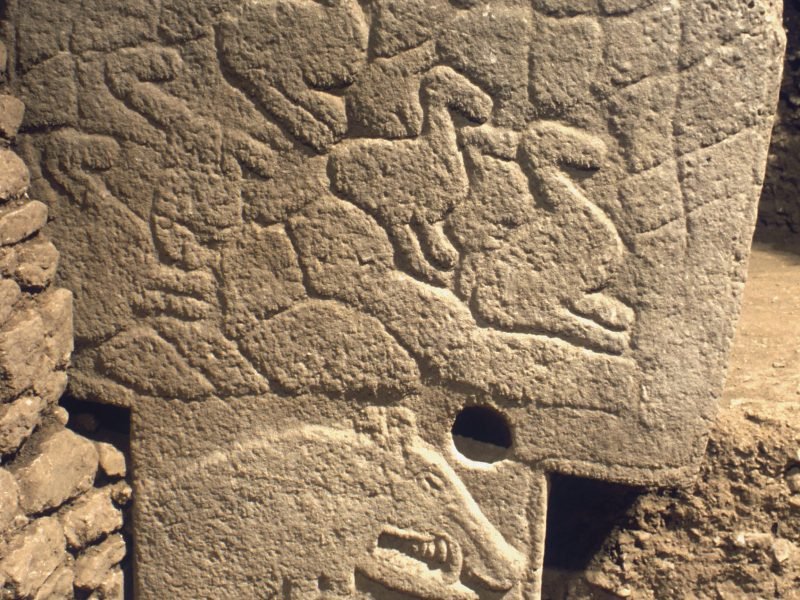
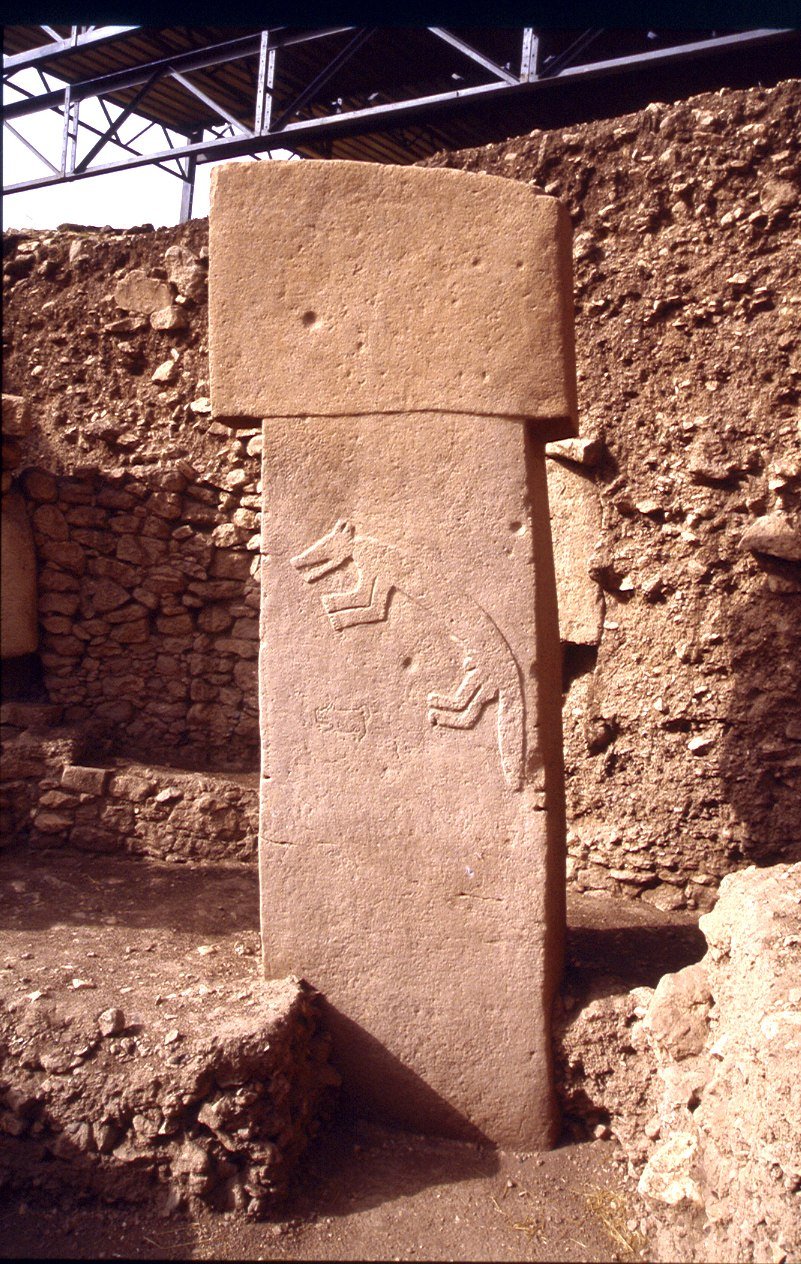
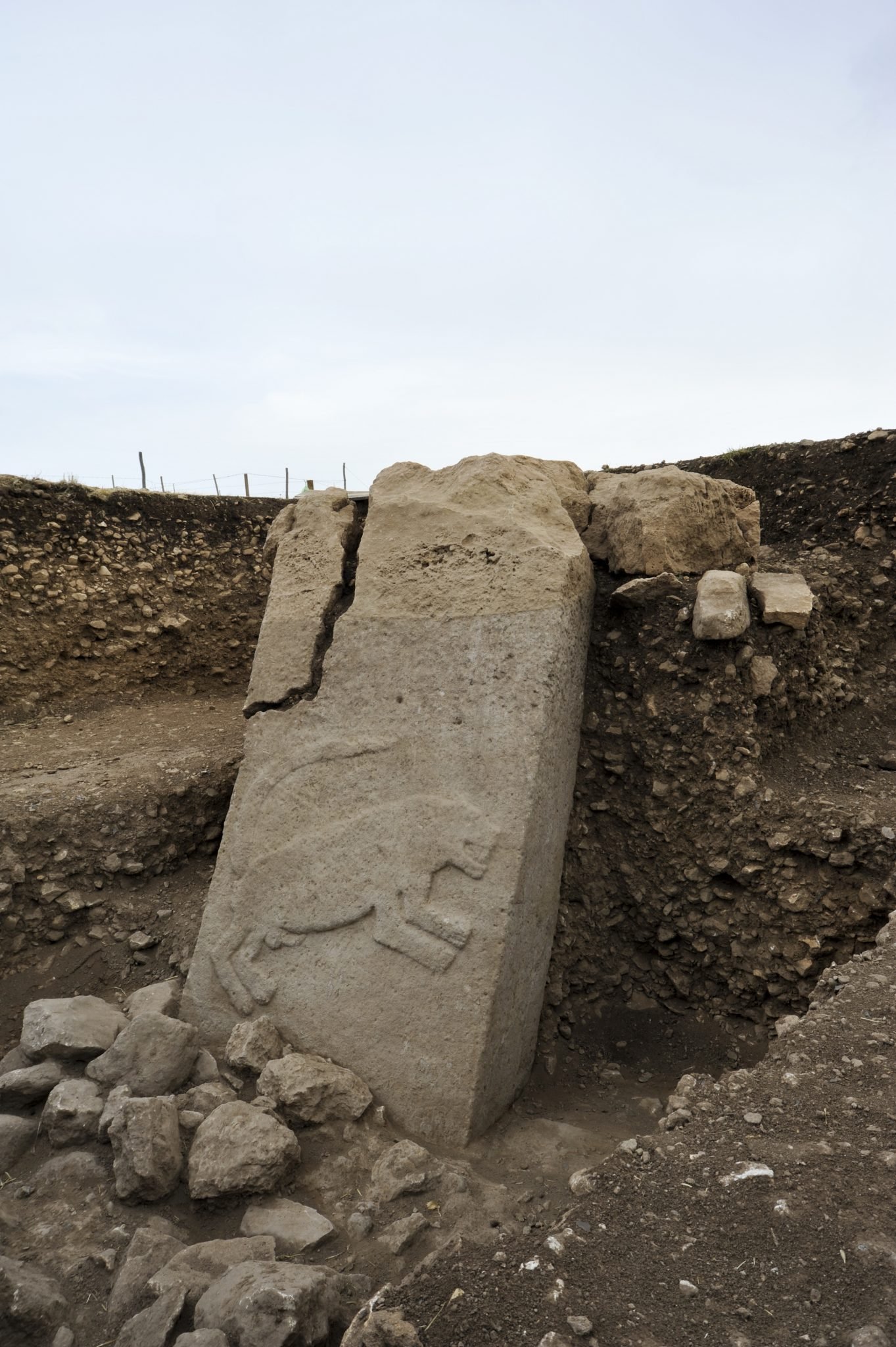
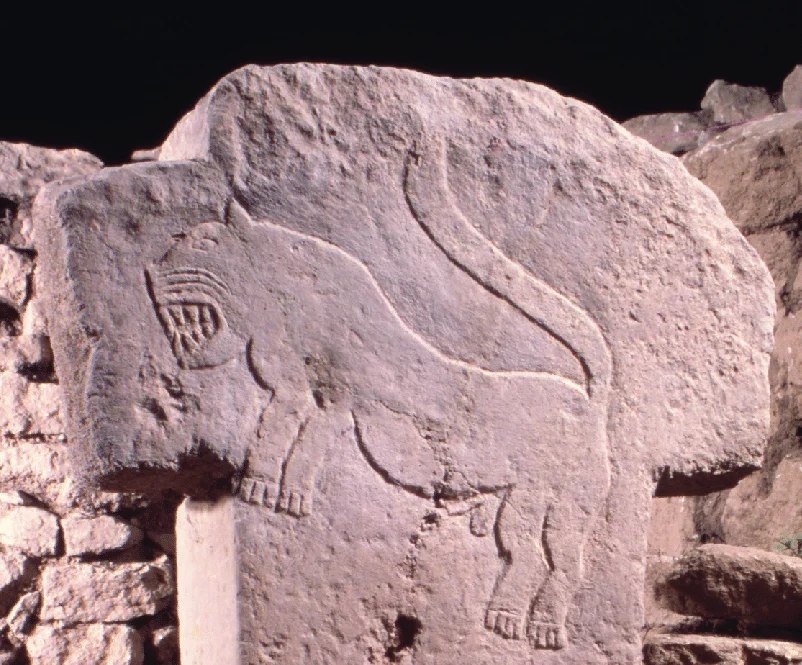
Across the pillars crawls a menagerie: foxes, boars, aurochs, snakes, cranes, vultures, scorpions and spiders, carved in relief and sometimes in the round. They are overwhelmingly the dangerous and the inedible — not the animals these people mostly ate, but the ones they feared and revered.
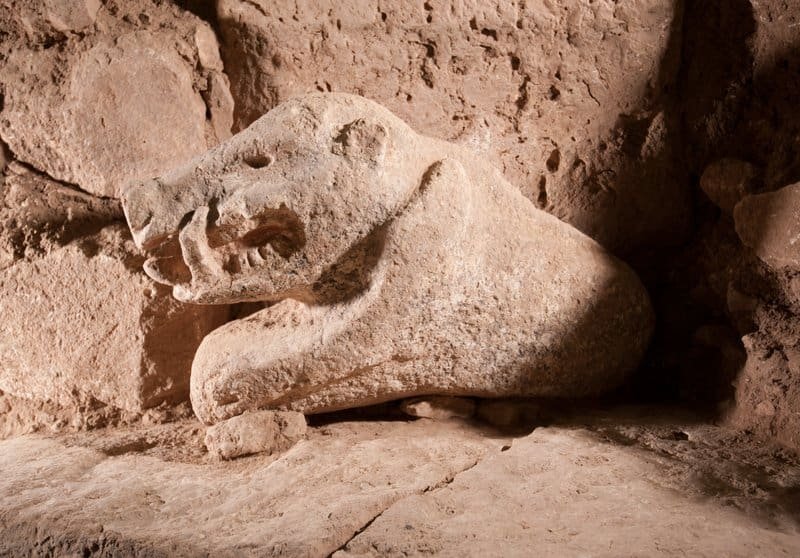
Two are famous. Pillar 43, the 'Vulture Stone' in Enclosure D, crowds vultures, a scorpion and a headless man into one dense, argued-over scene. And a boar statue uncovered in recent years still carried its original red, black and white paint — proof that these grey stones were once vividly coloured. The consensus among the excavators is that the carvings are stories and symbols, not a naturalist's catalogue.
Göbekli Tepe has two broad phases. The older Layer III (from about 9600 BCE) is the world of the great round enclosures. The younger Layer II brings smaller, rectangular rooms with more modest pillars — the same shift from round to rectangular seen right across the early Neolithic, happening here on a single hill across more than a thousand years of use, repair and rebuilding.
Recent radiocarbon work, taken from the mortar in the walls rather than the fill, shows the enclosures were not raised and buried in one generation but stood, were repaired and rebuilt for centuries.
Schmidt read Göbekli Tepe as a ritual centre — a place hunter-gatherers walked to for ceremony and feasting, with no ordinary houses nearby. That idea inspired the provocative claim, associated with him and with Jacques Cauvin, that religion came before farming: gathering to build and feast drew people together and helped tip wild cereals toward domestication.
The picture is now more nuanced, and the current excavators are careful with it. They resist calling the site a 'temple', stress that the carvings cannot simply be decoded, and — as newer digging finds domestic traces on the hill — increasingly describe Göbekli Tepe as a place people may also have lived, not only visited. The society behind it is usually read as broadly egalitarian, though some argue for a hierarchy of prestige rather than wealth.
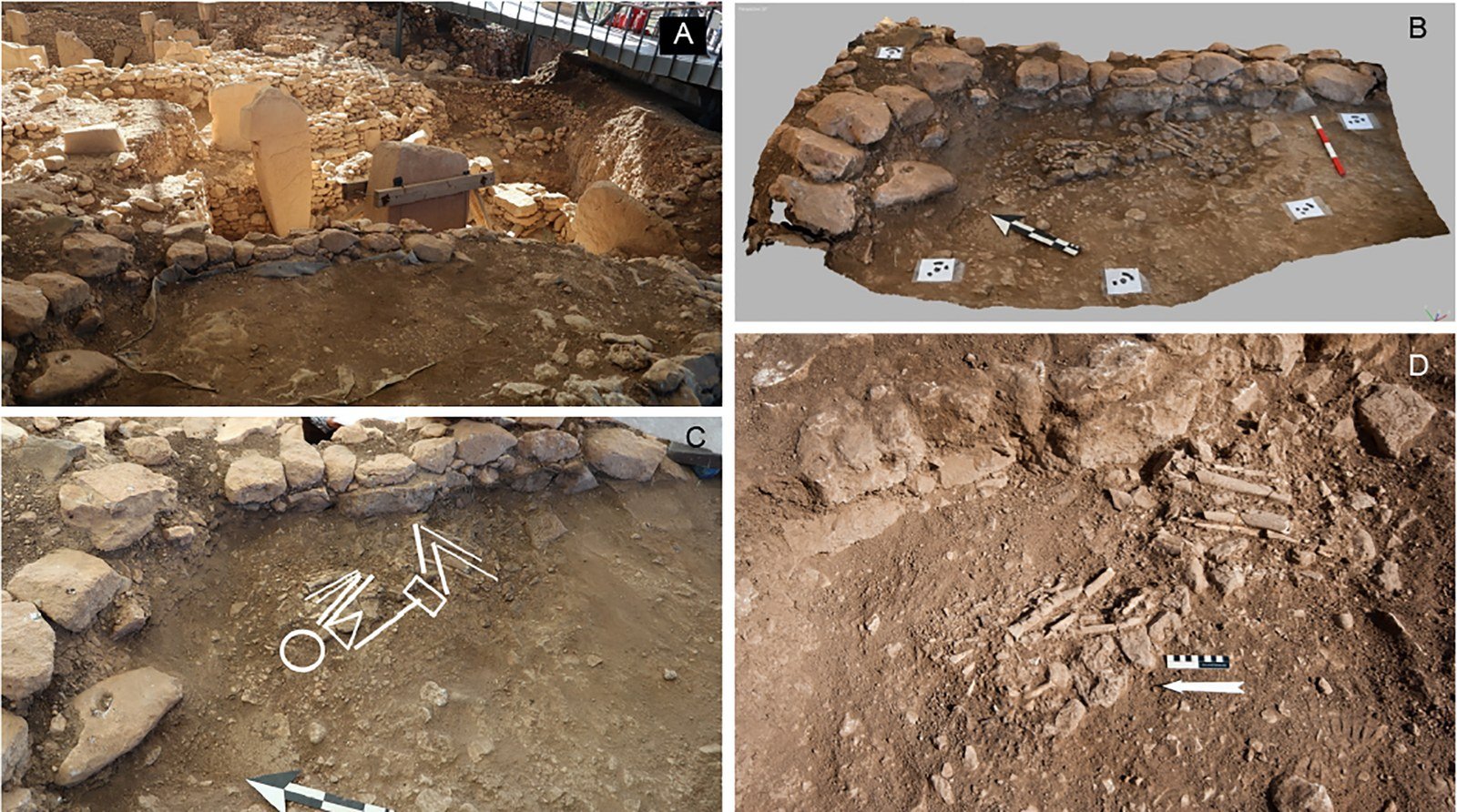
Göbekli Tepe is bound up with the human head. Fragments of human skull found here carry deliberate cut-marks and, in one case, a drilled hole — evidence the excavators named a new form of Neolithic 'skull cult', in which certain crania were curated, perhaps displayed or hung. Yet very few people were buried on the hill; it was not, on current evidence, an ordinary graveyard.
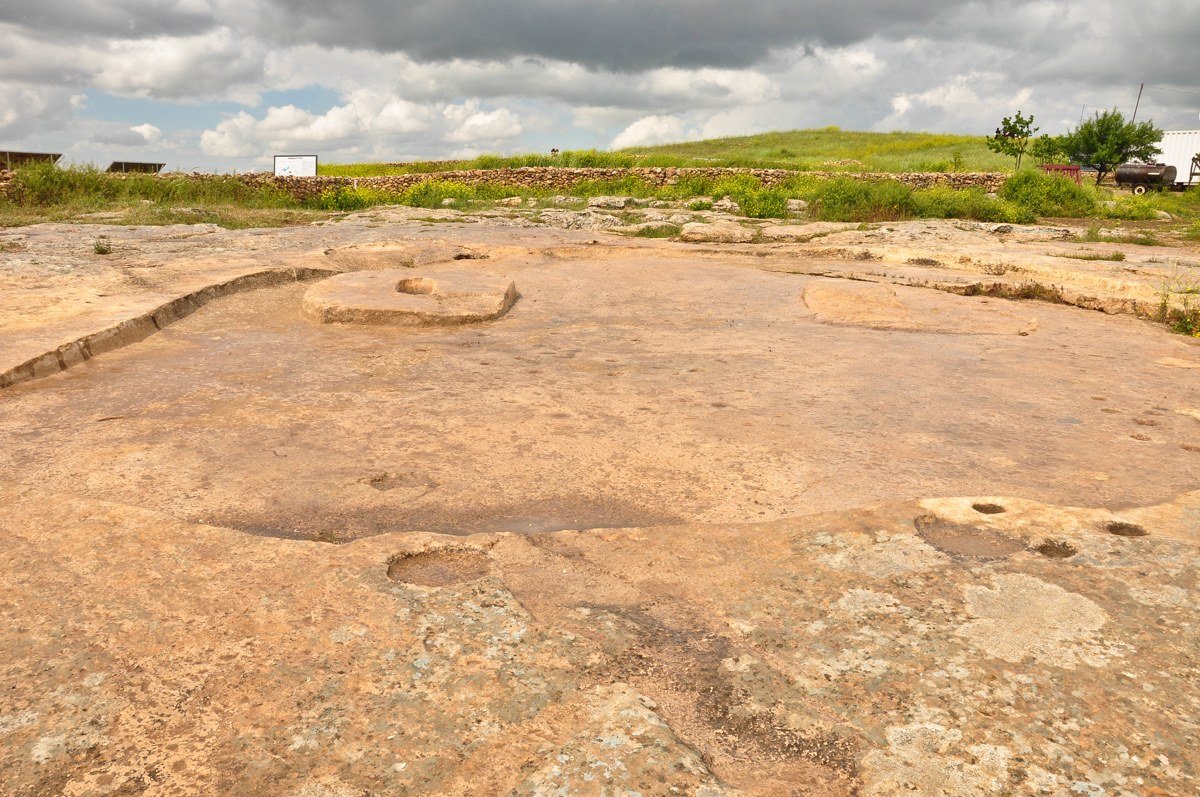
The hill also had to solve a practical problem: there is no spring on the summit. The builders cut rock basins and channels to harvest and store rainwater — some of the earliest water-management known — so that large gatherings could be sustained on a waterless height.
For all its fame, Göbekli Tepe was not sealed off. Its snakes, vultures and human-head imagery belong to motifs shared right across the Taş Tepeler — Karahan Tepe, Sayburç, Sefertepe, Çakmaktepe and the wider Şanlıurfa Neolithic world. Göbekli Tepe was one node in that regional web of contact and ideas — the most spectacular, but not the only, expression of it.
The strangest fact about Göbekli Tepe is how it ended. The enclosures were deliberately filled in — packed with earth, rubble and animal bone and sealed — which is precisely why they survive so well. Nobody buries a building they mean to keep using; the act of closure was itself part of the site's meaning.
And most of it is still down there. Geophysical survey shows many more enclosures beneath the unexcavated hill: by common estimate, only a small fraction of Göbekli Tepe has been dug. Recognised as a UNESCO World Heritage Site in 2018, it remains a live excavation whose greatest structures may not yet have been touched.
Inside the site
The full archive
Everything we've documented here — the buildings, the carved finds, and the questions people ask — grouped so you can jump straight to what interests you.
The wider world
Visit
Small-group and private tours to Göbekli Tepe and across the Taş Tepeler landscape, led by people who know the ground.
Full bibliography: the Taş Tepeler reference library →
Last reviewed 7 October 2026. Something wrong?