Şanlıurfa region · Southeastern Türkiye
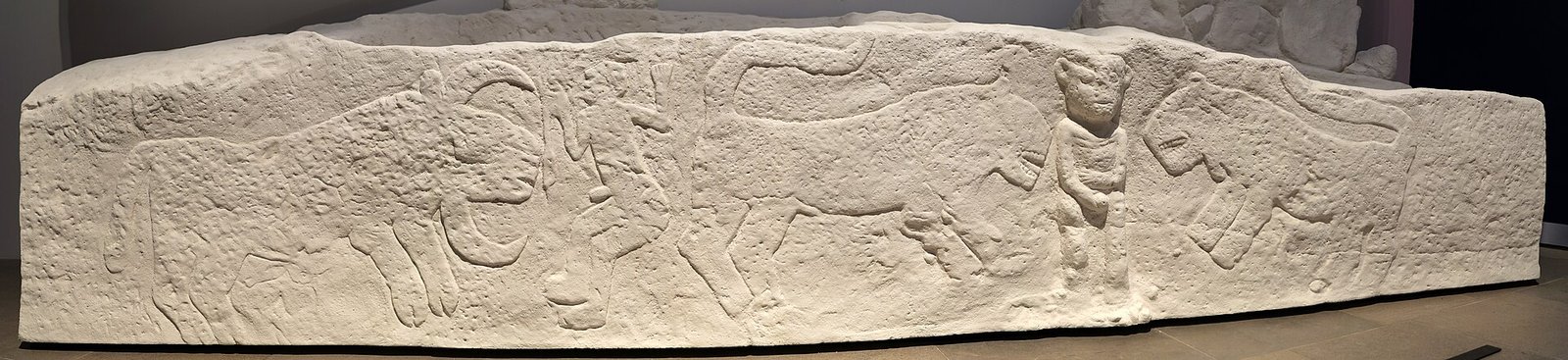
A Neolithic village where the oldest known scene of people was carved onto a bench — a man between two leopards, and another facing a bull.
The evidence
Sayburç in depth
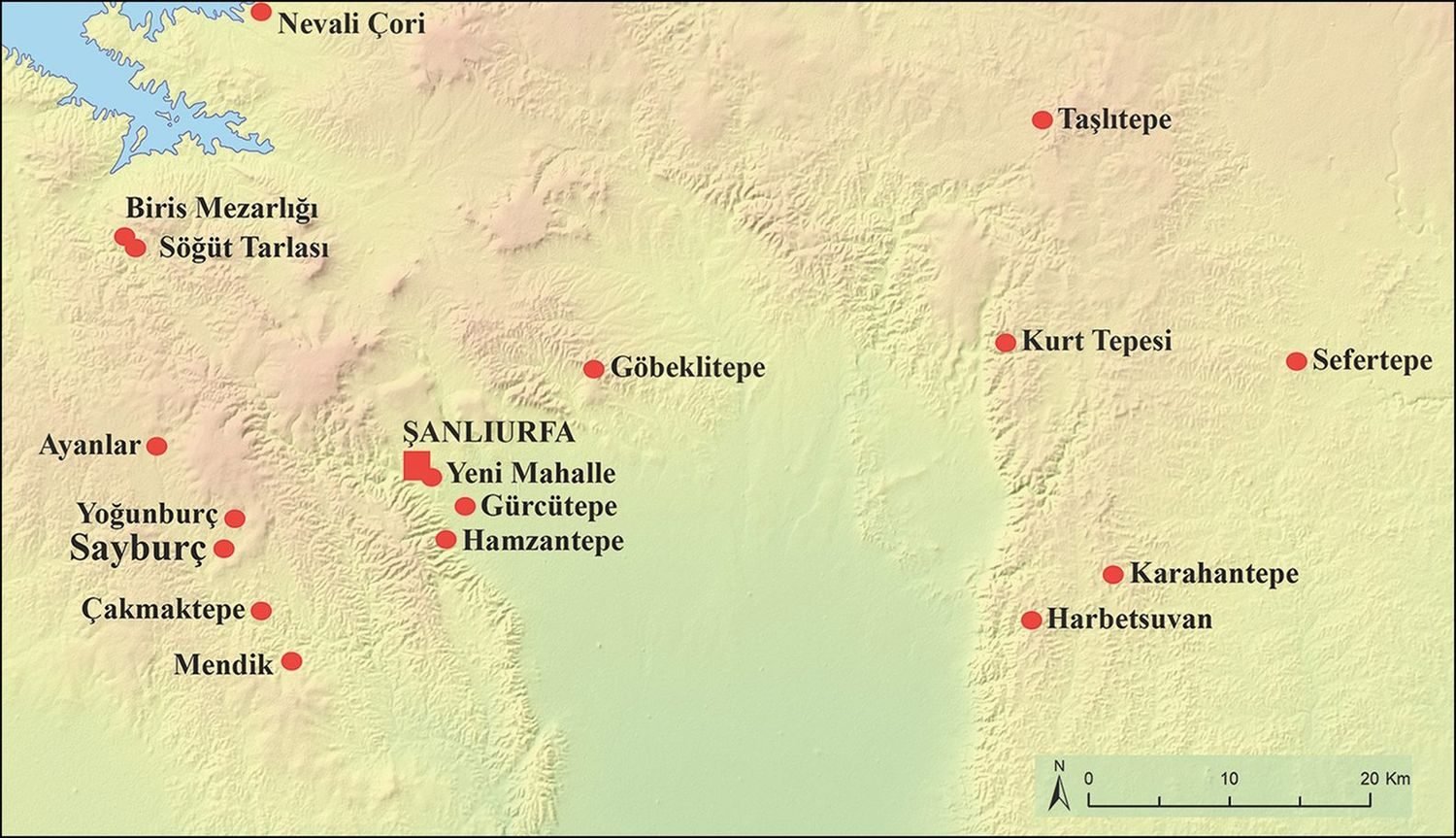
Sayburç sits under a modern village in the foothills of the Eastern Taurus, in the Şanlıurfa region — which is part of why it came to light only recently, during work connected to the Taş Tepeler program. It is a Pre-Pottery Neolithic B settlement of the mid-ninth millennium BCE, a little later than Göbekli Tepe's great early enclosures, and it has quickly become one of the most important sites of the whole landscape.
The reason is a single wall.
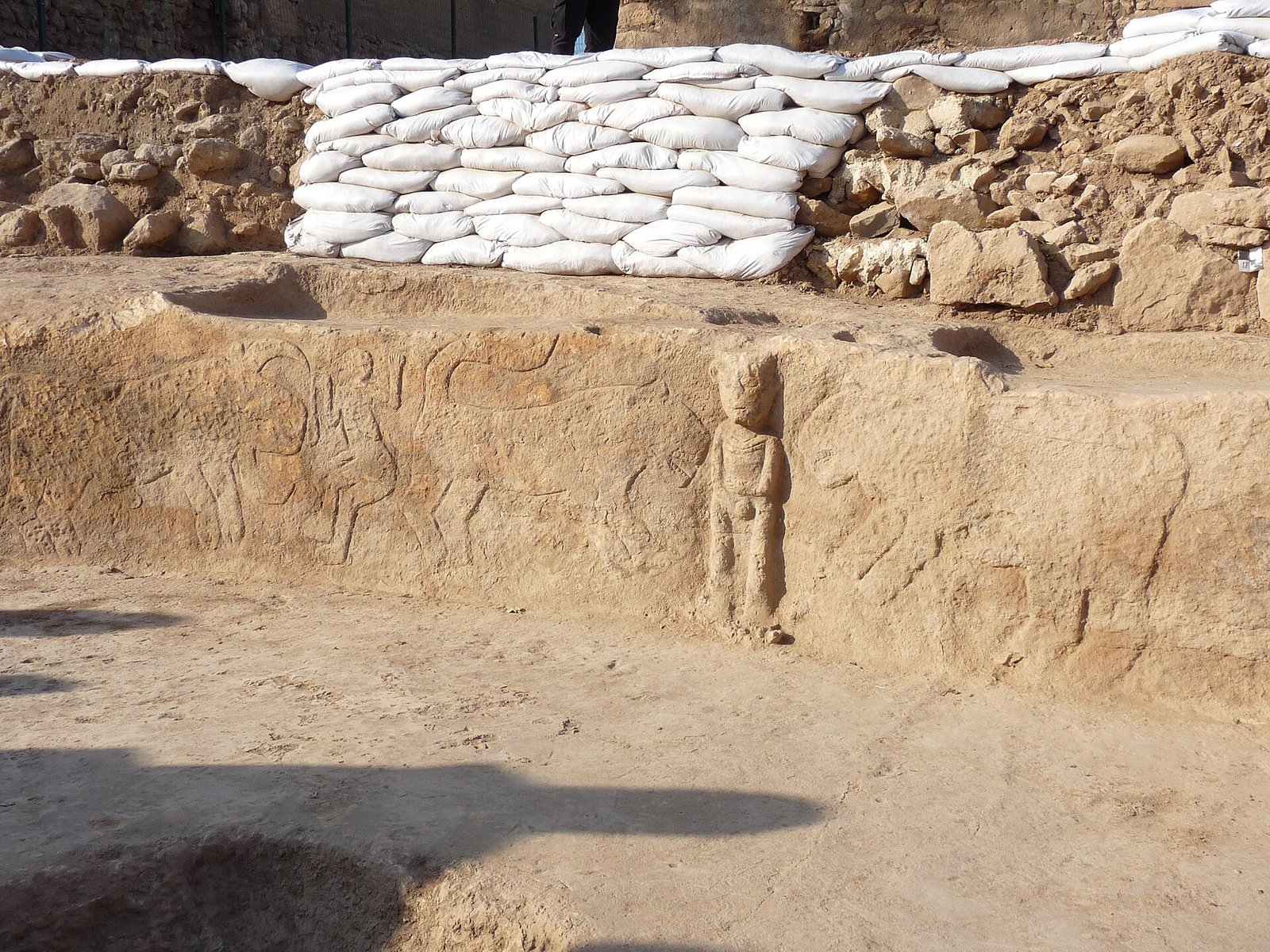
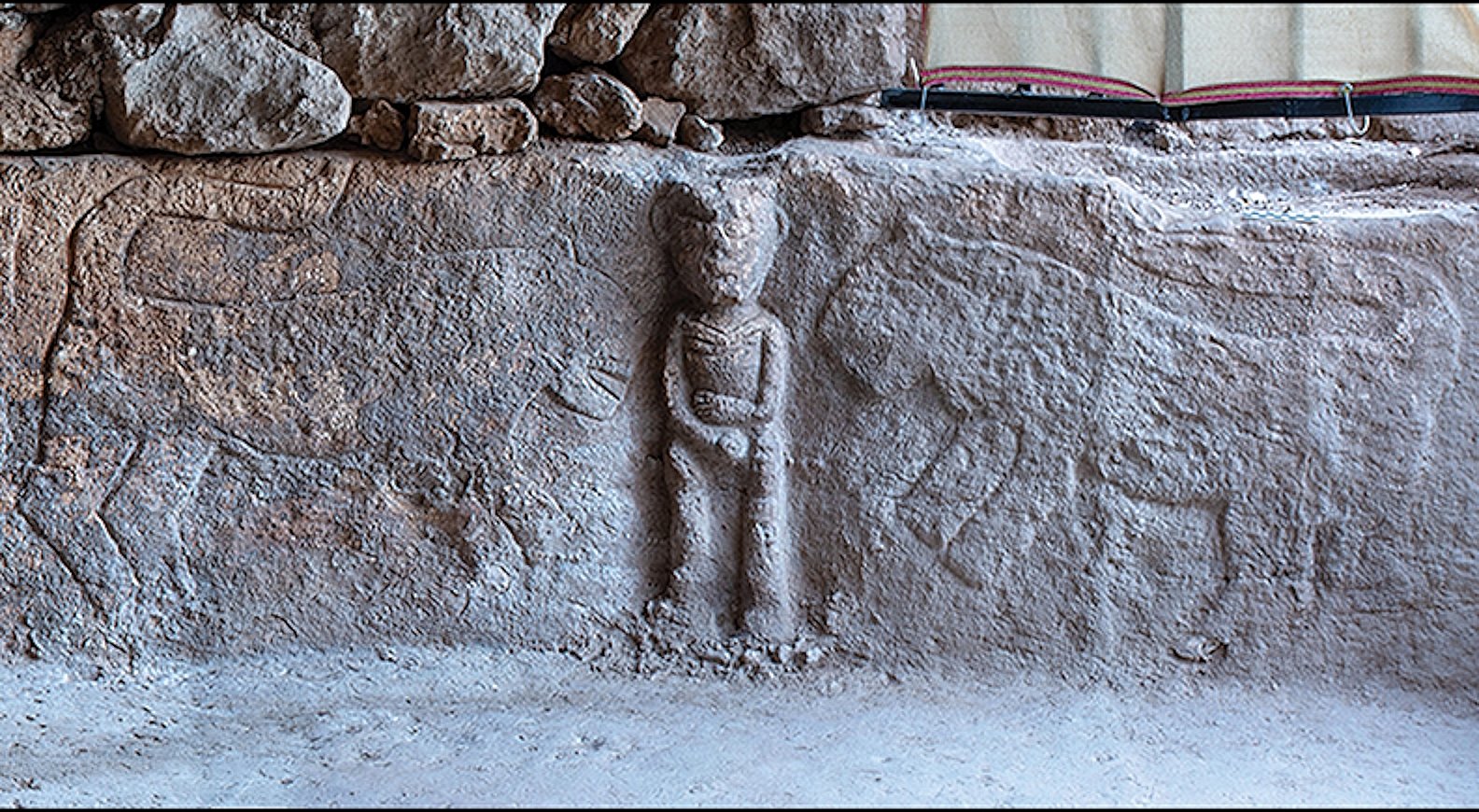
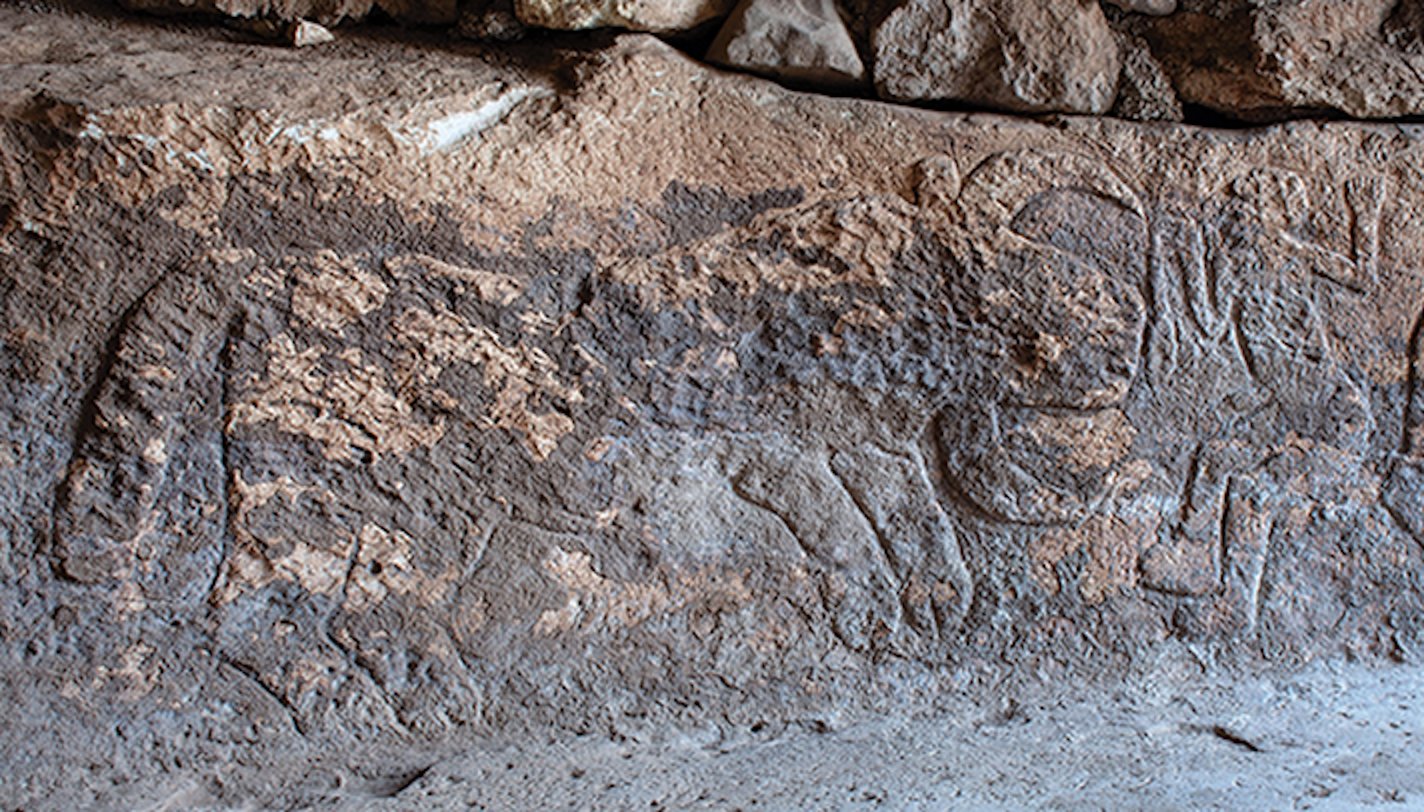
Along a bench inside a communal building runs a relief of five figures, published by Eylem Özdoğan in 2022. On one side, a man holding his phallus is flanked by two leopards, their teeth and claws bared. On the other, a squatting figure holds a rattle or snake before a charging aurochs with huge horns. Özdoğan argued that this is not a set of separate images but a single, connected scene — the earliest known depiction of a narrative in human art.
That claim is what makes Sayburç extraordinary. Elsewhere, Neolithic carving gives us powerful symbols; here, for the first time, the symbols may be telling a story — of danger, of confrontation, perhaps of a myth we will never fully recover.
Sayburç does two things at once. It extends the Taş Tepeler world in time, showing the tradition of communal buildings and figurative carving continuing into the later Pre-Pottery Neolithic. And it deepens what that carving could do: from a vocabulary of isolated animals and bodies toward something like a sentence.
Because the relief was found in place, on the wall of the building it was made for, it also gives a rare, undisturbed glimpse of how such imagery actually sat within a room where people gathered — not an object in a case, but a scene meant to be lived with.
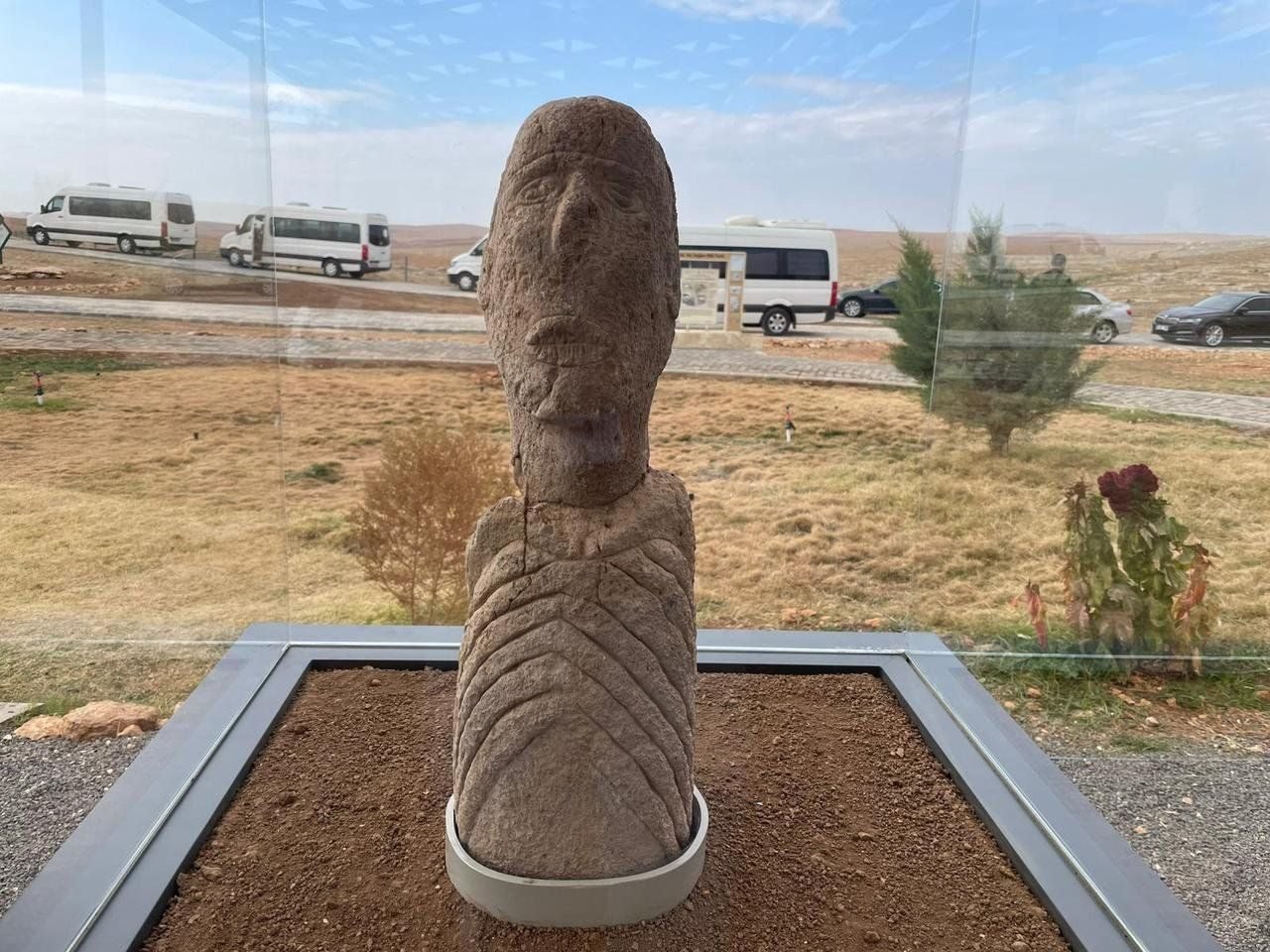
Sayburç keeps returning to the human figure and the human head. In a small western special building, a human face was carved onto the bedrock base of a pillar, set to face a large niche, with neighbouring pillars carrying leopard and pig reliefs. And among the finds is the haunting 'stitched-mouth' statue — a rigid human figure with pronounced ribs and apparent shell-inlaid eyes, its mouth carved as if sewn shut, widely read as an image of death.
The dead themselves were kept close. In buildings across the southern area, excavators found secondary burials — selected, often burnt long bones and skulls — placed inside the dwellings, one set sealed in a wall niche and plastered over. At Sayburç the living, the carved and the dead shared the same few rooms.
In her 2024 report — the first full account of the site — excavation director Eylem Özdoğan makes a point that sets Sayburç apart from the classic image of Göbekli Tepe. Here the carved 'special buildings' were not raised on a bare hilltop away from daily life; they sit right among the dwellings. The whole Neolithic settlement covers only about 3,000 square metres, densely built, and even some of the ordinary houses have pillars of their own.
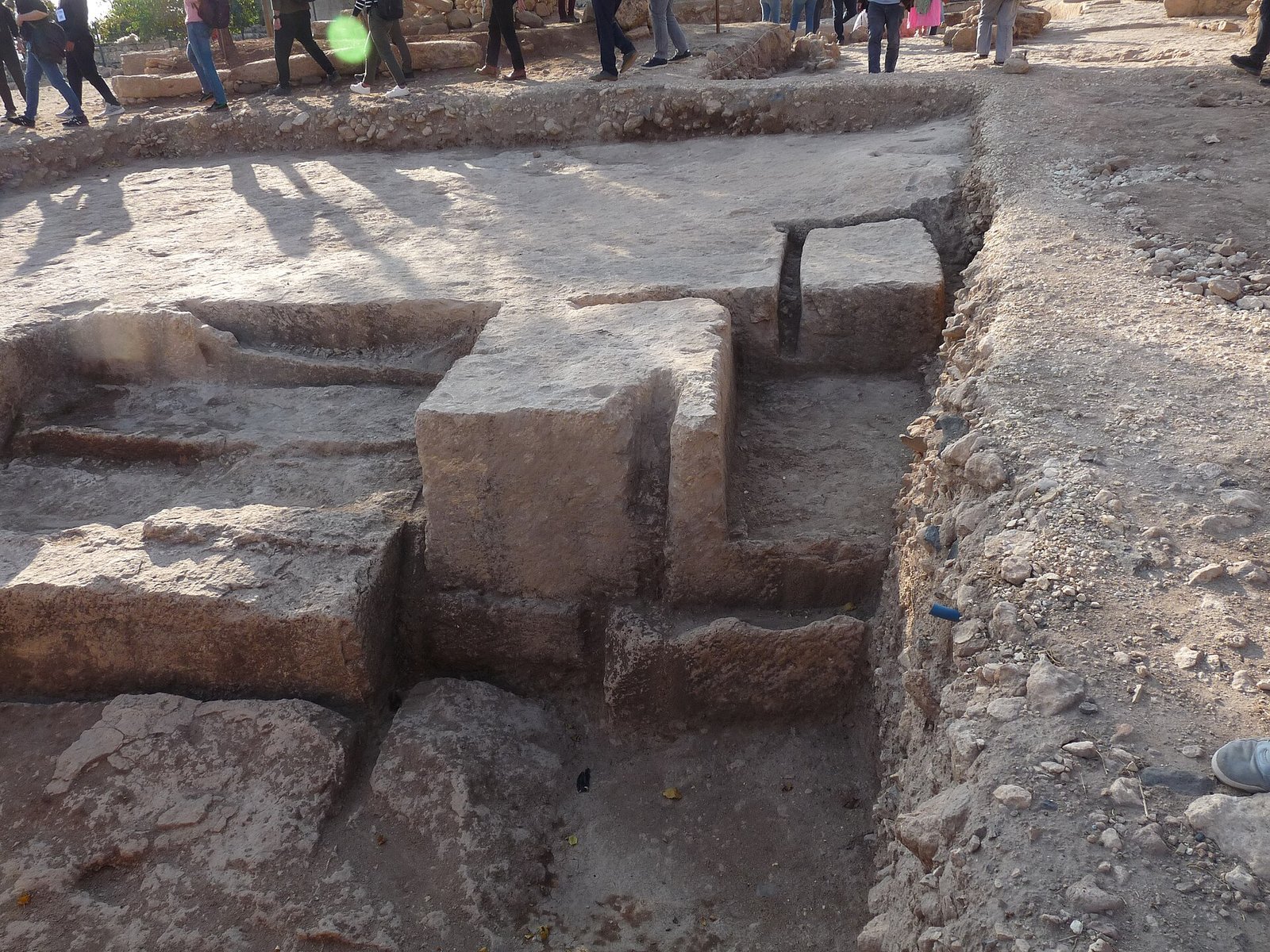
Two special rooms have been exposed: Structure AA, an oval chamber cut into the bedrock with a rock-cut bench along its wall, and Structure AB, whose carved bench carries the famous narrative scene — a bull facing a male figure on the left, and two leopards flanking a male, lifted into high relief and looking straight out at the viewer, on the right. Dated to the mid-9th millennium BC, Sayburç shows the sacred and the everyday woven into a single fabric — ritual and story sitting in the middle of where people cooked, slept and worked.
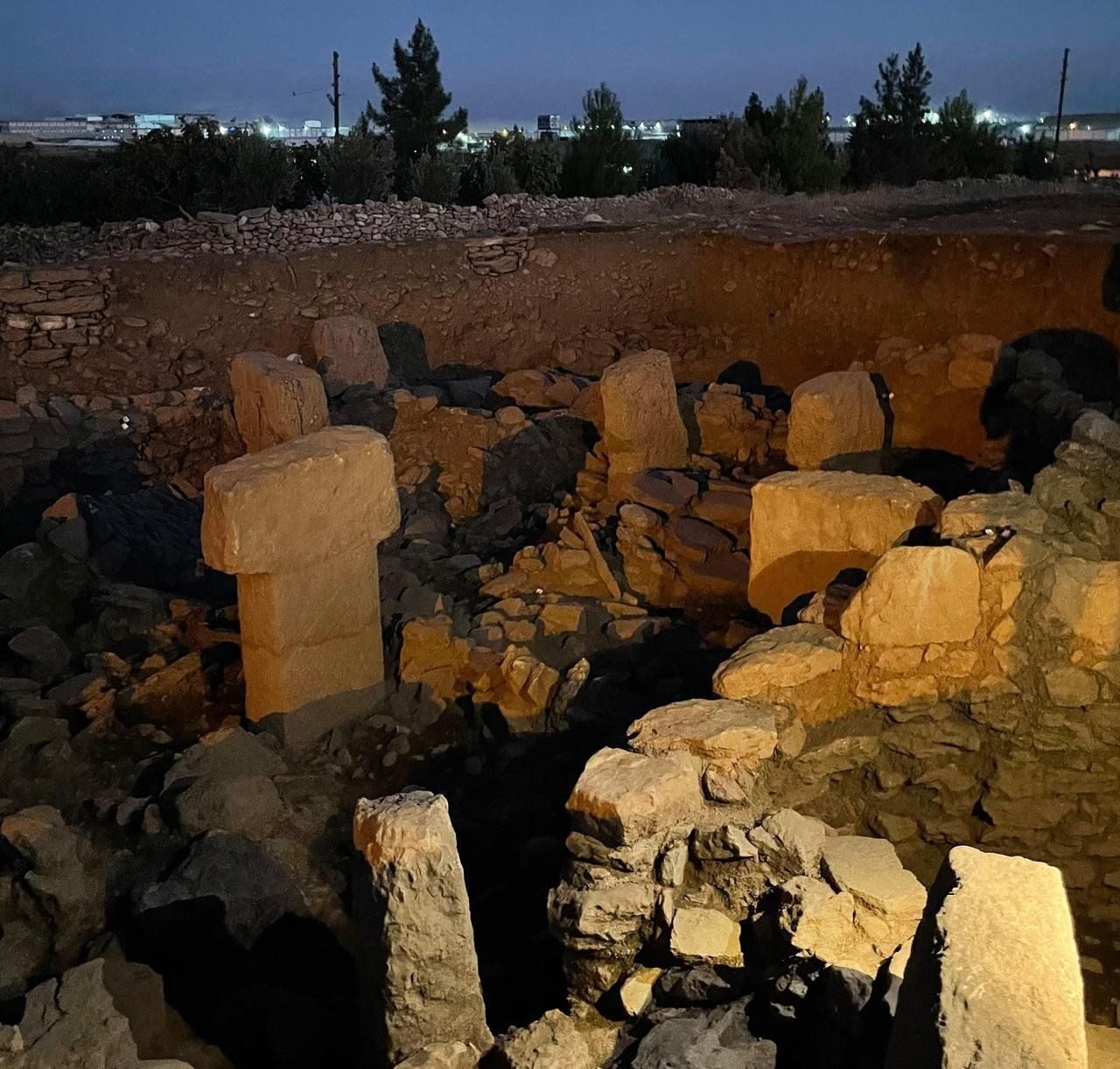
The southern part of the site sharpens the point. At least three more special buildings sit there among the houses — Structure CB, with seven T-shaped pillars set along its walls and one more in the centre; Structure CD with the same arrangement; and Structure DA, ringed by dwellings, with a double-stepped bench and a fallen central pillar. And the dead were kept close too: three clusters of burnt, secondary burials — selected long bones and skulls — were placed inside the domestic buildings, one set sealed in a wall niche and plastered over.
Inside the site
The full archive
Everything we've documented here — the buildings, the carved finds, and the questions people ask — grouped so you can jump straight to what interests you.
The wider world
Visit
Small-group and private tours to Sayburç and across the Taş Tepeler landscape, led by people who know the ground.
Full bibliography: the Taş Tepeler reference library →
Last reviewed 7 October 2026. Something wrong?