Short answer
Sayburç dates to the 9th millennium BCE — the late Pre-Pottery Neolithic A into the early PPNB, with figures around 8650–8300 BCE discussed from the excavation, making it roughly 10,300–10,600 years old.
That places it after Göbekli Tepe's earliest monumental phase, which begins around 9500 BCE. Unusually for the region, Sayburç is essentially a single short occupation rather than a deep stack of rebuilding — which makes its date easier to interpret, though the published radiocarbon record is still developing.
The dates
Sayburç belongs to the transition from the late Pre-Pottery Neolithic A into the early PPNB, with radiocarbon framing in the region of 8650–8300 BCE discussed from the excavation.
That places it after Göbekli Tepe's earliest monumental phase, which begins around 9500 BCE, and within the horizon when the great enclosure tradition was giving way to other kinds of building.
As with most sites in this group other than Göbekli Tepe, the published radiocarbon record is still developing, and these figures should be read as the excavation's working framing rather than a closed sequence.
Why a short occupation is valuable
Sayburç is essentially single-layer: one main phase, without the centuries of rebuilding, refilling and modification that complicate Göbekli Tepe and Karahan Tepe.
This is a real methodological advantage. At a multi-phase site, almost every question splits into several — when was it built, when modified, when filled, when abandoned. Material from one phase can intrude into another.
At Sayburç, the buildings, the relief and the domestic material belong to broadly the same moment. What you are looking at is closer to a snapshot than a sequence, which makes the relationship between the special building and the ordinary houses around it much easier to interpret.
Where it sits in the regional story
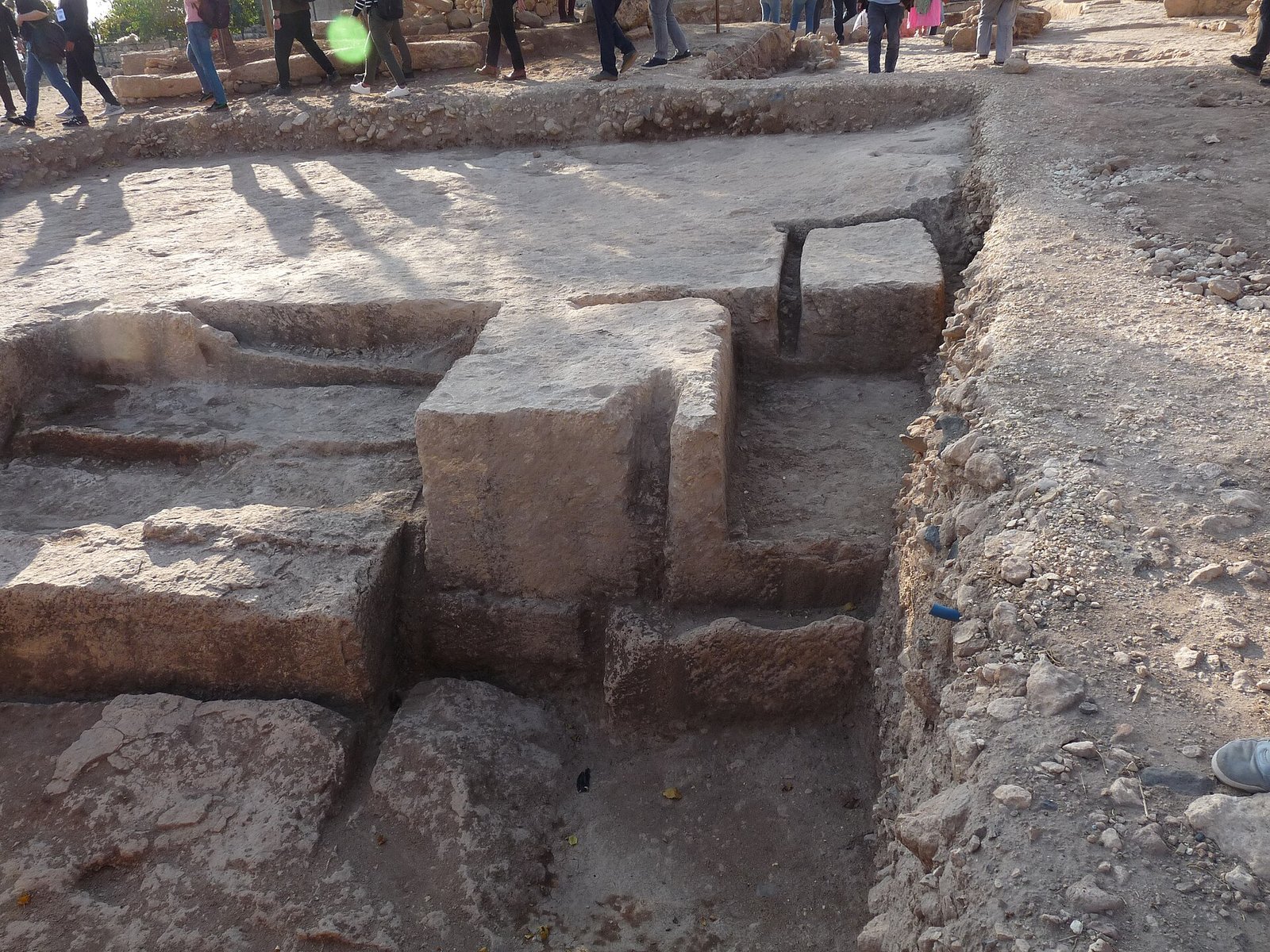
By Sayburç's period, the monumental round enclosure was no longer the only game. The site has a round bedrock-cut special building and residential buildings, hearths, storage and food-preparation areas, in the same settlement.
That combination is the interesting part chronologically. It shows the special building persisting as a form while ordinary domestic life is clearly visible alongside it — a stage between Göbekli Tepe's monumental horizon and the fully household-based villages of the later PPNB, such as Gürcütepe.
It is a useful reminder that the transition was gradual. There is no clean break between a monument age and a village age.
What is settled, and what would sharpen it
Settled: Sayburç is a 9th-millennium BCE occupation, later than Göbekli Tepe's monumental phase, and essentially single-layer.
Still to come: a fully published series of radiocarbon determinations tied to defined contexts; confirmation of how the special building relates chronologically to the residential structures — contemporary, or successive; and correlation with Göbekli Tepe's and Karahan Tepe's sequences.
Until then, 'late PPNA into early PPNB, around 8650–8300 BCE' is the accurate framing.
Common questions
How old is Sayburç?
Late Pre-Pottery Neolithic A into the early PPNB, with figures in the region of 8650–8300 BCE discussed from the excavation — roughly 10,300 to 10,600 years old.
Is Sayburç older than Göbekli Tepe?
No. Göbekli Tepe's monumental phase begins around 9500 BCE, earlier than Sayburç's occupation.
Why does the single-layer occupation matter?
Because it avoids the interpretive problems of multi-phase sites. The buildings, relief and domestic material belong to broadly one moment, making their relationships much easier to read.
How certain are the dates?
They are the excavation's working framing rather than a closed published sequence. As with most sites in the group other than Göbekli Tepe, the radiocarbon record is still developing.
Sources & further reading3 references
- Özdoğan, E. (2022). The Sayburç reliefs: a narrative scene from the Neolithic. Antiquity 96(390): 1599–1605. doi:10.15184/aqy.2022.125
- Özdoğan, E. (2025). Interviews on the Sayburç excavation and its reliefs. Transcribed interviews held in the Taş Tepeler research atlas. Spoken material, translated from Turkish; paraphrased rather than quoted. See Özdoğan 2022 for the published account.
- Clare, L. (2020). Göbekli Tepe, Turkey. A brief summary of research at a new World Heritage Site (2015–2019). e-Forschungsberichte des Deutschen Archäologischen Instituts 2020(2): 81–88.
Full bibliography: the Taş Tepeler reference library →