The wider world
Near Şanlıurfa · Southeastern Türkiye
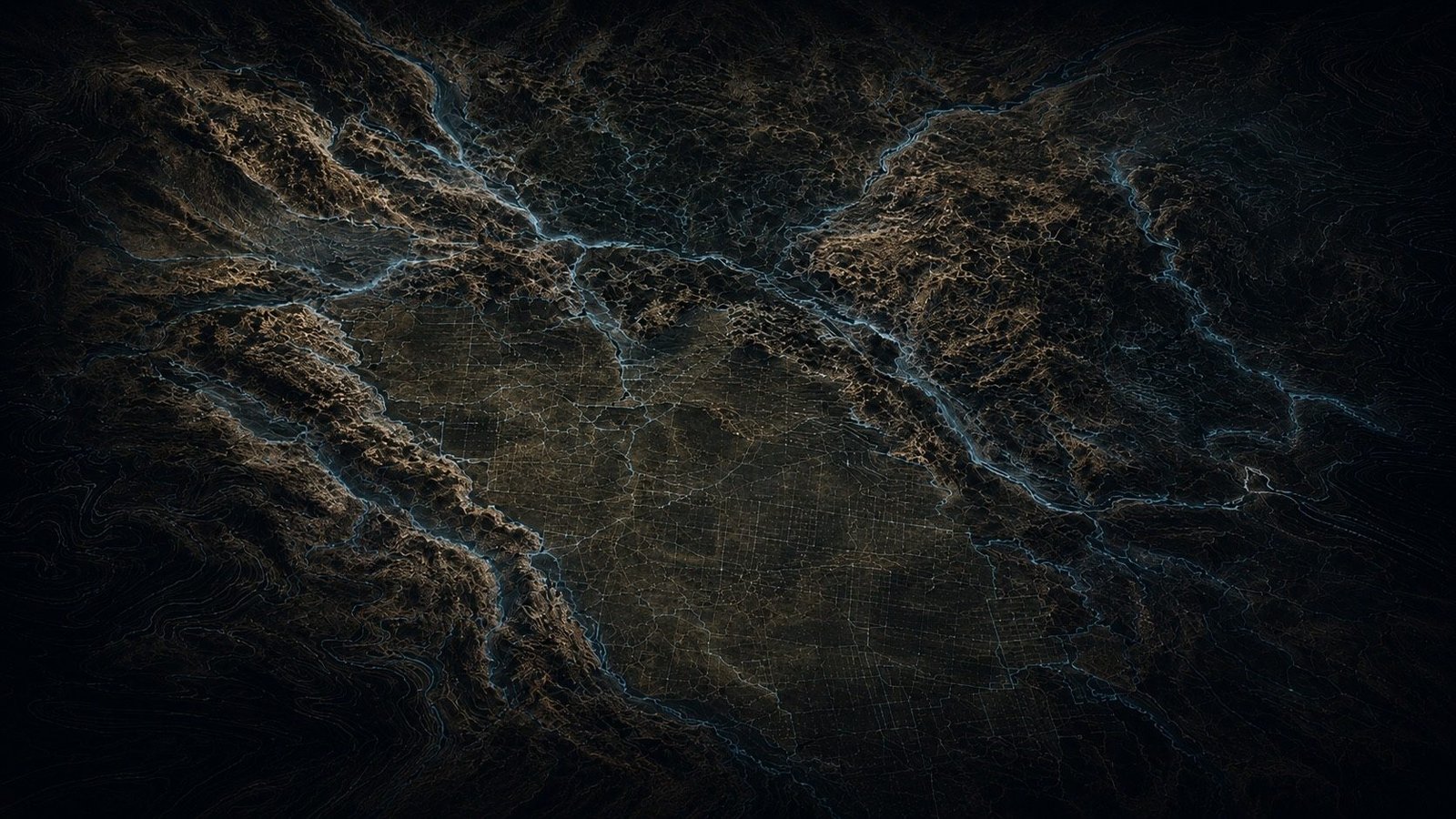
A later Neolithic settlement near Şanlıurfa — four low mounds on the Harran Plain, showing everyday village life as the Taş Tepeler world came down from the hills.
The evidence
Gürcütepe in depth
Gürcütepe is not a single mound but a cluster of eight settlements — Gürcütepe I to VIII, four raised mounds and four flat sites — spread across roughly a square kilometre about four kilometres southeast of Şanlıurfa, on the northwestern edge of the Harran Plain beside the Sırrın stream. Where Göbekli Tepe is a hilltop of monuments, Gürcütepe is the flat, domestic counterpart: the place people actually lived.
It was first excavated between 1995 and 1999 by the German Archaeological Institute and the Şanlıurfa Museum, under Adnan Mısır, Harald Hauptmann and Klaus Schmidt — the same circle then uncovering Göbekli Tepe — who concentrated on the mounds seen from the east.
It was once assumed the four hills were settled in sequence, with one phase matching nearby Göbekli Tepe. The soundings showed something simpler: all four were occupied during the Pre-Pottery Neolithic B, with the easternmost hill running on into the later Pre-Pottery Neolithic C. Gürcütepe, in other words, is essentially a single broad horizon, and a rural one — significantly younger than the great monuments up on the plateau.
The buildings fit that character: rammed-earth structures subdivided into small rooms, standing beside larger community buildings — a layout typical of the settled Neolithic villages of Upper Mesopotamia rather than of the pillar sanctuaries.
Since 2021, Gürcütepe has been excavated again as part of the Taş Tepeler project, led by Assoc. Prof. Mücella Erdalkıran of Ege University with Barbara Helwing of Berlin's Pergamon Museum. It is described as the latest chronological link in the Taş Tepeler chain — its occupation begins in the Late Pre-Pottery Neolithic and continues without a break into the Pottery Neolithic, after the great monumental sites had been abandoned.
Work has focused on western Gürcütepe III, the one stretch not built over by the modern town, where the excavators are combining data on paleogeography, subsistence and household economies to reconstruct how daily life changed.
What has emerged is ordinary life in detail. Small stone-founded and rammed-earth (pisé) houses with hearths and ovens stand beside open courtyards used as workshops, littered with the debris of daily craft. The animal bones are those of a farming village — mostly sheep and goat, then pig, then cattle, with wild gazelle, fox and deer alongside. The flint work is typical Pre-Pottery Neolithic B, dominated by large Byblos and Palmyra arrowheads.
The heavy domestic kit is here too: basalt mortars and pestles, grinding stones, and stone vessels of alabaster and limestone — the equipment of a community that produced and processed its own food.
In place of pillars and giant sculptures, Gürcütepe's people made small figurines. Excavation has brought to light many limestone and clay figures — some schematic, some more realistic — depicting women, men and gender-neutral human forms, together with clay models of domesticated and hunted animals. Most are cubic and consistent with figures known across the region, but two heavier-set female figures stand out, echoing types from Central Anatolia and hinting at a stronger female presence in this community's symbolic life than at the monument-building sites nearby.
Reported in 2025 alongside multi-room buildings and burials, this material is why researchers see Gürcütepe as a window on a changing belief world — one that had moved, with the people, from the hilltops down to the plain.
Gürcütepe records a turning point: the moment communities came down from the limestone hills to live on the open plain, a shift the excavators link to a changing climate. Its small houses, workshops and figurines are the settled, domestic other-half of the story — the ordinary end of the same world that raised the pillars, carrying it forward toward the farming villages that followed.
Because much of it lies under the modern town and only Gürcütepe III is being dug, the full extent and phasing of the group are still being worked out, and the newest figurine and building finds are known mainly from field reporting ahead of full publication.
Inside the site
The full archive
Everything we've documented here — the buildings, the carved finds, and the questions people ask — grouped so you can jump straight to what interests you.
The wider world
Visit
Small-group and private tours across the Taş Tepeler landscape, led by people who know the ground.
Full bibliography: the Taş Tepeler reference library →
Last reviewed 7 October 2026. Something wrong?