Short answer
Gürcütepe matters because it shows what came after the monuments: excavation disproved the idea that it was the village of Göbekli Tepe's builders, and instead made it a rare window on the shift from great enclosures to ordinary Neolithic village life.
The original hope was that one of its mounds would be the home of the pillar-builders. Dating showed it was later than Göbekli Tepe — a negative result that proved more useful than the theory it replaced, because it cleanly separates the monumental world from the village world that followed.
The expectation, and the correction
The original working assumption was that Gürcütepe's hills were settled in sequence, and that one of those phases would coincide with Göbekli Tepe — making Gürcütepe the domestic counterpart where the pillar-builders actually lived.
Excavation did not support it. All four hills belong to the Pre-Pottery Neolithic B (the easternmost later still, PPNC), while Göbekli Tepe's earlier phases are PPNA. Gürcütepe comes afterwards. It is not the village of the pillar-builders.
Why the correction is the point
A negative result that removes a neat story can look like a letdown. Here it did something more useful: it separated two questions that had been tangled together — where the monuments were built, and where people lived.
Göbekli Tepe's own domestic side has since been found at Göbekli Tepe itself: deep soundings have exposed PPNA domestic structures, hearths, replastered floors, bone tools and bead production on the mound. There was never a need for a separate village down the hill.
What Gürcütepe shows instead
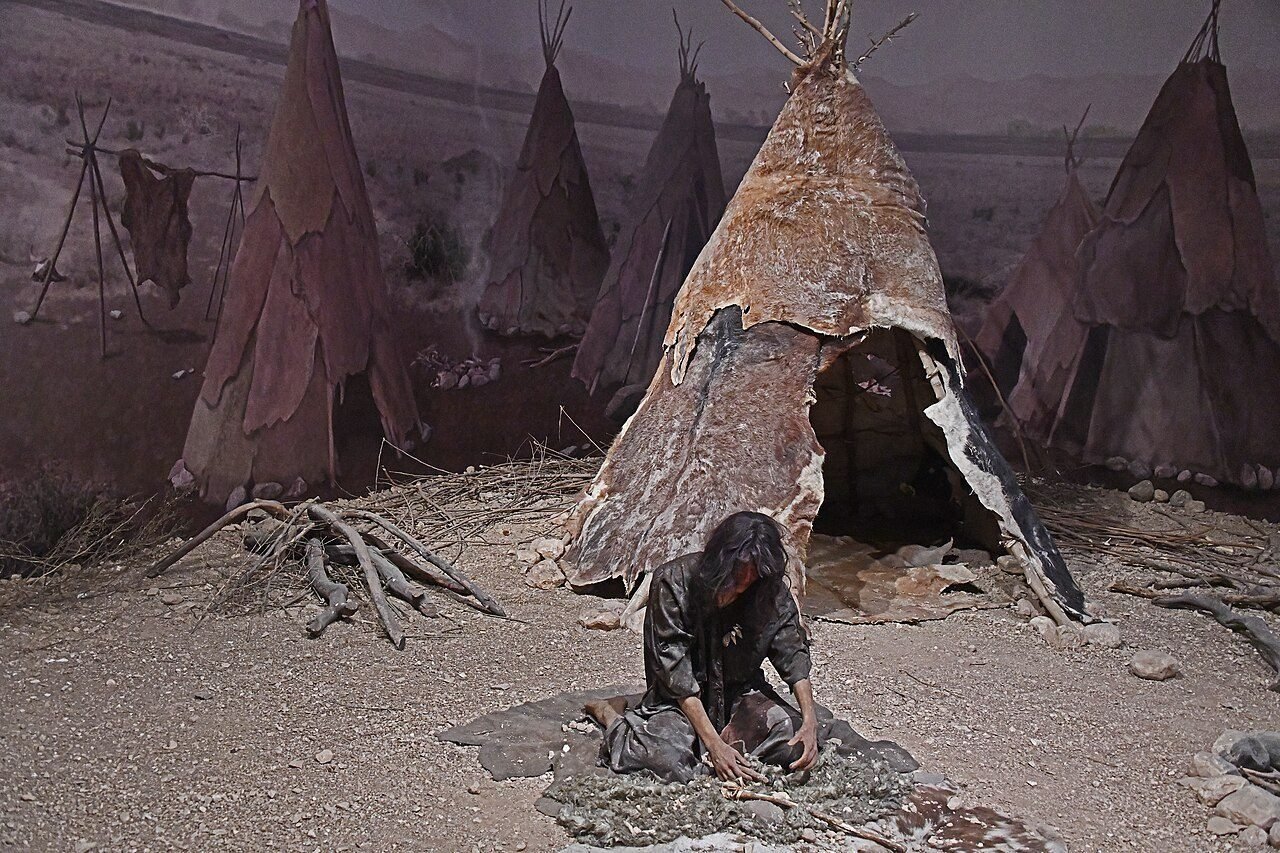
Freed from that role, Gürcütepe became evidence for what came after the monumental phase. Its rammed-earth houses with subdivided interiors, set beside larger community buildings, are the shape of a recognisable Neolithic village.
That is the world the T-pillar horizon gave way to: the great communal enclosures recede, the house becomes the organising unit, rooms get divided, and storage and property become architectural facts.
Newly important again
Recent Taş Tepeler seasons have made the site interesting for its own sake. Reporting from 2025 describes small figurines and multi-room burials at Gürcütepe, framed as helping to refine the region's later chronology — one account called it the last link in the Taş Tepeler chain.
This is field reporting ahead of full publication, so the specifics may shift. But it shows Gürcütepe actively reshaping, rather than merely illustrating, the story.
Why it is worth caring about
The Taş Tepeler narrative is usually told as a peak — the extraordinary monuments — with nothing on either side of it. Gürcütepe supplies the descent from that peak, in the same catchment, first excavated by the same archaeologist who made Göbekli famous.
The move from monumental gathering places to settled village life is one of the genuinely important problems in the archaeology of this region, and Gürcütepe is one of the few places it can be examined directly. Its sequence is less fully published than the flagship sites, so the current picture is still firming up.
Common questions
Why is Gürcütepe important?
Because it shows what came after the monumental T-pillar horizon: ordinary partitioned houses replacing communal enclosures. It is one of the few places in the region where the shift from monuments to settled village life can be studied directly.
Is Gürcütepe older than Göbekli Tepe?
No. It was once hoped one of its phases might coincide with Göbekli Tepe, but excavation showed all four hills are Pre-Pottery Neolithic B — later than Göbekli's PPNA phases — with the easternmost hill later still, in the PPNC.
Did Göbekli Tepe's builders live at Gürcütepe?
No. That was the original hypothesis, but the dating rules it out. Domestic structures have since been found at Göbekli Tepe itself — hearths, plastered floors, bead production and household tools.
What has recently been found at Gürcütepe?
Field reporting from 2025 describes small figurines and multi-room burials, said to help refine the region's later chronology. These are press-reported results awaiting full publication.
Sources & further reading5 references
- Schmidt, K. (2012). Göbekli Tepe: A Stone Age Sanctuary in South-Eastern Anatolia. Berlin: ex oriente. The foundational monograph by the site's first excavator.
- Wikipedia contributors (2026). Gürcütepe. Wikipedia. Tertiary summary of K. Schmidt's 1990s soundings (after Bohn, Gerber, Morsch & Schmidt 1998; Schmidt 2000). link
- Clare, L. (2020). Göbekli Tepe, Turkey. A brief summary of research at a new World Heritage Site (2015–2019). e-Forschungsberichte des Deutschen Archäologischen Instituts 2020(2): 81–88.
- Kayra, O. (2025). Gürcütepe's 9,000-year-old figurines offer rare clues to life after Taş Tepeler's monumental age. Arkeonews, 11 December 2025. Citing excavation director M. Erdalkıran. link
- Erdoğan, K. (reporting excavation director M. Erdalkıran) (2025). Neolithic figurines, multi-room burials found at Gürcütepe redefine Taş Tepeler chronology. Türkiye Today, 28 November 2025. Field reporting; awaiting full publication. link
Full bibliography: the Taş Tepeler reference library →