Short answer
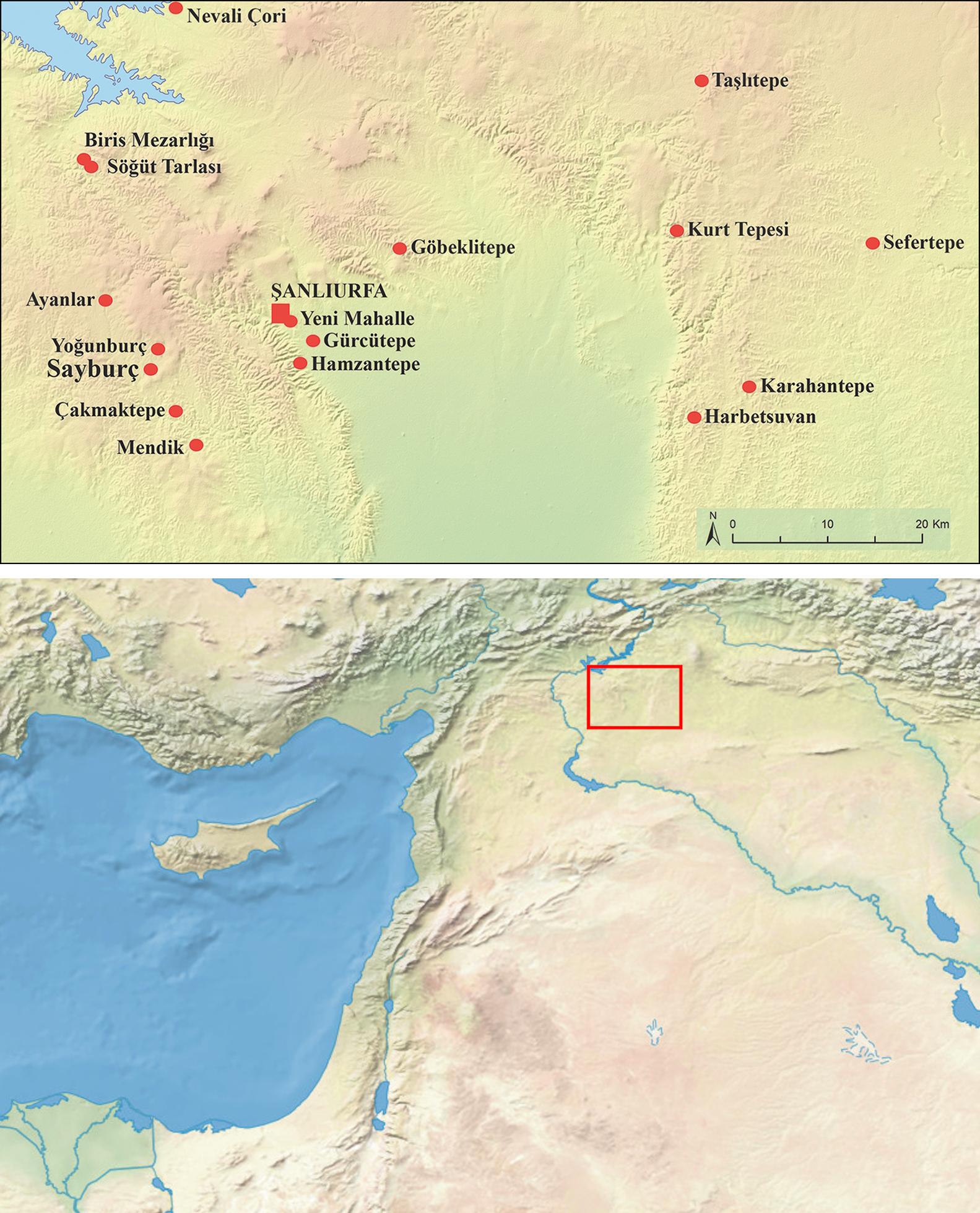
Taş Tepeler is not one site but a cluster of Pre-Pottery Neolithic sites in Şanlıurfa province — twelve of them under active excavation as of the 2025 season, from the great enclosures of Göbekli Tepe to the shallow later mounds of Gürcütepe.
The best known are Göbekli Tepe, Karahan Tepe, Sayburç and Sefertepe. Published lists differ because some count active digs and others include survey-known T-pillar sites such as Kurt Tepe, Hamzan Tepe and Taşlı Tepe — the same tradition, but not among the twelve excavations.
The twelve active excavations
Taş Tepeler — 'Stone Hills' — is a Turkish-led research programme covering a cluster of Pre-Pottery Neolithic sites in Şanlıurfa province. In September 2025 it reached twelve active excavations with the addition of Ayanlar Höyük.
Göbekli Tepe — the UNESCO World Heritage site, the earliest and most fully published of the monumental sites, with T-pillar enclosures and, more recently, extensive domestic evidence on the same mound.
Karahan Tepe — the second great monumental site, known for the rock-cut chamber with pillars rising from the bedrock floor and the human head carved into its wall.
Sayburç — a site inside a living village, holding a narrative relief on a bench face that is among the earliest known scenes rather than isolated figures.
Sefertepe — T-pillars and quadrangular buildings, and a chamber where human skulls were gathered together.
Çakmaktepe — early-horizon material, mortars, and deposits of burnt animal heads inside and outside special buildings.
Harbetsuvan Tepesi — T-pillars but, per 2025 geophysics, no large circular buildings; excavated with a Japanese–Turkish team.
Gürcütepe — four shallow mounds excavated by Klaus Schmidt in the late 1990s, later than Göbekli Tepe, showing the village world that followed.
Ayanlar Höyük (Gre Hut) — roughly 14 hectares, essentially unexcavated until September 2025.
Mendik Tepe, Yoğunburç, Yenimahalle and Söğüt Tarlası — the less-published members of the group, with excavation and reporting still developing.
A note on which names count
Published lists of Taş Tepeler sites do not always agree, and it is worth knowing why.
There is a difference between sites under active excavation in the project and sites known from survey that belong to the same regional tradition. Places such as Kurt Tepe, Hamzan Tepe and Taşlı Tepe were identified through survey work as T-pillar sites and are often named alongside the others, but they are not among the twelve active digs.
Some lists include them; some substitute them for Yenimahalle or Söğüt Tarlası. Neither list is wrong — they are counting different things. We list the twelve active excavations and name the survey sites separately.
The scale of the programme
At its fifth anniversary in 2025 the project reported 36 academic institutions involved — 15 Turkish and 21 international — and 219 researchers working across all twelve sites simultaneously.
That is an unusual concentration of effort on a single region and period, and it is the reason the picture keeps changing. Findings that were current three years ago have been superseded; several of the sites had no excavation data at all before this programme began.
It also means published summaries date quickly. Anything written about Taş Tepeler should be read with an eye to when it was written.
Why they are treated as a group
Because they share a vocabulary. T-shaped pillars, special or communal buildings distinct from houses, animal relief carving, human imagery, and a concern with heads and the dead recur across the group.
And because they are close together. These sites sit within a landscape people could walk across. Harbetsuvan is about 7 km from Karahan Tepe; Karahan Tepe is around 40 km from Göbekli Tepe. Whatever was happening was happening between neighbours.
But grouping them should not flatten them. Harbetsuvan lacks the large circular buildings its neighbours have. Gürcütepe is substantially later. Sayburç has a narrative relief nobody else has produced. The group is a network of variations, not a set of copies.
Which ones you can actually visit
Göbekli Tepe is fully developed for visitors, with a protective shelter, walkways and a visitor centre.
Karahan Tepe is open with visitor infrastructure in place and is the natural second stop.
The remainder are working excavations rather than visitor sites. Access varies by season and by permission, some have no facilities at all, and several are on land where arriving unannounced is not appropriate.
If you want to see more than the two flagship sites, going with someone who knows the current access situation is the practical answer — it changes year to year.
Common questions
How many Taş Tepeler sites are there?
Twelve active excavations as of September 2025: Göbekli Tepe, Karahan Tepe, Sayburç, Sefertepe, Çakmaktepe, Harbetsuvan Tepesi, Gürcütepe, Ayanlar Höyük, Mendik Tepe, Yoğunburç, Yenimahalle and Söğüt Tarlası.
Why do different sources list different sites?
Because some lists count active excavations and others include survey-known T-pillar sites such as Kurt Tepe, Hamzan Tepe and Taşlı Tepe, which belong to the same tradition but are not among the twelve digs.
What does Taş Tepeler mean?
'Stone Hills' in Turkish. It is the name of the Turkish-led research programme covering this cluster of Pre-Pottery Neolithic sites in Şanlıurfa province.
Which Taş Tepeler sites can I visit?
Göbekli Tepe and Karahan Tepe have visitor infrastructure. The others are working excavations with varying and often restricted access.
How big is the Taş Tepeler project?
At its fifth anniversary in 2025 it reported 219 researchers from 36 institutions — 15 Turkish and 21 international — working across all twelve sites.
Sources & further reading5 references
- Şanlıurfa Neolithic Research Project — Taş Tepeler (2026). Official project site (Istanbul University / Şanlıurfa Museum). tastepeler.org link
- Clare, L. (2020). Göbekli Tepe, Turkey. A brief summary of research at a new World Heritage Site (2015–2019). e-Forschungsberichte des Deutschen Archäologischen Instituts 2020(2): 81–88.
- Karul, N. (2021). Buried Buildings at Pre-Pottery Neolithic Karahantepe. Türk Arkeoloji ve Etnografya Dergisi 82: 19–29. link
- Çelik, B.. Differences and similarities between the settlements in Şanlıurfa region where 'T' shaped pillars are discovered. Comparative survey of the Şanlıurfa T-pillar sites. Consulted via open repository copy; full bibliographic details not verified.
- Özdoğan, E. (2022). The Sayburç reliefs: a narrative scene from the Neolithic. Antiquity 96(390): 1599–1605. doi:10.15184/aqy.2022.125
Full bibliography: the Taş Tepeler reference library →