Taş Tepeler

Taş Tepeler / Sefertepe / Sefertepe

Site profile · Sefertepe

Sefertepe

On the eastern edge of the Taş Tepeler landscape, Sefertepe is a Pre-Pottery Neolithic settlement where a community gathered human skulls into purpose-built rooms, carved paired faces in stone, and worked a bead barely a few centimetres across with a human face on each side.

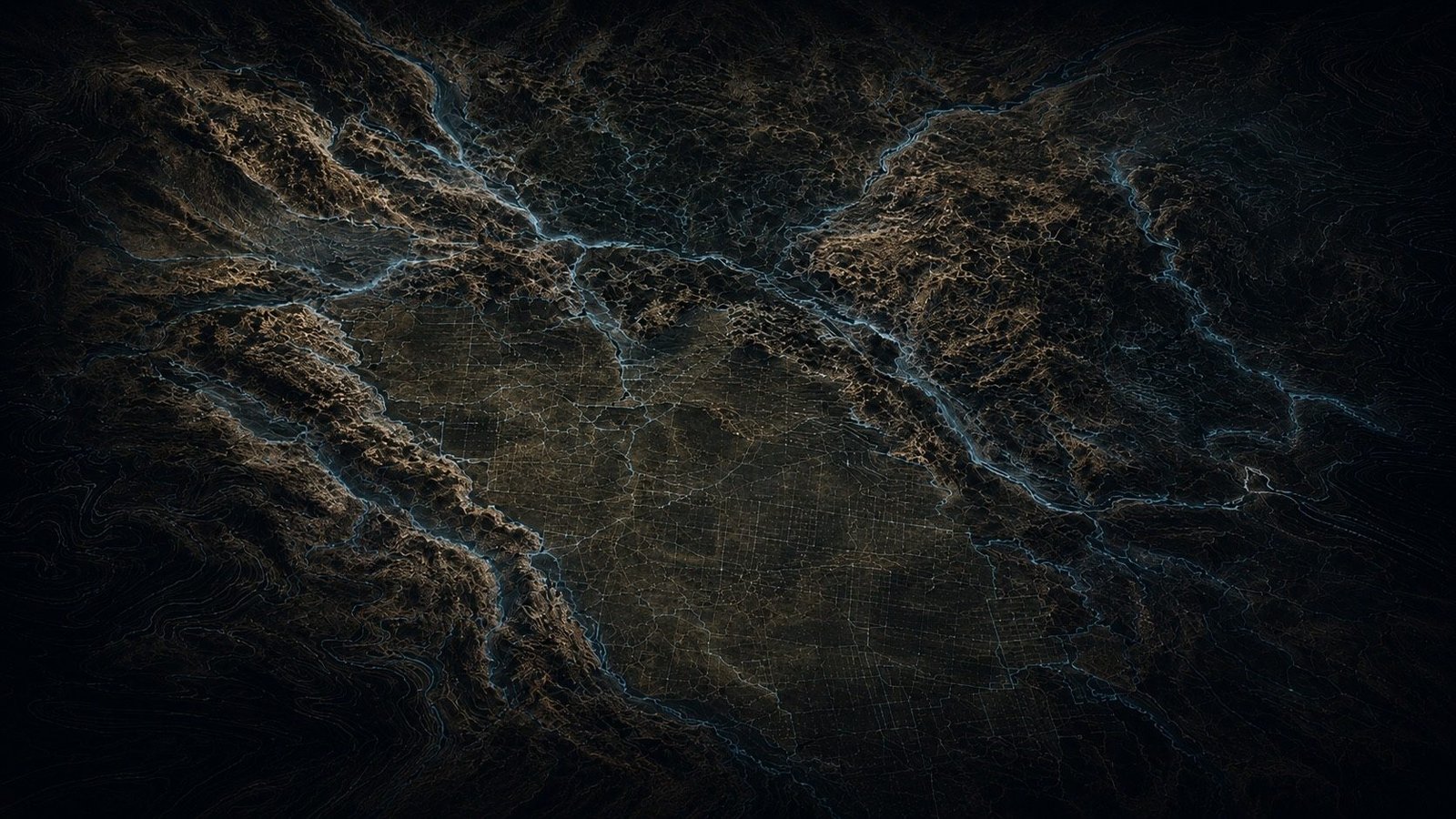
The Taş Tepeler landscape of Şanlıurfa, where Sefertepe lies. (Landscape; not a photograph of this find.)

The Taş Tepeler landscape of Şanlıurfa, where Sefertepe lies. (Landscape; not a photograph of this find.) — Wikimedia Commons

What Sefertepe is

Sefertepe sits on a low rise overlooking the Viranşehir plain, at the eastern edge of the Taş Tepeler cluster of Pre-Pottery Neolithic sites in the Şanlıurfa region — roughly 72 km east of the city, far enough out to stand apart from Göbekli Tepe and Karahan Tepe while plainly belonging to the same world. The site was first published by Bahattin Çelik in 2006, who identified it as one of the Şanlıurfa T-pillar sites and helped show that the tradition reached well beyond Göbekli Tepe.

Systematic excavation began in 2021 under Istanbul University and is directed by Emre Güldoğan. By 2025 the project had completed its fifth season, with a team of 39 opening six trenches and tracing a Pre-Pottery Neolithic B complex of rectangular stone buildings. Much of what follows is reported from the field — announced at the Taş Tepeler programme's fifth-anniversary briefing and in interviews — rather than set out in a peer-reviewed excavation report, and is best read as a strong lead that fuller publication will refine.

The skull room

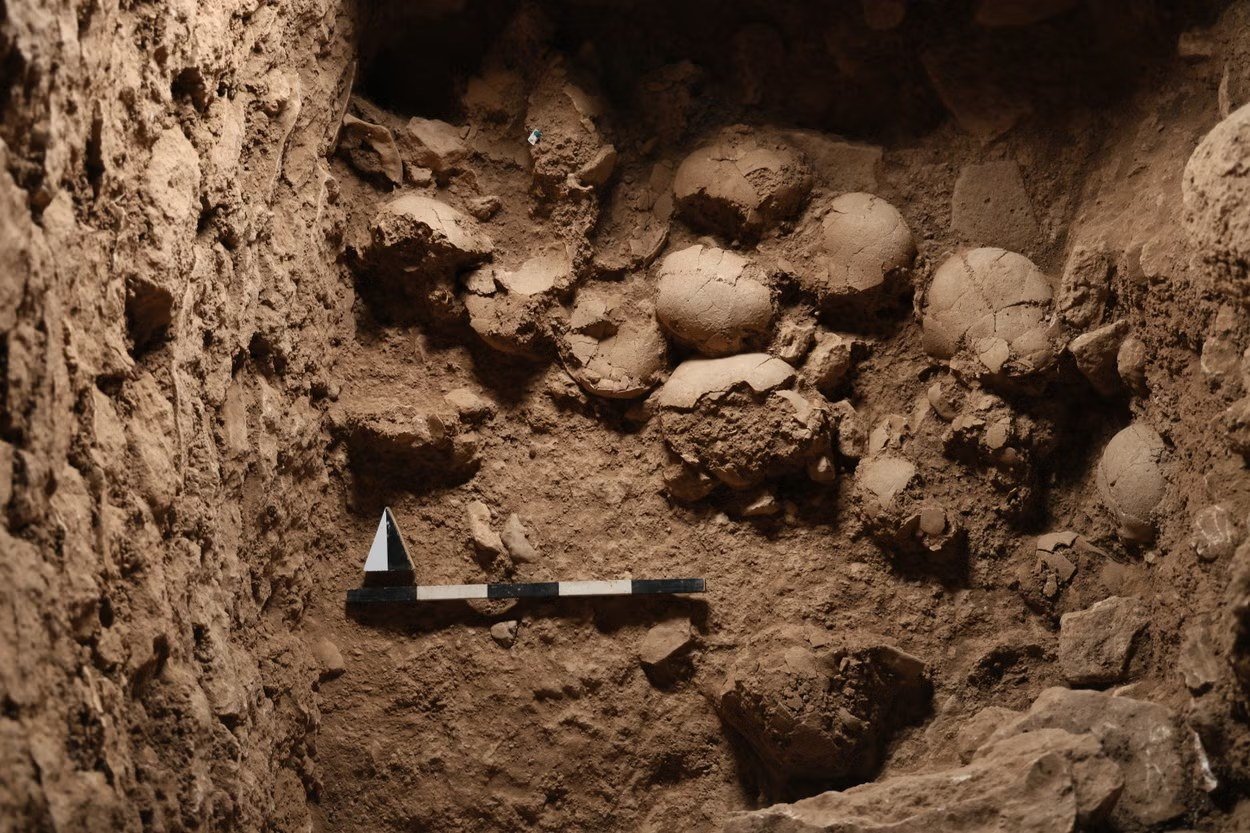
Sefertepe's best-known feature is a chamber the excavators call the skull room. In 2024 they documented 22 human skulls placed together inside it; most lacked their lower jaws, and no other bones were present — a pattern that points to deliberate selection rather than ordinary burial. Skulls had been separated from bodies, and in most cases jaws separated from skulls.

The counts have risen with each season, and different reports give different totals — which is what an accumulating excavation looks like rather than a contradiction. Güldoğan has described an earlier documented total of 31 skulls. In the 2025 season the team recovered a further 12: eight within the original chamber and four in a second chamber. The 2025 skulls were dated to around 10,500 years old. Anthropological study by Prof. Yılmaz Selim Erdal of Hacettepe University found individuals across a wide age range, from an infant of about six months to an adult of around forty — not a warrior group or a single age cohort.

The chamber was prepared for its purpose. Excavators reached the base of a special structure tied to the skulls and recorded that the bedrock had been deliberately levelled, with carefully cut holes worked into the rock surface.

Two burial rites, side by side

A few metres to the north of the skull room, the picture reverses. There, excavators found seven individuals whose skulls were still attached to their full skeletal remains — buried whole and left undisturbed. The same community, at the same site, treated its dead in two opposite ways: some bodies were taken apart and their heads curated together as a collective, while others were kept intact. That contrast rules out the easy explanations — this is neither a uniform cemetery nor a massacre — and leaves a genuine question: who was chosen for each rite, and why. On present evidence, no one can yet say.

Faces, a double-faced bead and pillars

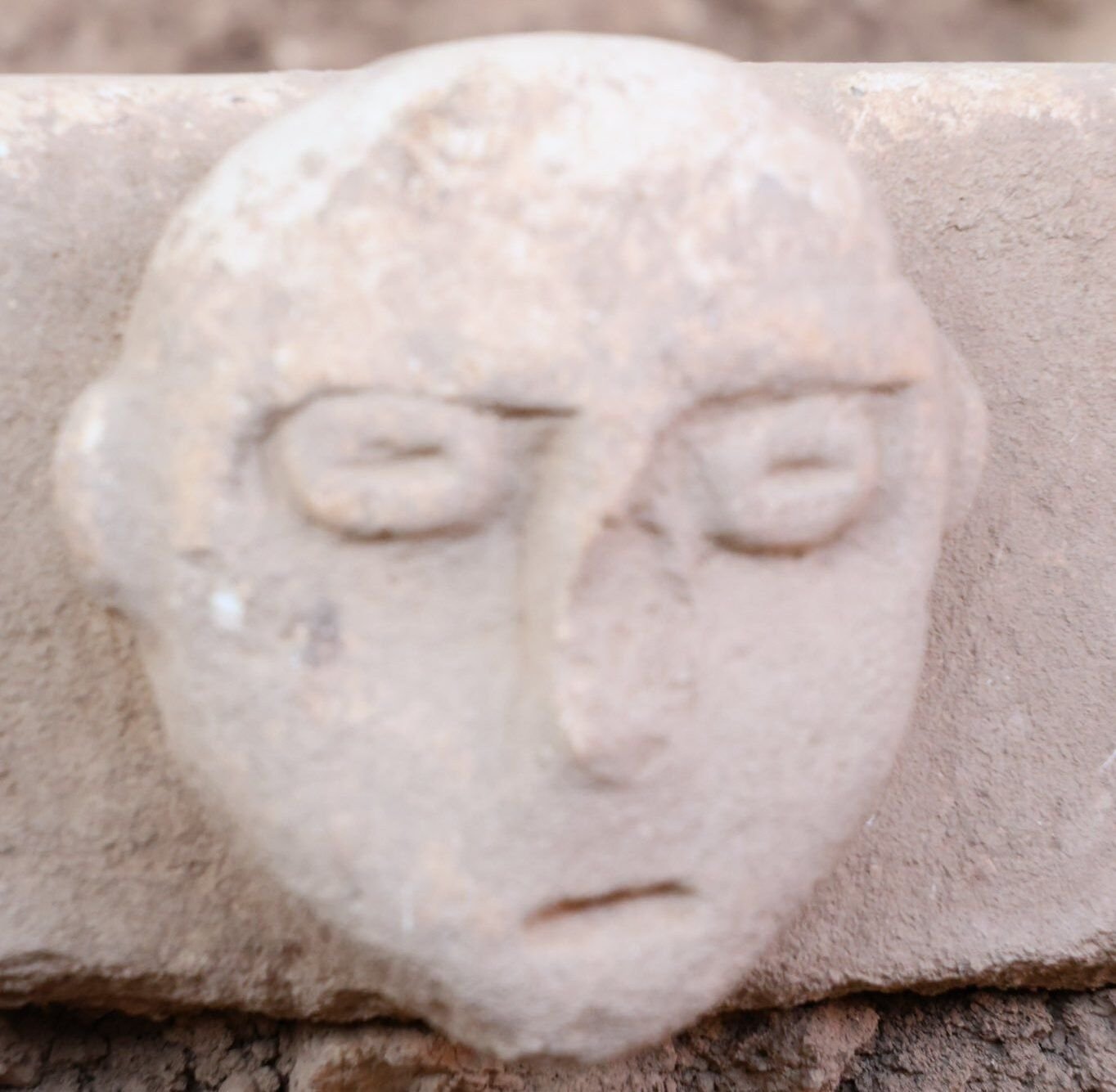
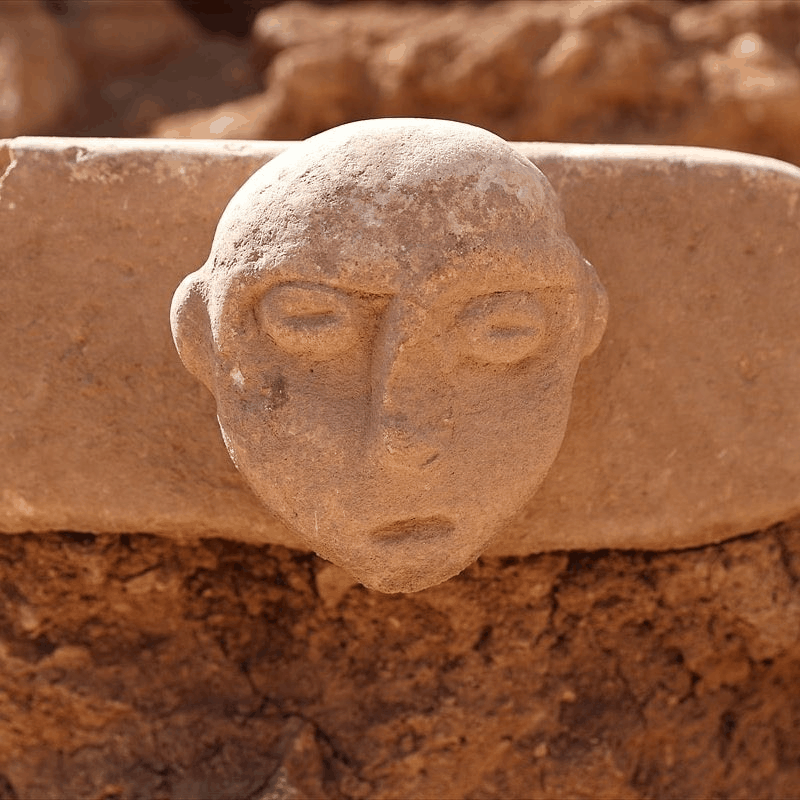
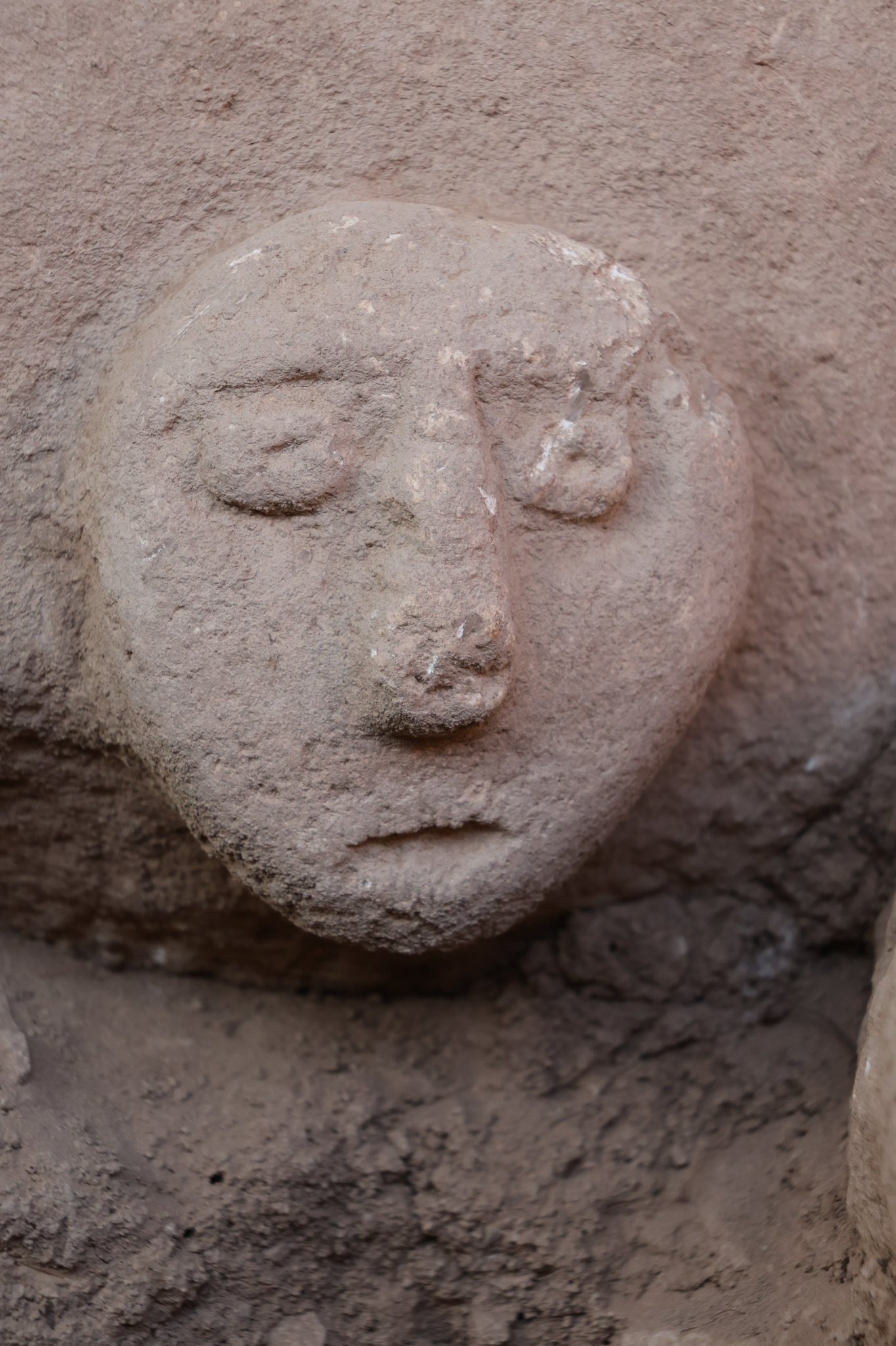
The 2025 season also produced two carved human faces on a single stone block set into a platform, with the two heads placed at its front corners. One face is worked in high relief, the other in low relief, and the excavators read the contrast as deliberate. They emphasise that the Sefertepe faces do not simply repeat the conventions of Göbekli Tepe, Karahan Tepe or Sayburç, and see them as evidence of a distinct local style — a working interpretation reported from the field.

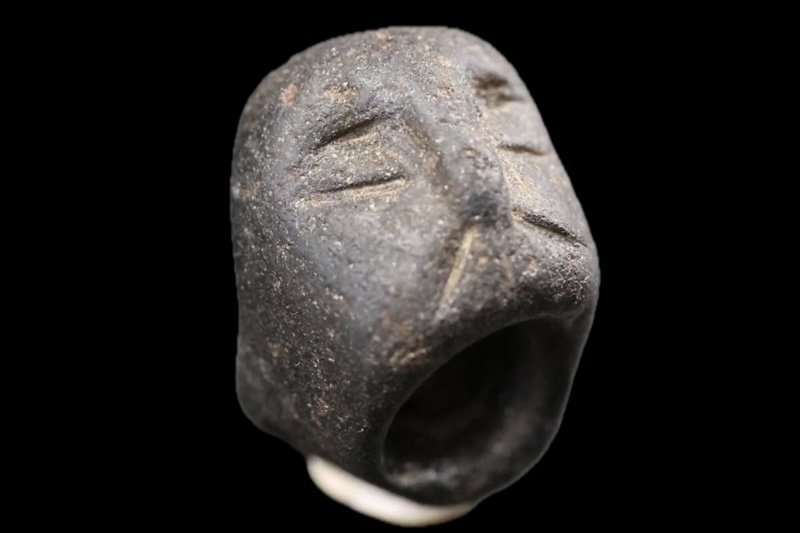
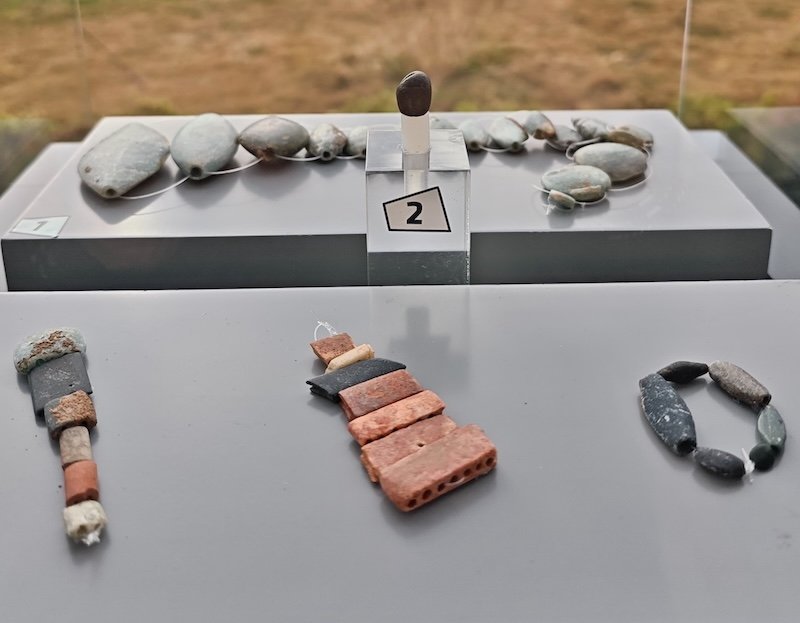
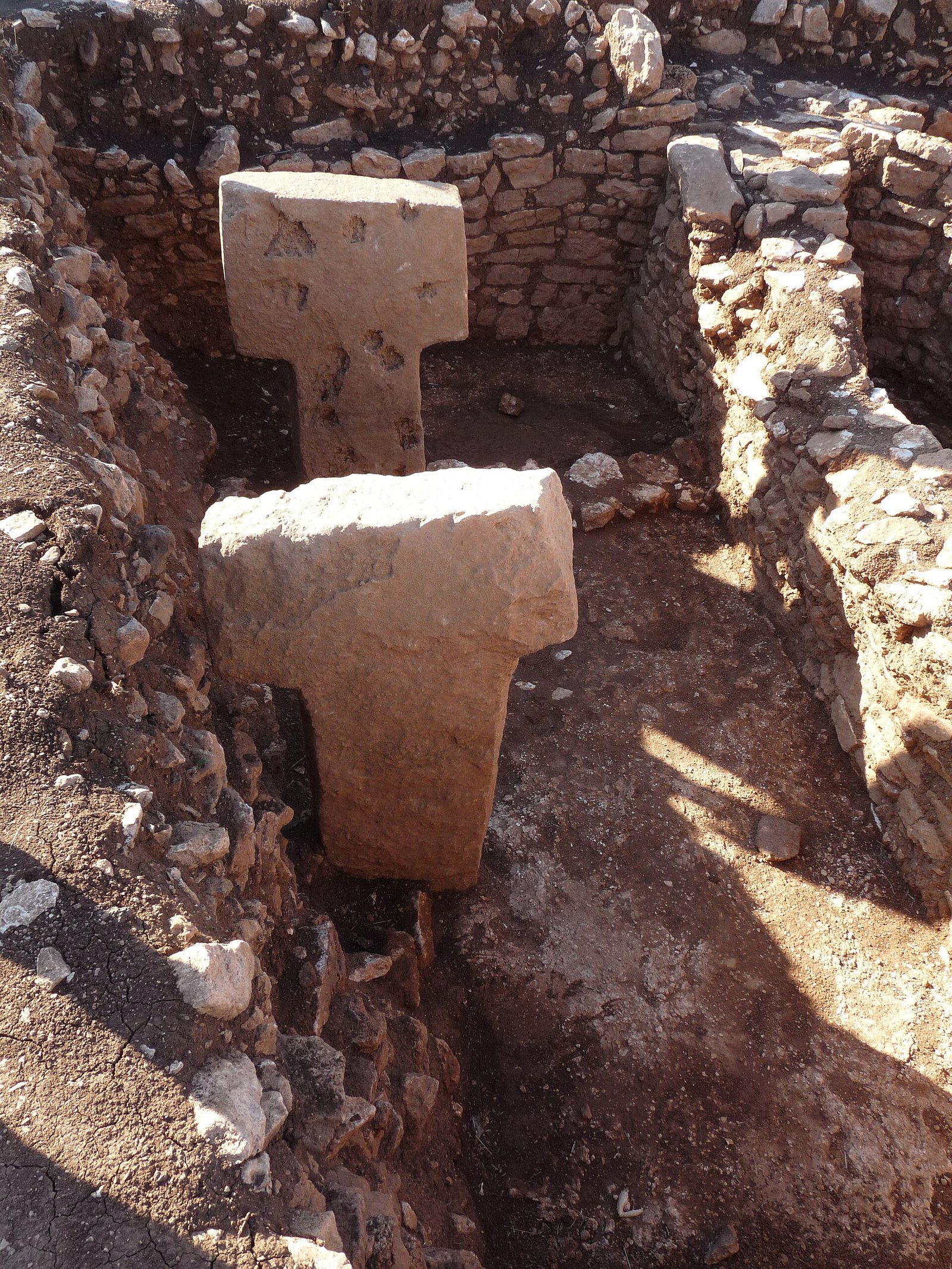
Beads are the most common find at Sefertepe, and the standout of 2025 is a tiny double-faced bead of black basalt, only a few centimetres across, carved with a human face on each side — micro-carving that is rare for the early Neolithic. Other beads are made from jade, labradorite and limestone, some shaped like snake heads. Because jade and labradorite are not local, the excavators read them as signs that Sefertepe was tied into wider exchange networks. Earlier reporting also records T-shaped and quadrangular pillars at the site, and restoration work in 2025 focused on reassembling broken standing stones found in earlier seasons.

Dating

The dates attached to Sefertepe are estimates drawn from press reporting rather than a published radiocarbon sequence, and they are not all the same figure. The settlement is placed in the Pre-Pottery Neolithic B; the carved faces and the bead have been reported as around 8,500 years old, while the skulls recovered in 2025 were dated to around 10,500 years. Coverage often rounds the site to roughly 10,000 years old. Until the excavation publishes its own stratigraphy and radiocarbon results, these numbers are best treated as approximate and provisional, and the internal phasing — how the pillars, the face platform and the skull chambers relate in time — remains open.

Why it matters, and what's still unknown

The deliberate treatment of the human head runs right through the early Neolithic Near East, but the evidence is usually scattered — a modified fragment here, a separated skull there. At Göbekli Tepe, Gresky and colleagues published skull fragments with cut marks and a drilled perforation in 2017, read as a skull cult. Sefertepe is different in kind: its skulls are concentrated in defined rooms, gathered as an arrangement that can be studied together, and set beside a contrasting rite of whole burial.

What is not yet settled is nearly everything that fuller study will decide: how the two skull chambers relate; whether the crania carry the cut marks or perforations seen at Göbekli Tepe; the full age and sex profile of the group; and the sequence of deposition. Sefertepe is an active excavation whose definitive account has not yet been written.

Sources & further reading8 references
  1. Çelik, B. (2006). Sefer Tepe: A New Pre-Pottery Neolithic Site in Southeastern Turkey. Neo-Lithics 1/06: 23–25.
  2. Güldoğan, E. (excavation director), reported via Taş Tepeler project coverage (2025). Sefertepe skull room: 2025 season — twelve further skulls across two chambers. Excavation reporting, Istanbul University / Taş Tepeler Project. Press coverage; awaiting full publication.
  3. Türkiye Today (from Anadolu Agency) (2025). Sefertepe excavations uncover 12 human skulls in Türkiye's Taş Tepeler Project. Türkiye Today, 13 September 2025. Field reporting; awaiting full publication. link
  4. Erdoğan, K. (2025). 8,500-year-old carved faces, tiny double-faced bead reshape Sefertepe's role in Taş Tepeler. Türkiye Today, 28 November 2025. Field reporting; awaiting full publication. link
  5. Altuntaş, L. (2025). An 8,500-year-old micro-carved bead and a 10,000-year-old skull room reveal Sefertepe's symbolic world. Arkeonews, 30 November 2025. link
  6. Onsite notes from archaeologists working at Sefertepe (2024). Field observations recorded at the site, end of August 2024. Unpublished field notes held by Taş Tepeler (tastepeler.net). First-hand site notes, not a peer-reviewed publication. Figures may be superseded by the excavation's own reporting.
  7. Gresky, J., Haelm, J. & Clare, L. (2017). Modified human crania from Göbekli Tepe provide evidence for a new form of Neolithic skull cult. Science Advances 3(6): e1700564. doi:10.1126/sciadv.1700564
  8. Çelik, B.. Differences and similarities between the settlements in Şanlıurfa region where 'T' shaped pillars are discovered. Comparative survey of the Şanlıurfa T-pillar sites. Consulted via open repository copy; full bibliographic details not verified.

Full bibliography: the Taş Tepeler reference library →

See it for yourself

We run small-group and private tours across the Taş Tepeler landscape.

Plan a visit →

Last reviewed 17 August 2026. Something wrong?