Taş Tepeler

Sefertepe · Mortuary evidence

Northern burials — skulls with skeletal remains

A few metres north of Sefertepe's skull room, excavators report seven individuals whose skulls were still attached to their skeletons — a whole-body burial rite that stands in deliberate contrast to the curated, disarticulated skulls next door.

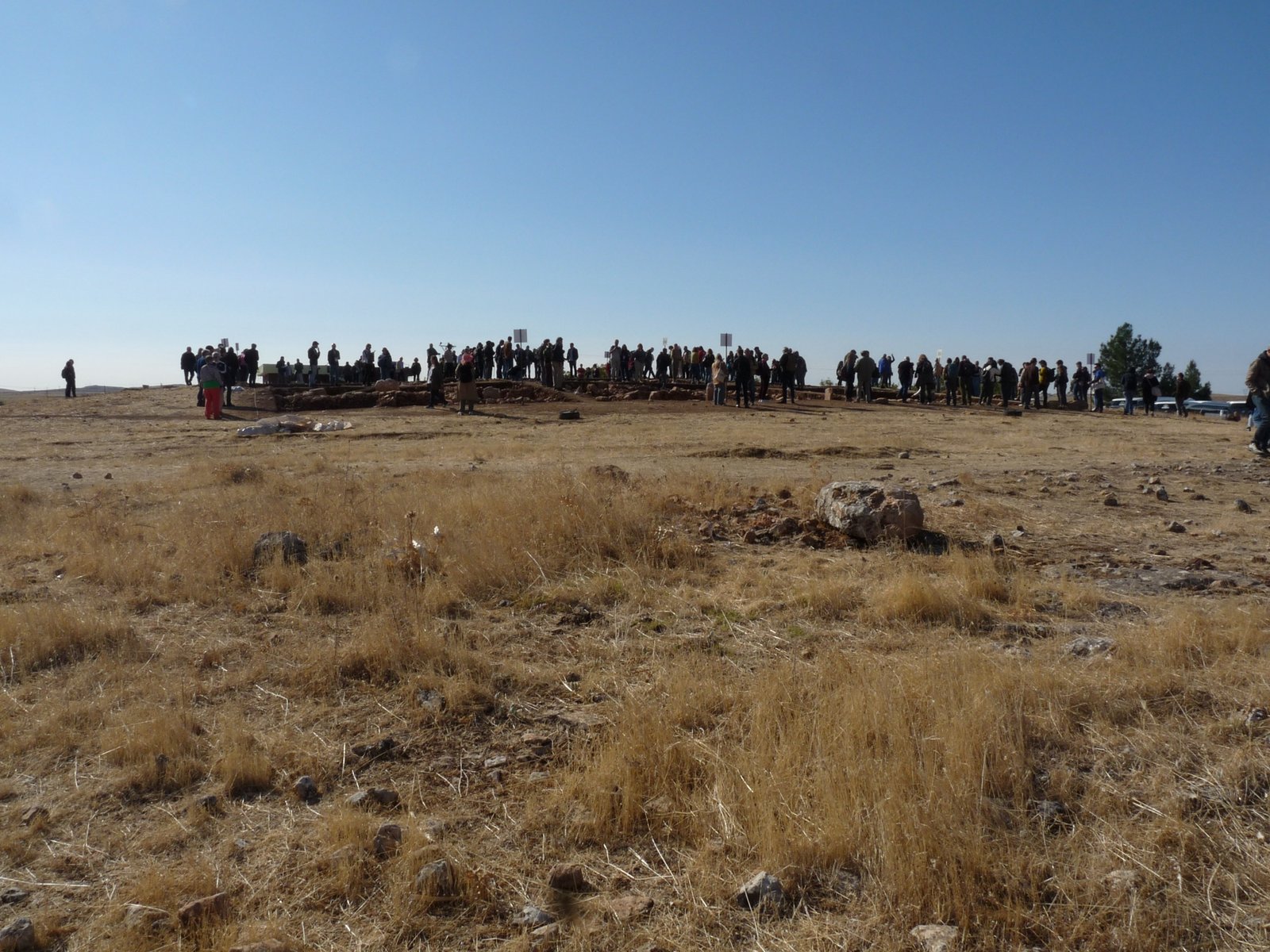
The mound of Sefer Tepe on the Viranşehir plain. (Site view; not a photograph of this find.)
The mound of Sefer Tepe on the Viranşehir plain. (Site view; not a photograph of this find.) Wikimedia Commons

Frantisek Trampota, Sefer Tepe, Public domain, via Wikimedia Commons.

01

Quick facts

Location
a context a few metres north of the skull room
Deposit
seven individuals whose skulls remained attached to their skeletal remains
Rite
whole-body burial, left undisturbed — the opposite of the curated skulls next door
Reported by
the 2025 season, via the excavation's carved-faces / bead reporting
Status
field-reported; exact room, cell or locus not yet precise
Open
whether this is the same as the 'nearby cell' in the 2025 twelve-skull reporting

02

What is reported

In the 2025 season the Sefertepe team reported a context a few metres to the north of the skull room containing seven individuals whose skulls remained attached to their skeletal remains — bodies buried whole and left undisturbed. This is reported field material announced at the project's fifth-anniversary briefing, not yet a peer-reviewed report, and reporting of the exact room, cell or locus is imprecise.

03

Two rites, one community

The contrast is the point. In the nearby skull room, crania were separated from bodies and gathered together — most lacking their lower jaws, with no other bones present — a pattern that points to deliberate selection. A short distance north, the same community buried its dead intact. One site, at the same broad time, treated its dead in two opposite ways.

That contrast rules out the easy explanations — this is neither a uniform cemetery nor the aftermath of a massacre — and leaves a genuine open question: who was chosen for each rite, and why. On present evidence no one can yet say. It is also not yet settled how the northern burials relate stratigraphically to the skull chambers, or whether any of these crania carry the cut marks or perforations reported for the Göbekli Tepe skull material.
04

What was it for?

Two rites, deliberately kept apart

The most defensible reading is simply the contrast itself: the same community, at broadly the same time, both curated selected skulls collectively and buried other people whole. Who was chosen for which rite, and why, is a genuine open question rather than something this evidence can settle.

Not one deposit merged with another

It is not yet clear whether this northern context is identical to the 'nearby cell' that produced four skulls in the 2025 reporting. Until the excavation publishes plans, the whole-body burials are kept separate from the skull-only counts rather than folded together.

05

Sources

Sources & further reading5 references
  1. Erdoğan, K. (2025). 8,500-year-old carved faces, tiny double-faced bead reshape Sefertepe's role in Taş Tepeler. Türkiye Today, 28 November 2025. Field reporting; awaiting full publication. link
  2. Güldoğan, E. (excavation director), reported via Taş Tepeler project coverage (2025). Sefertepe skull room: 2025 season — twelve further skulls across two chambers. Excavation reporting, Istanbul University / Taş Tepeler Project. Press coverage; awaiting full publication.
  3. Türkiye Today (from Anadolu Agency) (2025). Sefertepe excavations uncover 12 human skulls in Türkiye's Taş Tepeler Project. Türkiye Today, 13 September 2025. Field reporting; awaiting full publication. link
  4. Altuntaş, L. (2025). At Sefertepe, tiny carvings and a 10,000-year-old skull room reveal an unexpected symbolic world. Anatolian Archaeology, 1 December 2025. Field reporting; awaiting full publication. link
  5. Çelik, B. (2006). Sefer Tepe: A New Pre-Pottery Neolithic Site in Southeastern Turkey. Neo-Lithics 1/06: 23–25.

Full bibliography: the Taş Tepeler reference library →

Explore Sefertepe

Last reviewed 7 October 2026. Something wrong?