On the map — jump straight to any spot:
Tek Tek Mountains · Şanlıurfa, Türkiye
Göbekli Tepe's sister sanctuary — not built up, but carved down into living rock, where a human head watches over a chamber of pillars.
On the map — jump straight to any spot:
The evidence
Karahan Tepe in depth
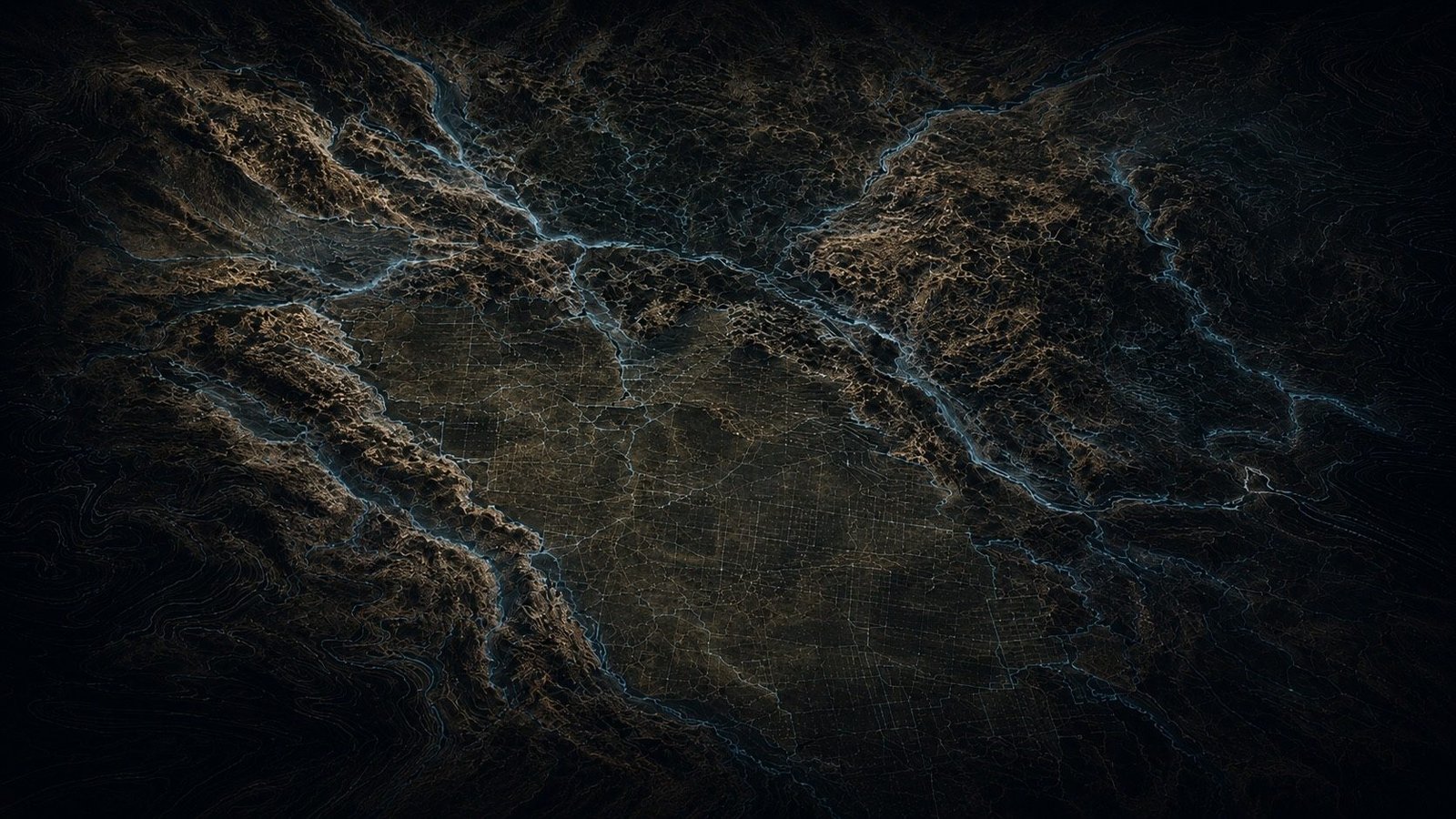
Karahan Tepe lies about 35 kilometres east of Göbekli Tepe, in the Tektek mountains of Şanlıurfa province. It was spotted in a survey in 1997, but its true importance only emerged when large-scale excavation began in 2019 under Necmi Karul of Istanbul University — the site that has become the anchor of the whole Taş Tepeler project.
That timing shapes everything. Where Göbekli Tepe was dug across earlier decades, Karahan Tepe is being uncovered now, with modern recording, radiocarbon dating and conservation. It is why its discoveries arrive so well-documented — and why, almost every season, one of them makes headlines around the world. Roughly its imagery and architecture place it in the Pre-Pottery Neolithic, the same broad horizon as Göbekli Tepe, on the order of 11,000 years old.
Karahan's signature is subtractive architecture. Rather than only building up from the ground, its makers carved rooms, pillars and channels down into the bedrock itself — a method that allows no second chances, since every element had to be planned before the first cut was made. Whole halls were hollowed out of the hill, and their pillars were left standing from the floor as the surrounding rock was cut away around them, not quarried and dragged in as at Göbekli Tepe.
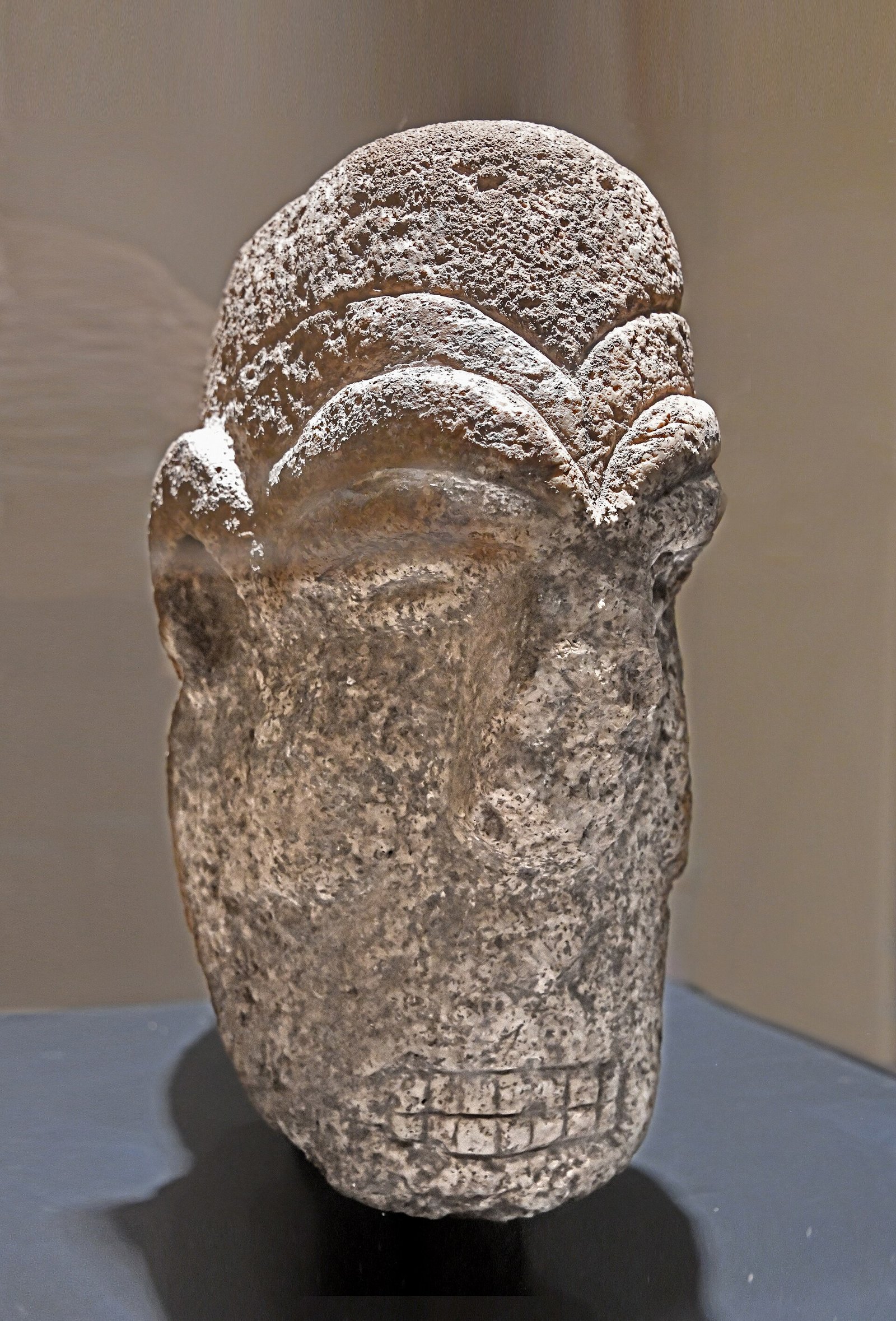
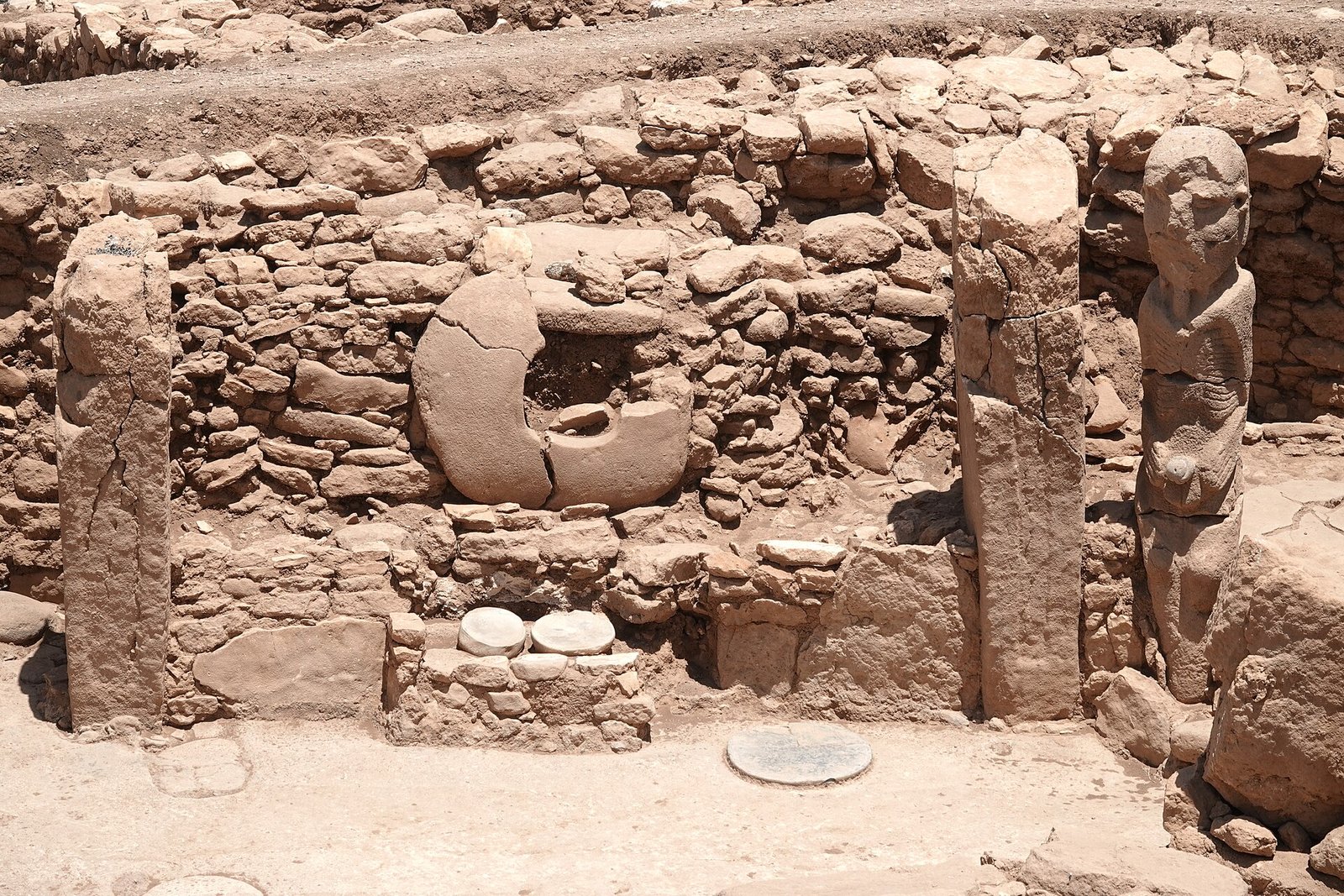
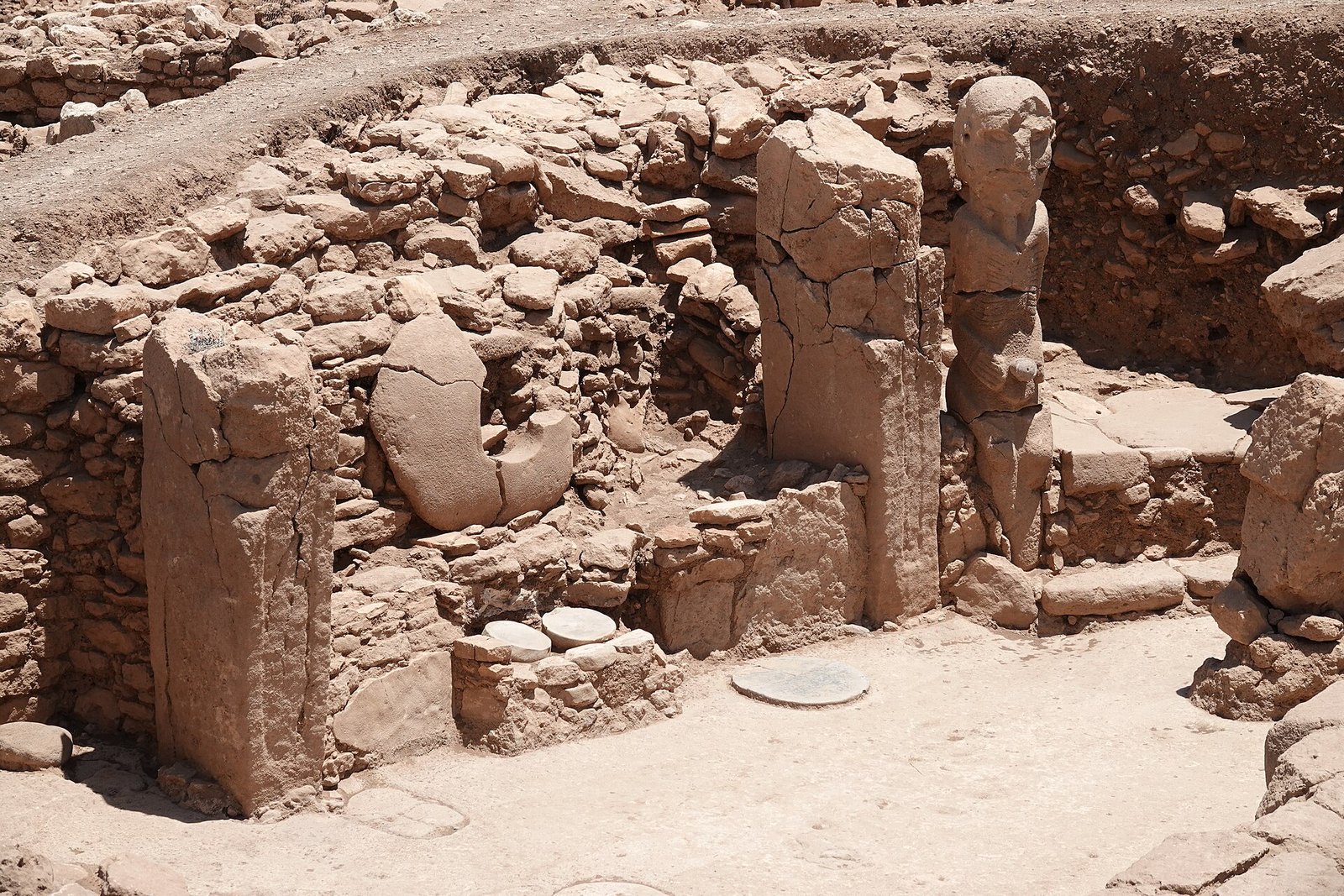
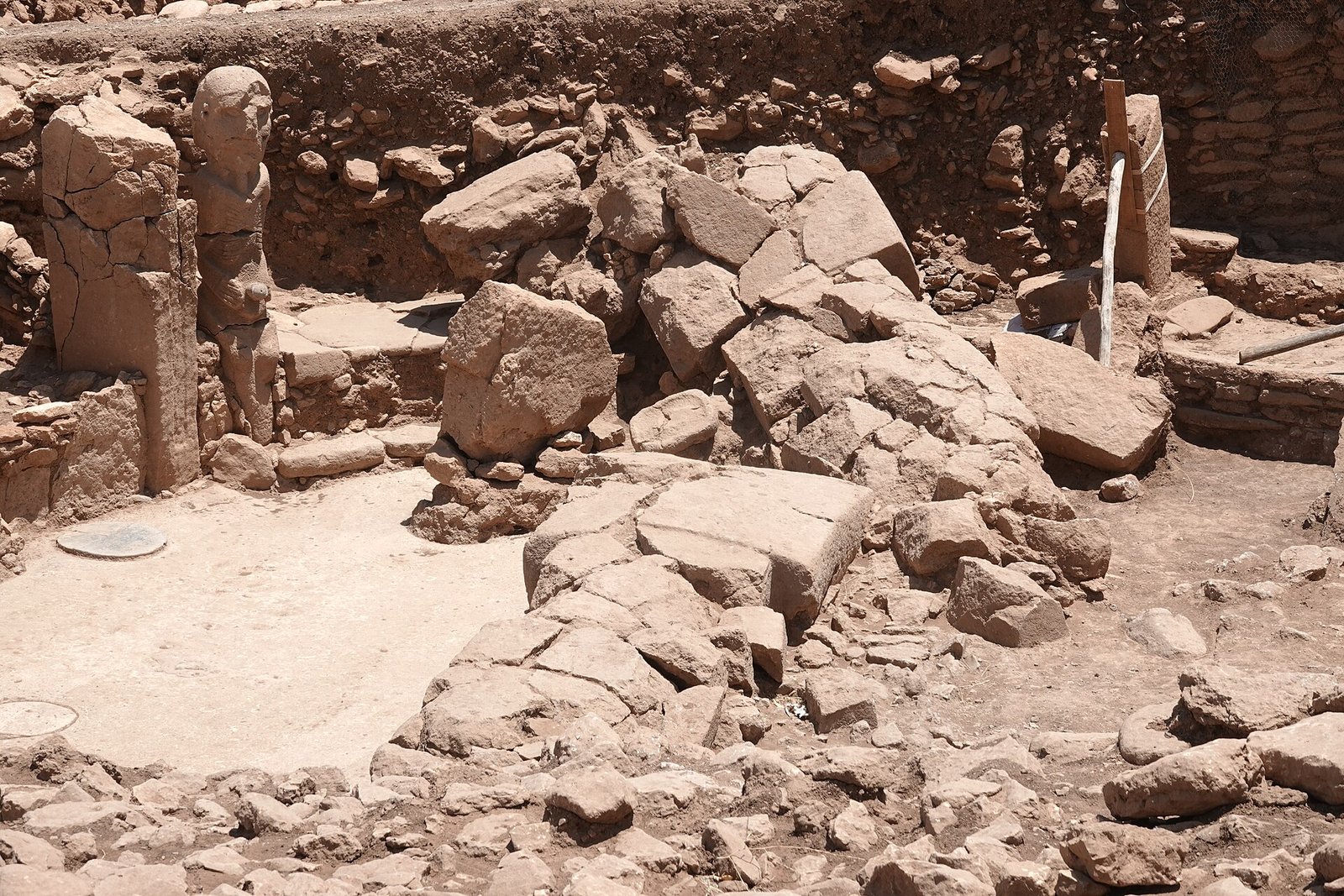
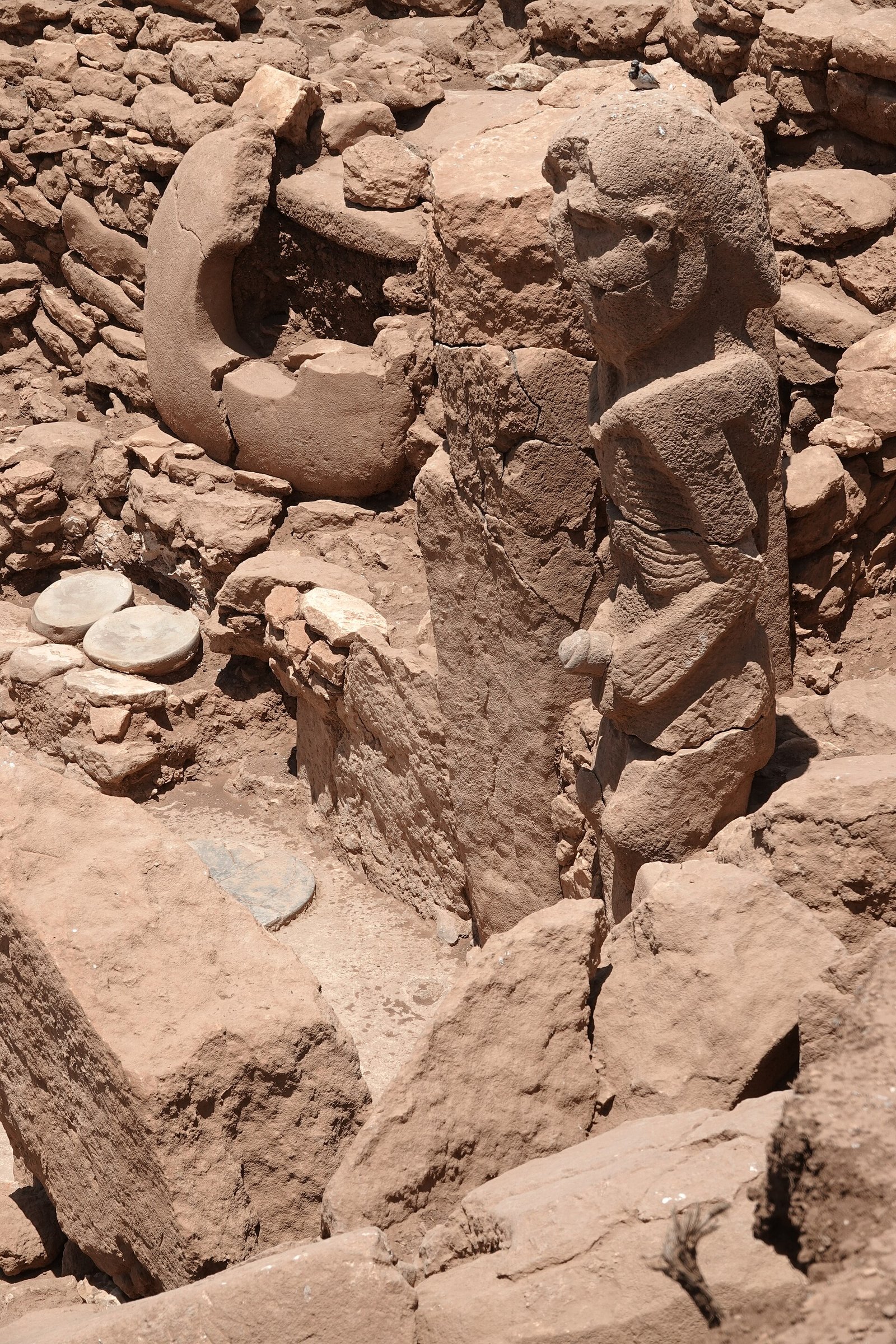
The most famous space is a sunken rock-cut chamber where a human head emerges from the wall of living rock, leaning out into the room and turned toward the entrance, so that anyone descending is met by its gaze. Around it stand tall phallus-shaped pillars. The effect is sculptural and theatrical in a way that sets Karahan apart even from its sister site — you do not look at this architecture so much as walk down into it.
Karul's 2025 excavation report — the fullest account of the site yet — sets out how little of Karahan has actually been dug: only about 10% of the surface, roughly 5,000 m² on the western slope, even though the whole site spans some 15 hectares. Survey has divided the mound into five sections: the excavated western slope (its highest part); an eastern slope where geomagnetic survey suggests more circular monumental buildings and T-pillars still buried; a flat 'southern plain' of domestic debris; the limestone quarries on the northern and western cliffs, where a half-finished T-pillar about 5.8 m long still lies in its bed, showing how the stones were cut free in one piece; and, about 100 m north, a field of 27 rock-cut cisterns linked by channels — a Neolithic water system on a scale matched only at the region's other great settlements.
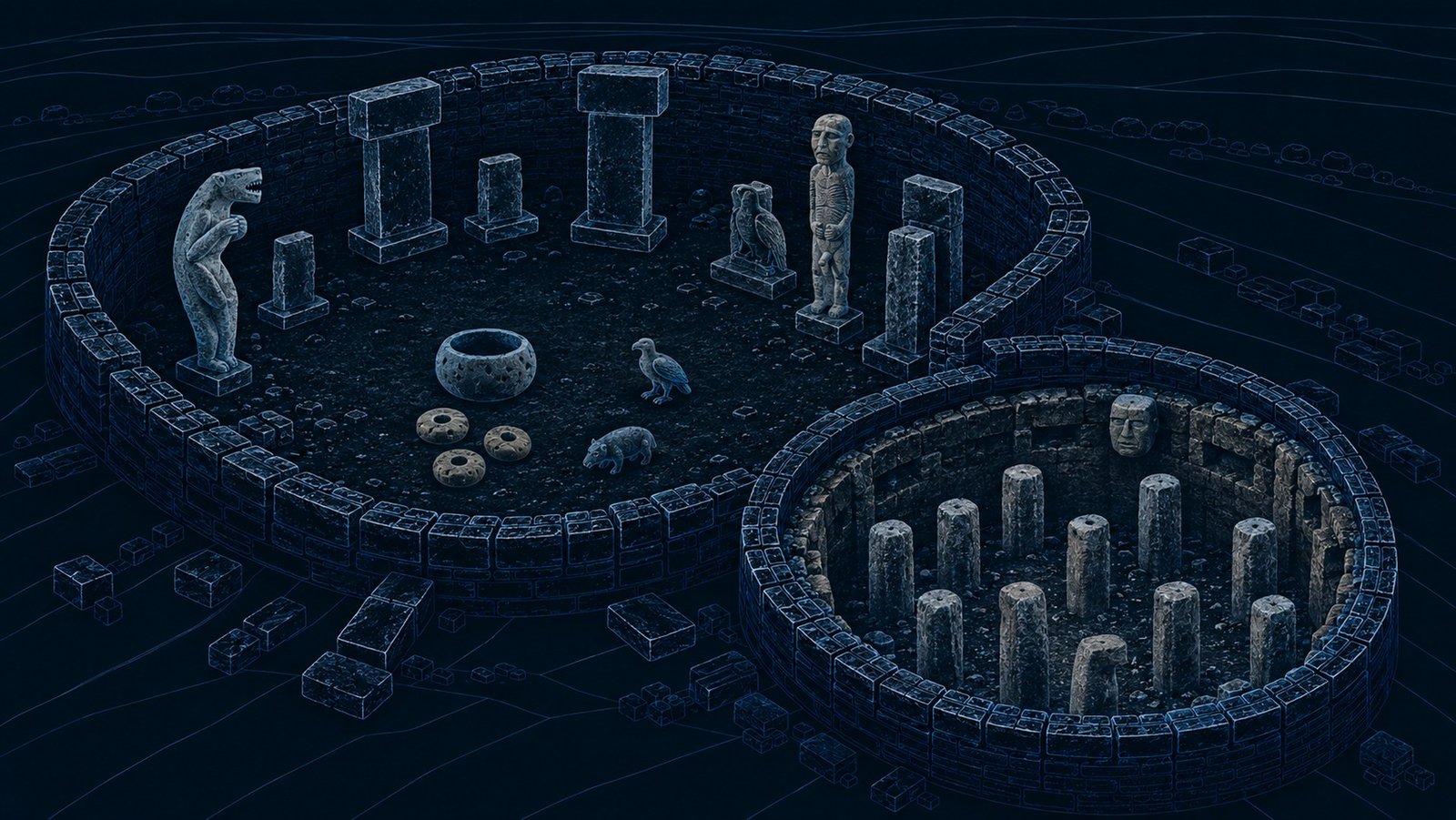
On the western slope the architecture runs through three phases. First a complex of round-plan communal buildings (among them the central AD, the pillar chamber AB, and BF) ringed by honeycomb-packed dwellings — ordinary houses with their own paired pillars, grinding stones, and in one case a wild-ass figure carved into a floor slab. Then a transition to quadrilateral buildings with rounded corners (AH, AE), each with four symmetrical T-pillars and, in one, a fully preserved collapsed roof of wood, reeds and clay. Finally the quadrangular phase at the summit, centred on building BD. Radiocarbon and material evidence put the occupation from the mid-10th to the early 8th millennium BCE — Karahan was a genuine, long-lived settlement, not only a sanctuary.
That theatrical quality is clearest in Structure AB, the celebrated pillar chamber. It was not simply a room but a designed experience: you enter through a narrow passage, pass the watching head, and move between the standing pillars in a deliberate sequence. A carved channel snakes through the bedrock, linking AB to a neighbouring chamber and hinting at a controlled movement of people — or of water — through the complex, a ritual choreography still being studied.
The channel is part of a wider pattern at Karahan of cut basins, platforms and water-management features, some with traces of burning nearby — evidence that these rock-cut spaces were stages for events, not just storage or shelter.
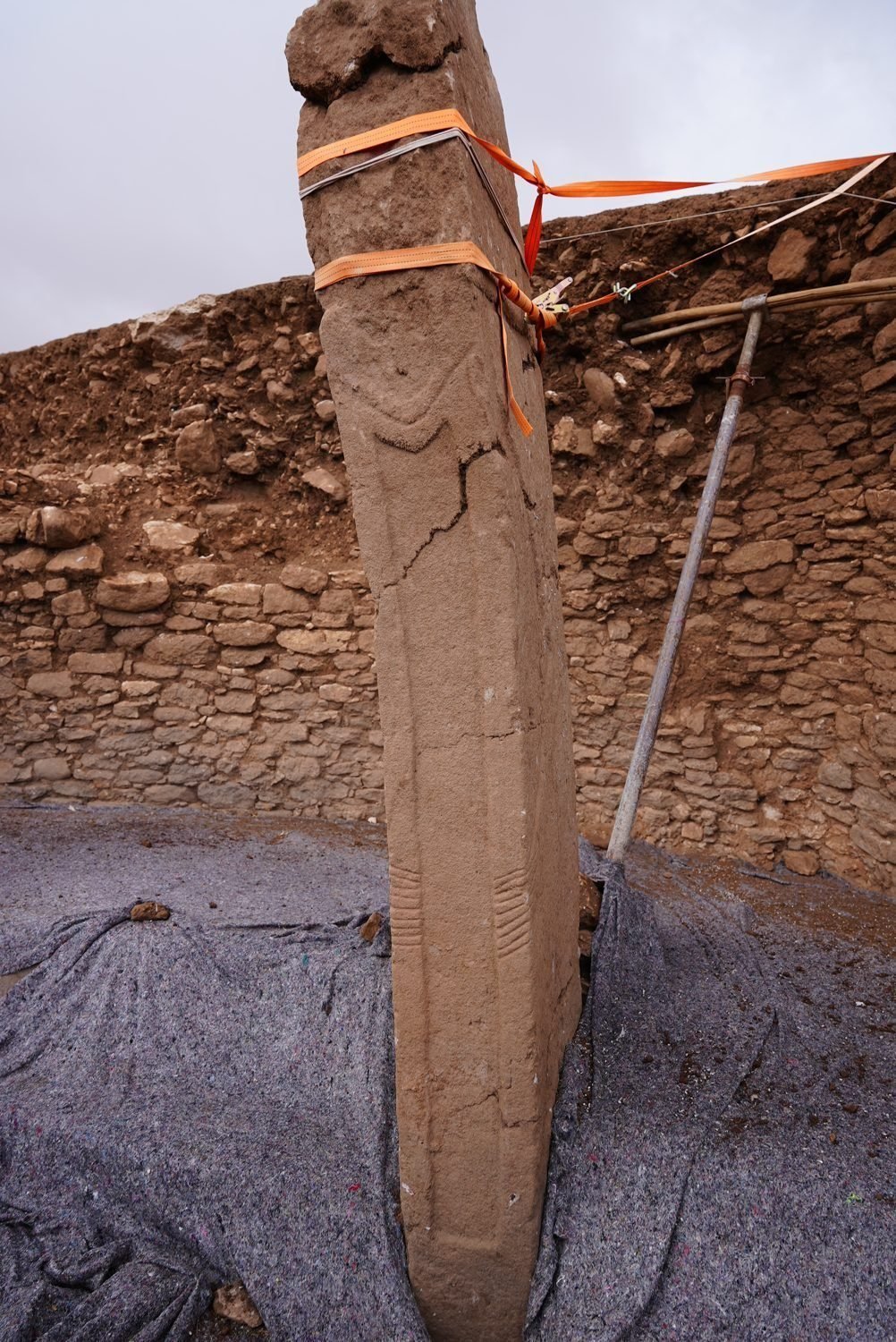
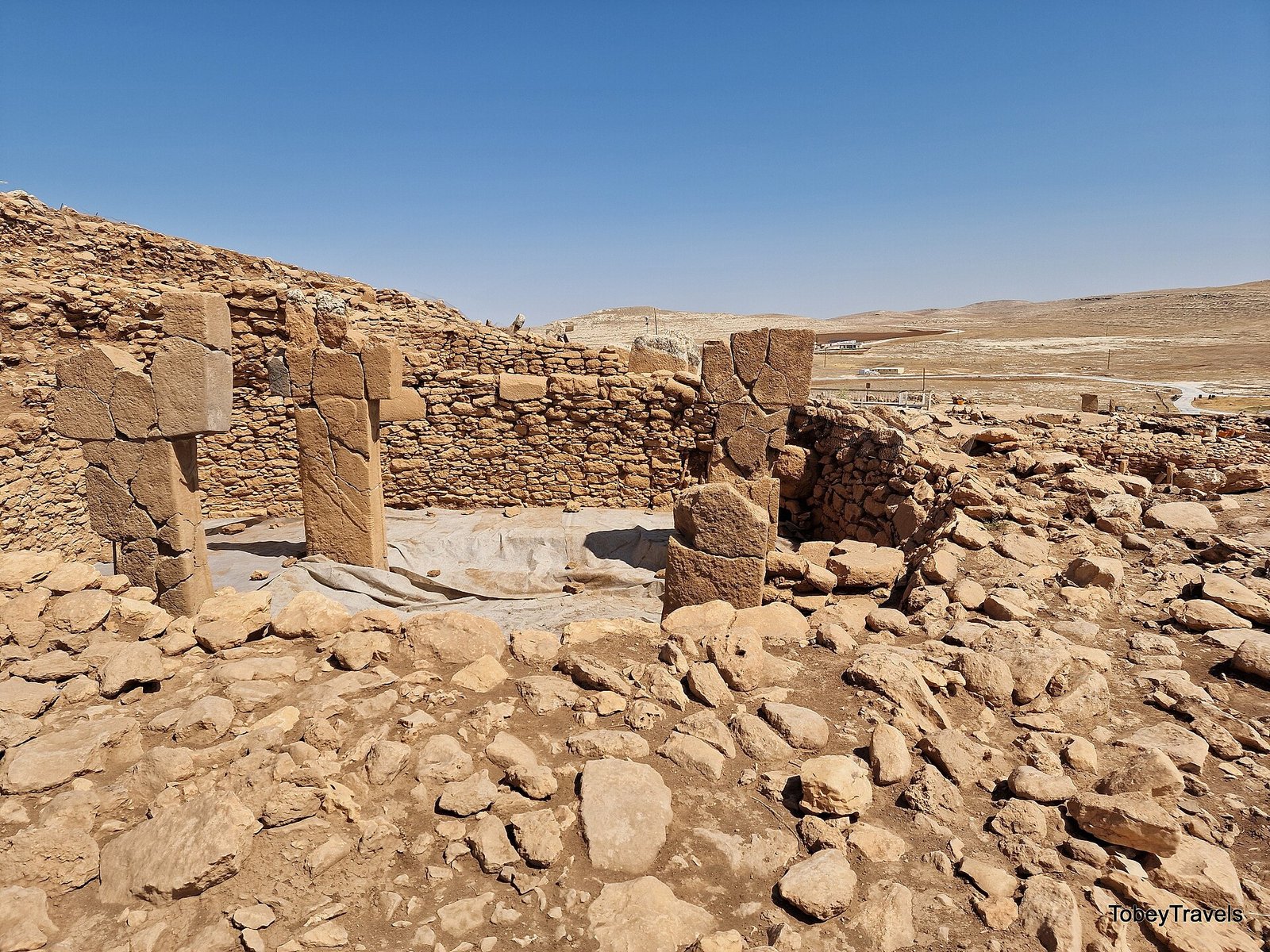
Karahan is a place of pillared halls. Structure BD, on the western terrace, is a pillared hall: two tall T-pillars stood facing each other at its centre (Karul 2025), with more set along its walls — a plan that echoes the great enclosures of Göbekli Tepe. Structure AA, sometimes called the 'Snake Bench Room', is a smaller sunken room about 8.5 by 7 metres, ringed by a bench with steps and small pits and carrying animal imagery including snakes — a room Karul's 2025 report found still unfinished, caught mid-carving.
These special buildings sit among many others — the excavation has now exposed a dense field of structures (AA, AB, AC, AD, AO, AZ, BD, BF, BH and more), each adding to a picture of a settlement built for gathering, performance and ritual on a remarkable scale.
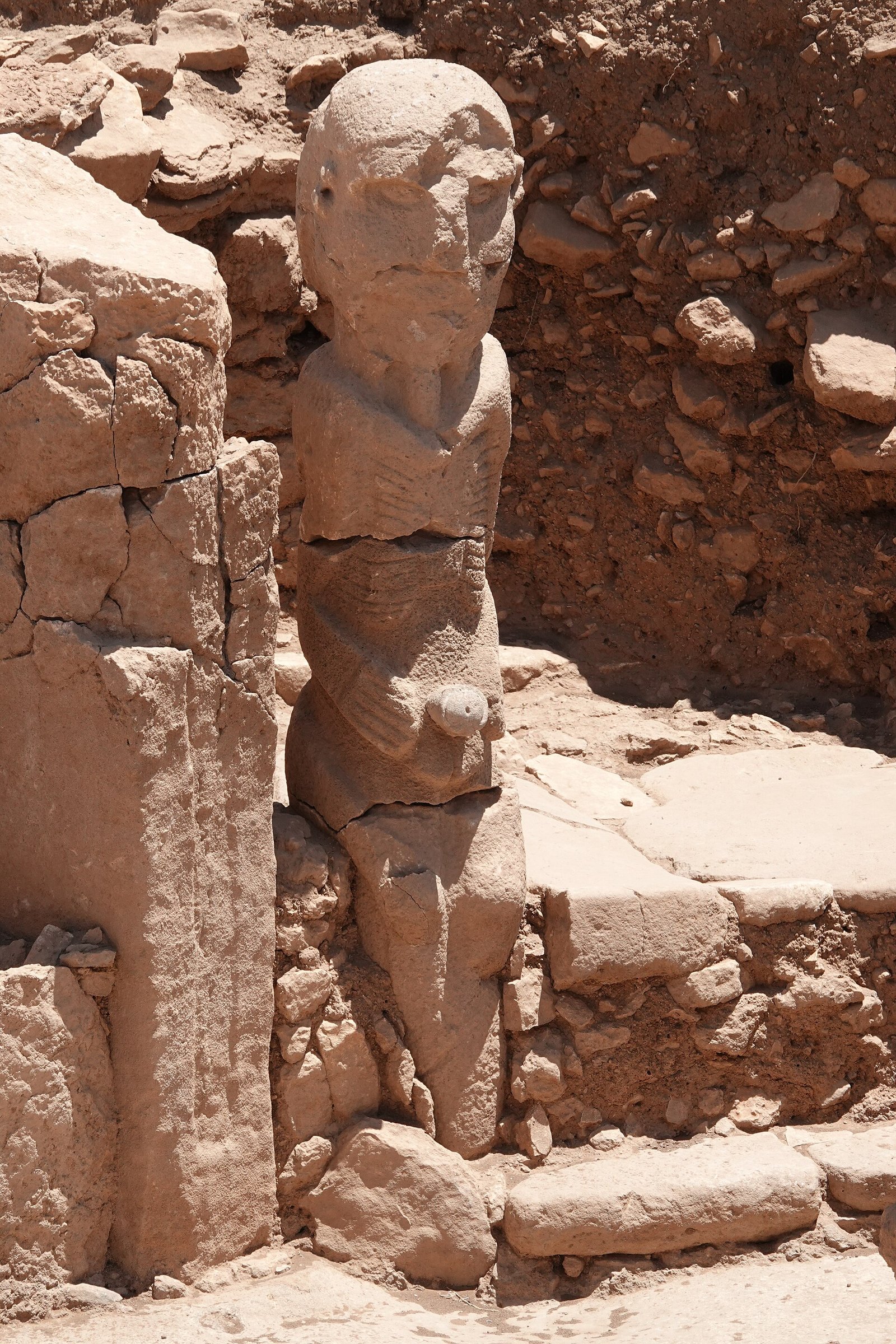
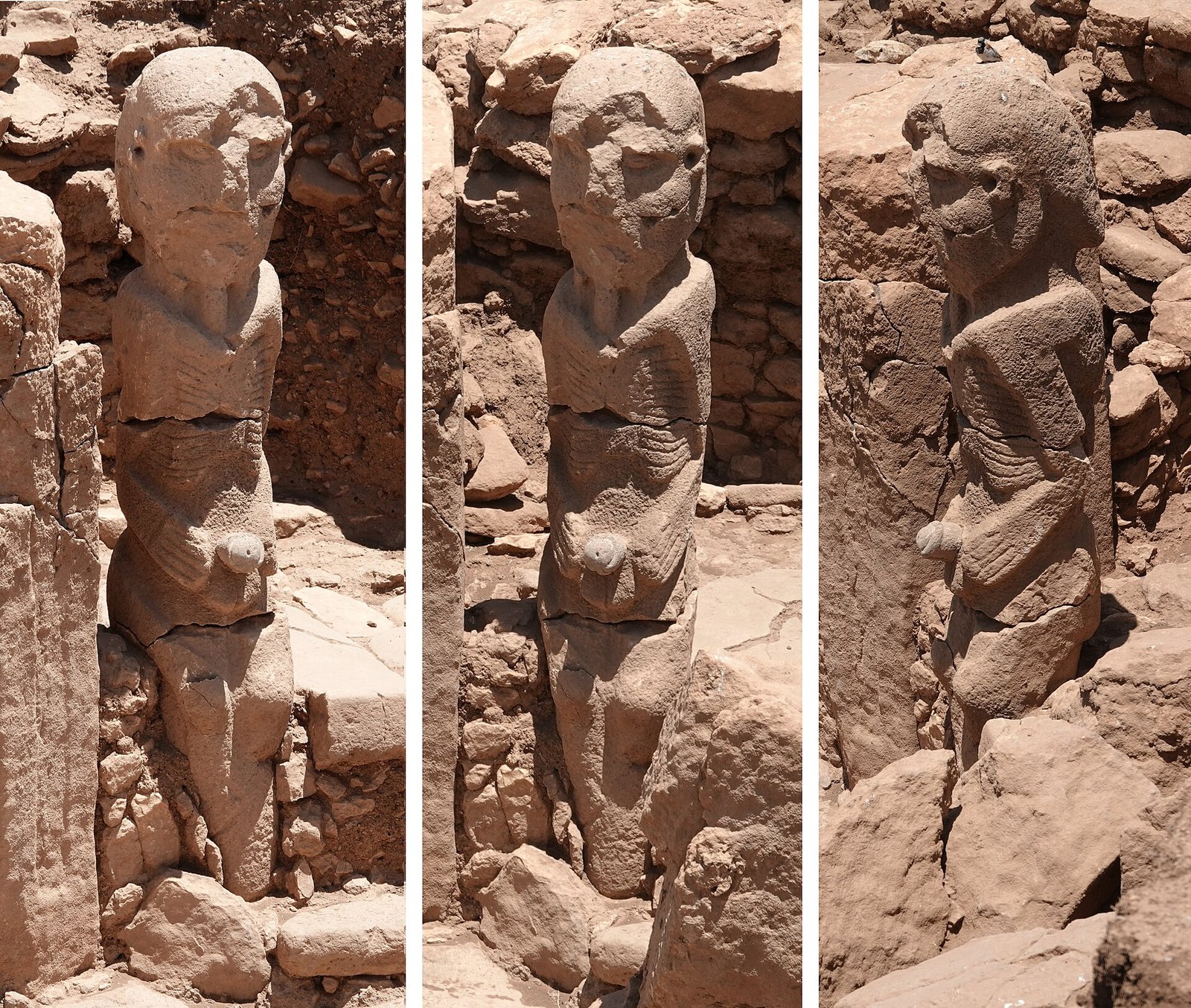
Karahan has produced some of the most extraordinary Neolithic sculpture ever found — above all the 'Ribbed Man', recovered from Structure BD and announced in 2023. It is a gaunt, life-size seated male figure about 2.45 metres tall (Karul's 2025 report; earlier accounts said ~2.3 m), carved from a single limestone block, with a bald head, a realistic face, the ribs and spine cut in deep lines, and the hands brought to the front of the body near an explicit phallus. Fixed into the ground and staring out, it is one of the most complete human figures in the entire Neolithic record.
The human face recurs everywhere else, too: a T-pillar in Structure AZ carries a human face carved directly onto it — reported as the first time a face has been worked onto one of the region's signature T-pillars — alongside a reported basalt human sculpture and the carved head of Structure AB.
The animals of Karahan are as striking as its people. The most talked-about arrival, announced in 2026, is a roughly 70-centimetre statue of a human seated on the back of a leopard — a composition the excavators call without known parallel, and one that reverses an earlier Karahan sculpture of a human carrying a leopard. Elsewhere the site has yielded a griffon vulture sculpture, a floor slab carved with a running wild donkey in Structure AO, the snakes of the Snake Bench Room, and a miniature nested composition whose fox, wild boar and vulture are each only about 3.5 centimetres across.
Read together, leopard, vulture, snake and wild donkey place Karahan firmly in the region's world of dangerous and liminal animals — the creatures these communities carved obsessively, and rarely ate.
Karul's 2025 report catalogues the finds as a single body of work, and the range is staggering. Human sculpture runs from the 2.45 m seated man down to heads barely 5 cm across; one unique statue carries two distinct human heads on a single body. A recurring type is the composite sculpture — a human figure with an animal, usually a leopard, draped over its back or shoulders — and the same instinct turns up in relief, where an arm on a pillar in building AH ends not in a hand but in a vulture's head. Many figures are shown gripping their own phallus, a gesture also known from nearby Yenimahalle and Sayburç, so Karahan's imagery belongs to a shared regional language rather than a local quirk.
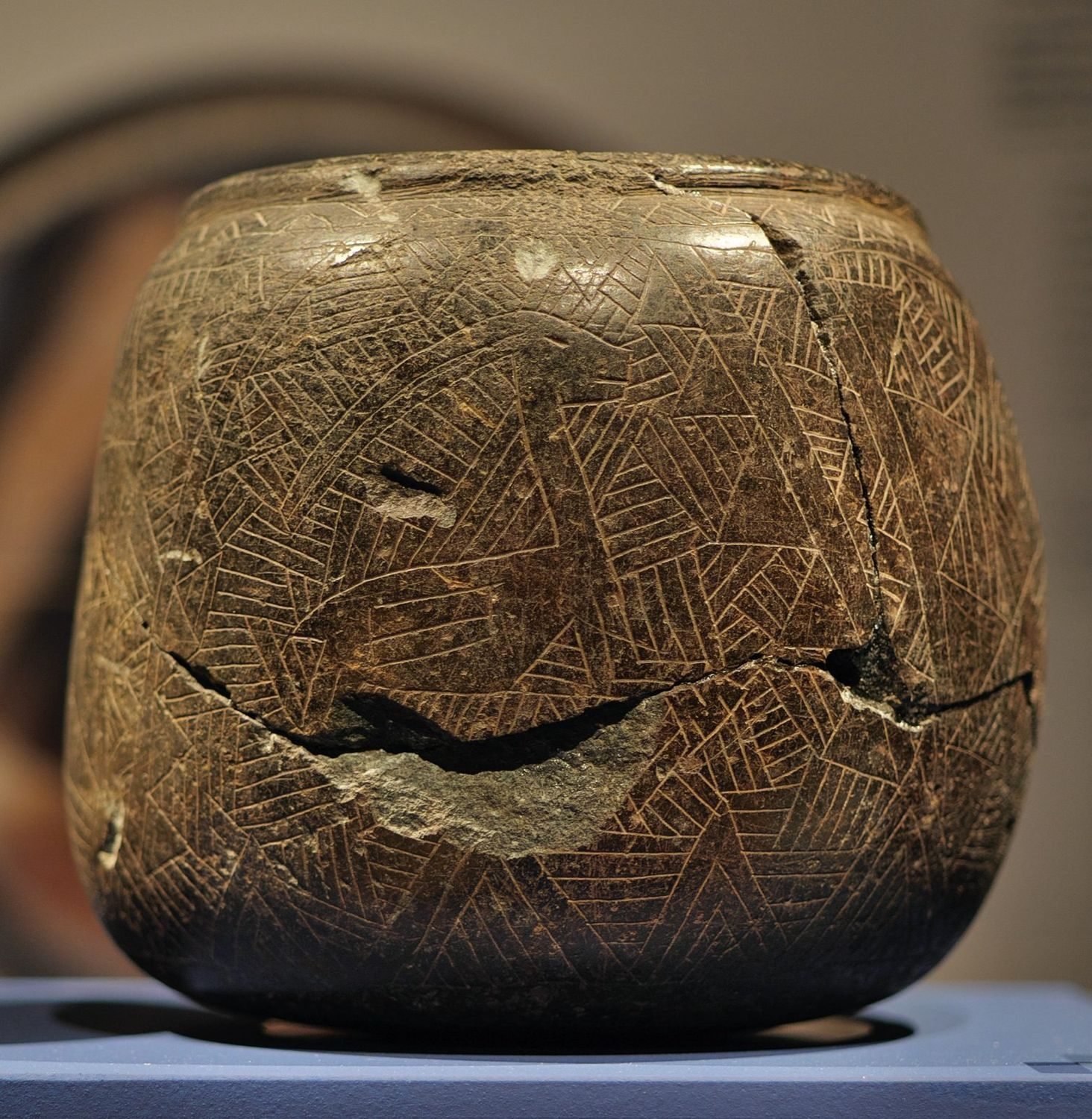
The smaller finds are just as deliberate. Dozens of chlorite vessels are incised all over with snakes, spiders, gazelles, deer and wild sheep — the triangular panels often divided by snake motifs — and their style is so close to work from the Tigris basin that Karul raises the possibility some were imported. There are animal-headed stone batons (25–45 cm), grooved stones carrying a snake motif, beads worked from many different stones, and even a small human figurine carved from the bone of a wild ass. Pottery appears too — miniature vessels of fired clay or stone — but since Karahan predates everyday pottery, these are read as symbolic objects, not kitchenware. Which specific creatures meant what is interpretation; that this was a community fluent in a dense visual vocabulary is not in doubt.
For all its monuments, Karahan was also a place people lived. Beneath and around the special buildings lies a dense settlement of ordinary houses, packed around the special buildings like a honeycomb, each with its own paired pillars; study of the plant and animal remains — reported in the project's companion studies — points to a diet of wild game and gathered plants, wild cereals and pulses among them. The sacred and the everyday, here as at Sayburç, share the same ground.
One building even reads like a small amphitheatre — a round hall with tiered stone benches rising around it and carved faces looking on, built with real thought for how people would sit and watch together. In the 2025 season the team reported a further communal building with carved benches, plastered wall sections and a central stone installation of likely ritual purpose.
Run the finds together and a theme emerges. Between the phallic pillars, the overwhelmingly male imagery, the watching head and the gaunt, staring Ribbed Man, Karahan is saturated with the symbolism of the body — fertility, potency and death. That, with its rock-cut theatricality, makes it the great Neolithic place of the human figure and the human face: a site less about a distant sky than about the people who made it, and what became of them.
The most quietly radical idea in the 2025 report is about how Karahan's buildings ended. Again and again the special buildings were not left to decay but deliberately filled in and sealed — Structure AD alone swallowed on the order of 800 m³ of packed earth and stone, the fill heaped against the slope in a way erosion could never produce, with standing stones toppled but never reused and chosen objects laid in place before the covering. Karul contrasts this with sites like Sefertepe and Sayburç, which sit where erosion simply cannot explain the infill, to argue that the burial was intended.
His reading is that a building had a kind of life cycle — built (its birth), used and repeatedly renovated (its life), then filled and closed (its death) — and that what was being protected was not the stone but the memories held in the space. Because each new phase raised its communal hall on fresh ground rather than on top of the last one, the earlier buildings stayed buried and intact, so the mound itself came to hold a memory of everything that had stood there. It is an interpretation, offered as such — the honest alternative, natural erosion, is the hypothesis Karul is arguing against — but it reframes Karahan from a ruin that fell silent into a place that was, carefully and repeatedly, put to rest.
Karahan is a live excavation, and its story is still being written season by season. A protective roof is being raised over the exposed structures, and a stone-sealed chamber is due to be opened for the first time in a coming season — a rare chance to enter a space closed for eleven thousand years.
Two cautions belong on any honest account. First, the site's detailed internal phasing and its exact position relative to Göbekli Tepe are still being worked out. Second, much of the newest, most spectacular material is announced through the Ministry ahead of the excavation team's own detailed reports, which should be treated as the authority when they appear. Few places in world archaeology are moving faster — this profile will keep changing as Karahan does.
Inside the site
The full archive
Everything we've documented here — the buildings, the carved finds, and the questions people ask — grouped so you can jump straight to what interests you.
The wider world
Visit
Small-group and private tours to Karahan Tepe and across the Taş Tepeler landscape, led by people who know the ground.
Full bibliography: the Taş Tepeler reference library →
Last reviewed 11 October 2026. Something wrong?