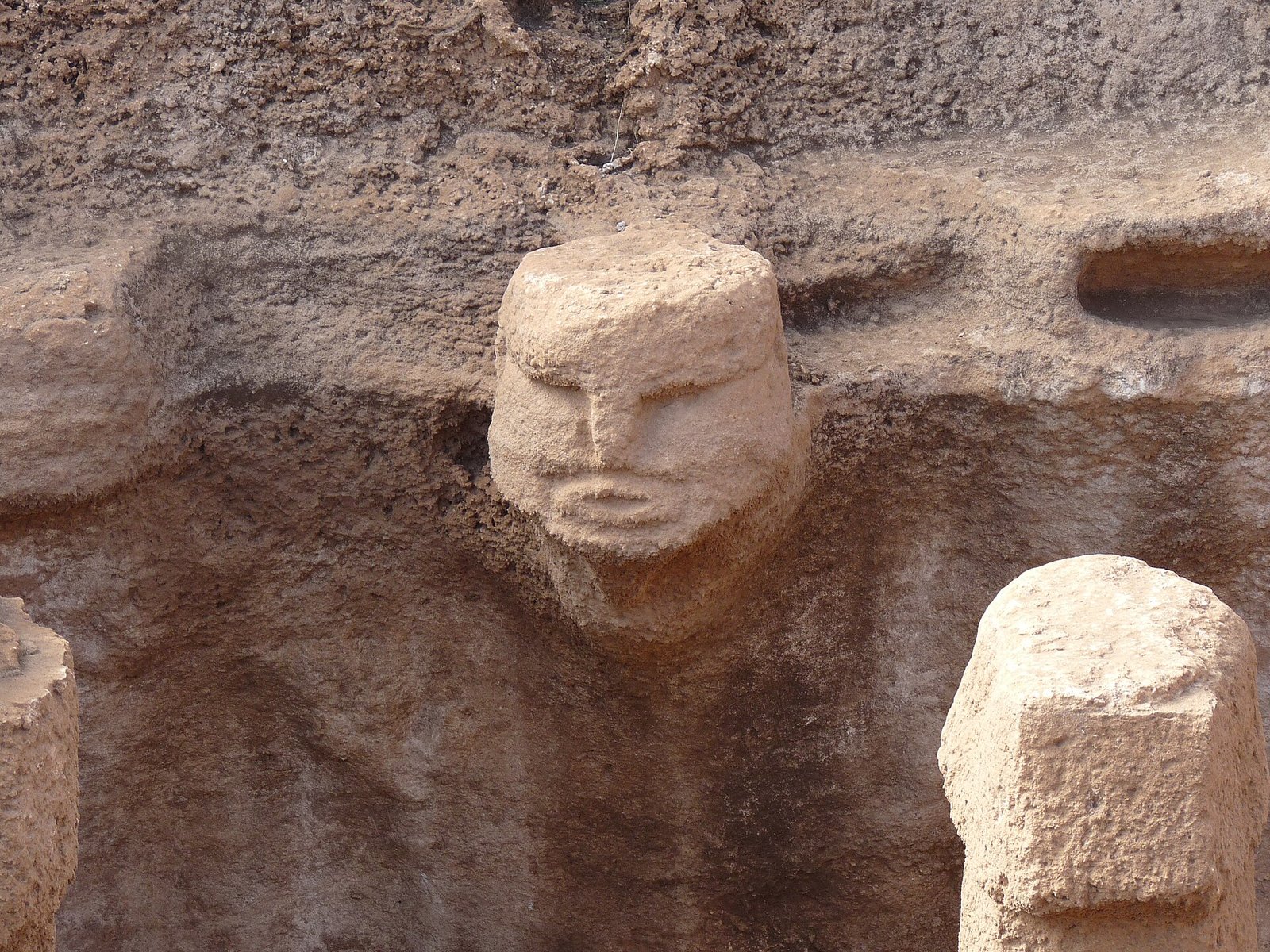
In the room at Karahan Tepe known as Structure AB, a human head is carved straight out of the bedrock wall — not set there as a statue, but shaped from the living rock itself. It leans out into the room and turns toward the entrance, so that anyone descending the steps is met by a face that is already looking at them. Around it stand the room's tall pillars. It is a face that has been watching that doorway for eleven thousand years.
Where it looks, and why that matters
The placement is everything. The head sits on the wall at the level of the pillar tops and tilts toward the stairs, so the encounter is staged: you climb down into a sunken, enclosed chamber, and before you have taken in the room, the room has taken in you. You are seen first.
That is not an accident of carving. Whoever made this room wanted the moment of arrival to feel like being received — or judged — by a presence that belonged to the place. The head isn't decoration on the wall. It is the wall, come alive.
What the head meant to them
To understand this face, you have to know how the people of this world felt about the human head. For something like two thousand years across the hills of the Neolithic Near East, the head was treated as the most charged part of a person — the seat of the self, and the part that mattered after death.
At Göbekli Tepe, real human skulls were deliberately worked — cut, carved, and possibly hung or displayed. Generations later and further south, at places like Jericho and Çatalhöyük, people removed the skulls of their dead and rebuilt their faces in plaster, keeping them among the living. The head was how you held onto a person, an ancestor, a presence.
Karahan does something different, and in a way more permanent. Instead of keeping a real skull, its builders carved a head into the bedrock — a face that could never be lost, never buried, always watching. Whether it is an ancestor, a guardian, a god, or the spirit of the place itself, we cannot say. But it belongs to the same deep preoccupation: the human head as the thing that watches, remembers, and endures.
It also rhymes with Göbekli Tepe's opposite image — the headless figure on the Vulture Stone. A world that carved headless bodies into some walls and living heads out of others was thinking hard, and consistently, about the head as the part where a person truly lives.
The head projects from the bedrock wall of Structure AB and turns toward the entrance stairs. It is carved from the rock of the chamber itself, not placed inside it. Karahan Tepe has produced several carved human heads and faces — some cut from the architecture, some free-standing.
Our reading: this is a room built around a gaze. The architecture, the pillars, and the watching head work together to turn arrival into an encounter with a presence. That is a remarkably sophisticated idea — theatre, eleven thousand years before theatre.
We're honest about the limits, too. We don't know the name or nature of who this face was meant to be. What we can say is that it was meant to be met — and that the meeting still works on anyone who stands where the stairs come down.
Karahan, the place of faces
This head is not alone. Karahan Tepe has produced more carved human heads and faces than almost anywhere else of its age — some rising from the rock like this one, others found as free-standing sculptures. Together they make Karahan the great Neolithic place of the human face, and one of the best places on Earth to ask the oldest question in art: when, and why, did people first make faces that look back?
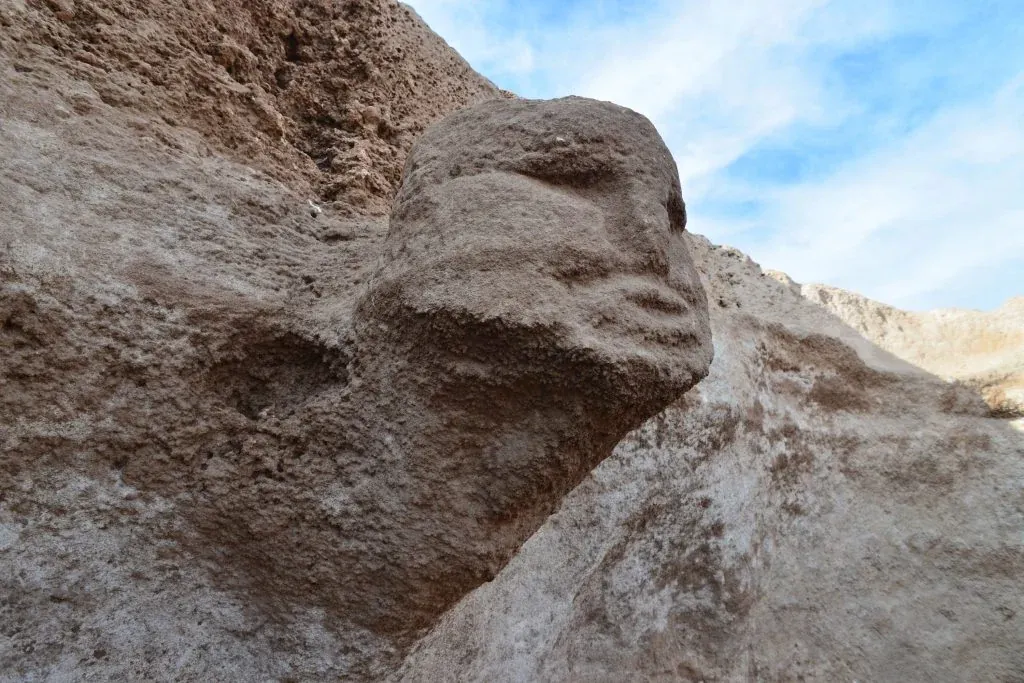
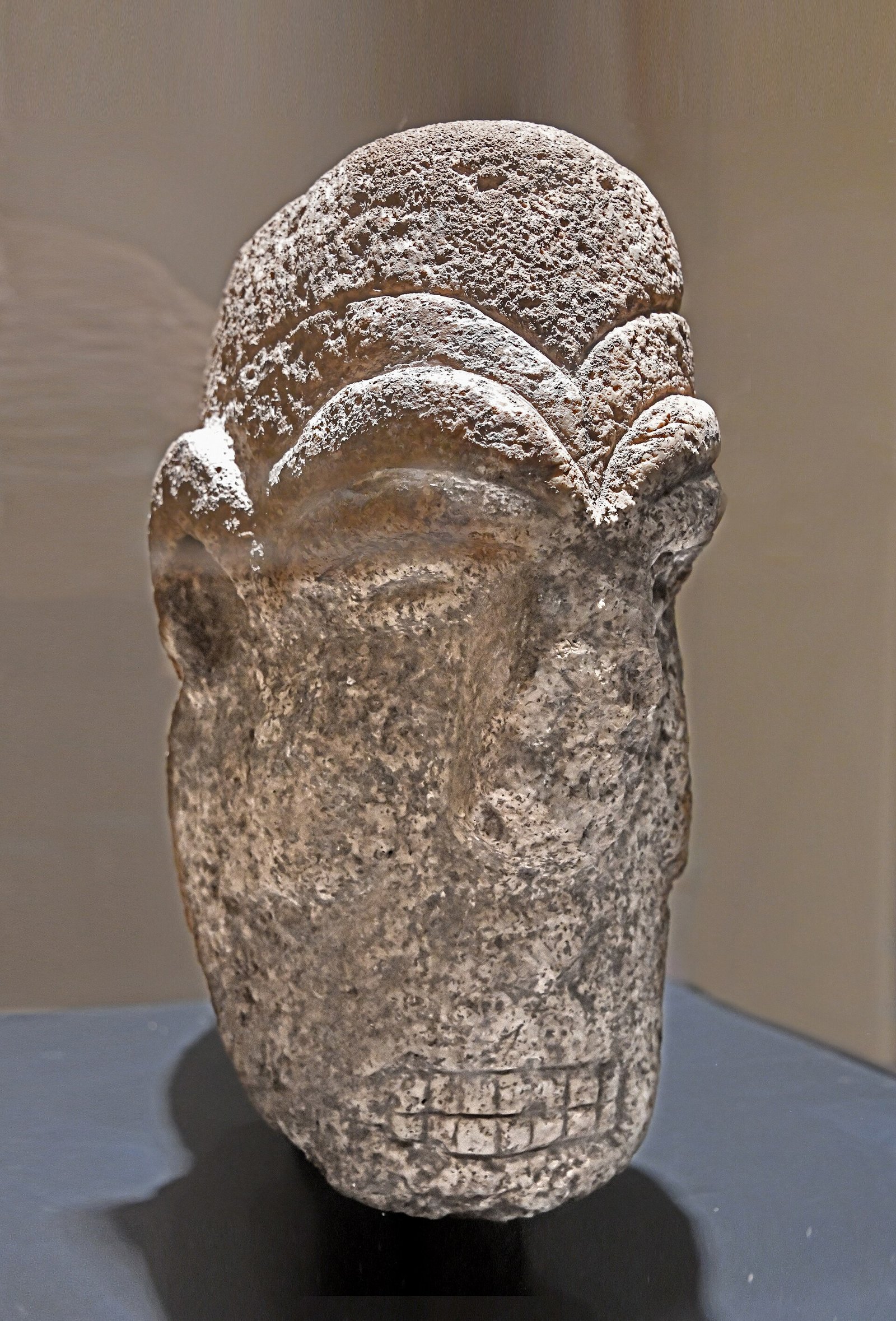
Carved heads and faces from Karahan Tepe. Karahan Tepe excavations / museum collections.
Frantisek Trampota, Karahan Tepe human face, Public domain, via Wikimedia Commons.
Sources & further reading3 references
- Karul, N. (2021). Buried Buildings at Pre-Pottery Neolithic Karahantepe. Türk Arkeoloji ve Etnografya Dergisi 82: 19–29. link
- Gresky, J., Haelm, J. & Clare, L. (2017). Modified human crania from Göbekli Tepe provide evidence for a new form of Neolithic skull cult. Science Advances 3(6): e1700564. doi:10.1126/sciadv.1700564
- The Tepe Telegrams (official research blog of the Göbekli Tepe Project, DAI). The Tepe Telegrams. Deutsches Archäologisches Institut. link Accessible, authoritative running commentary from the excavation team.
Full bibliography: the Taş Tepeler reference library →