What is confirmed
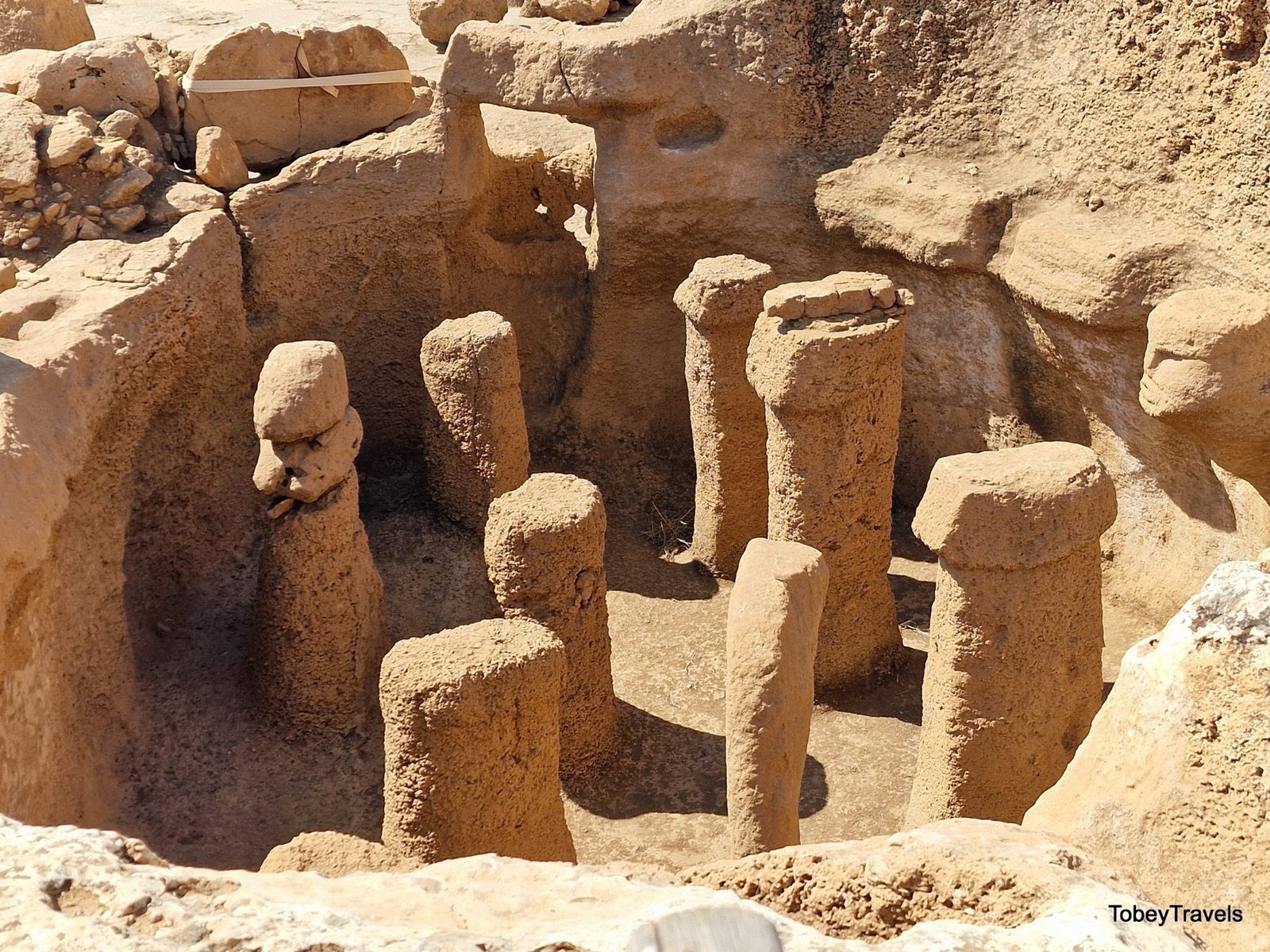
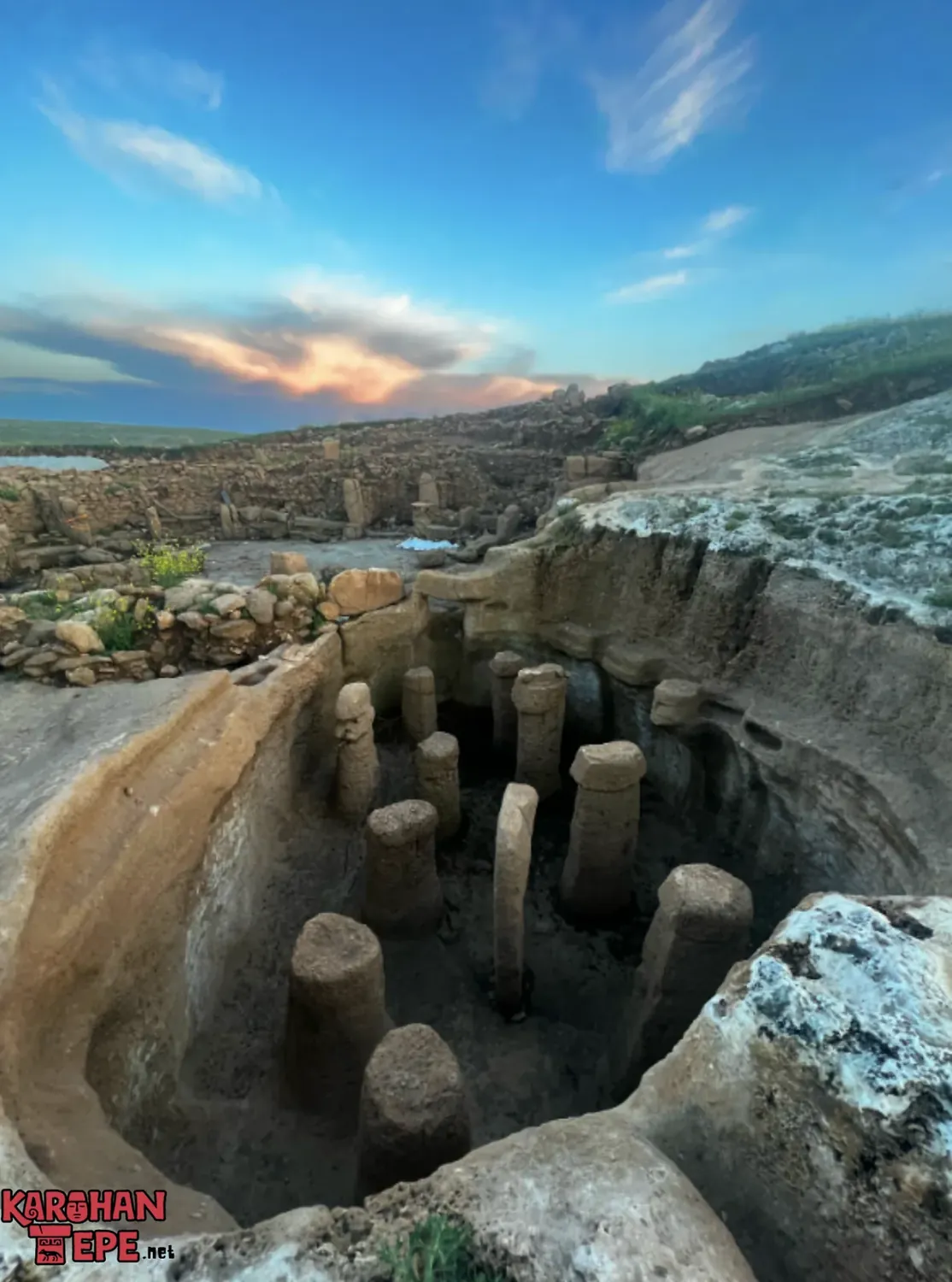
Structure AB is a bedrock-cut chamber, roughly 7 by 6 metres and about 3.5 metres deep, cut into the living rock beside the neighbouring Structure AD. Rather than being built up from the ground, its room, pillars and channels were produced by subtraction — the makers carved the space downward and left features standing where they wanted them, so that floor, walls and pillars are one continuous piece of bedrock.
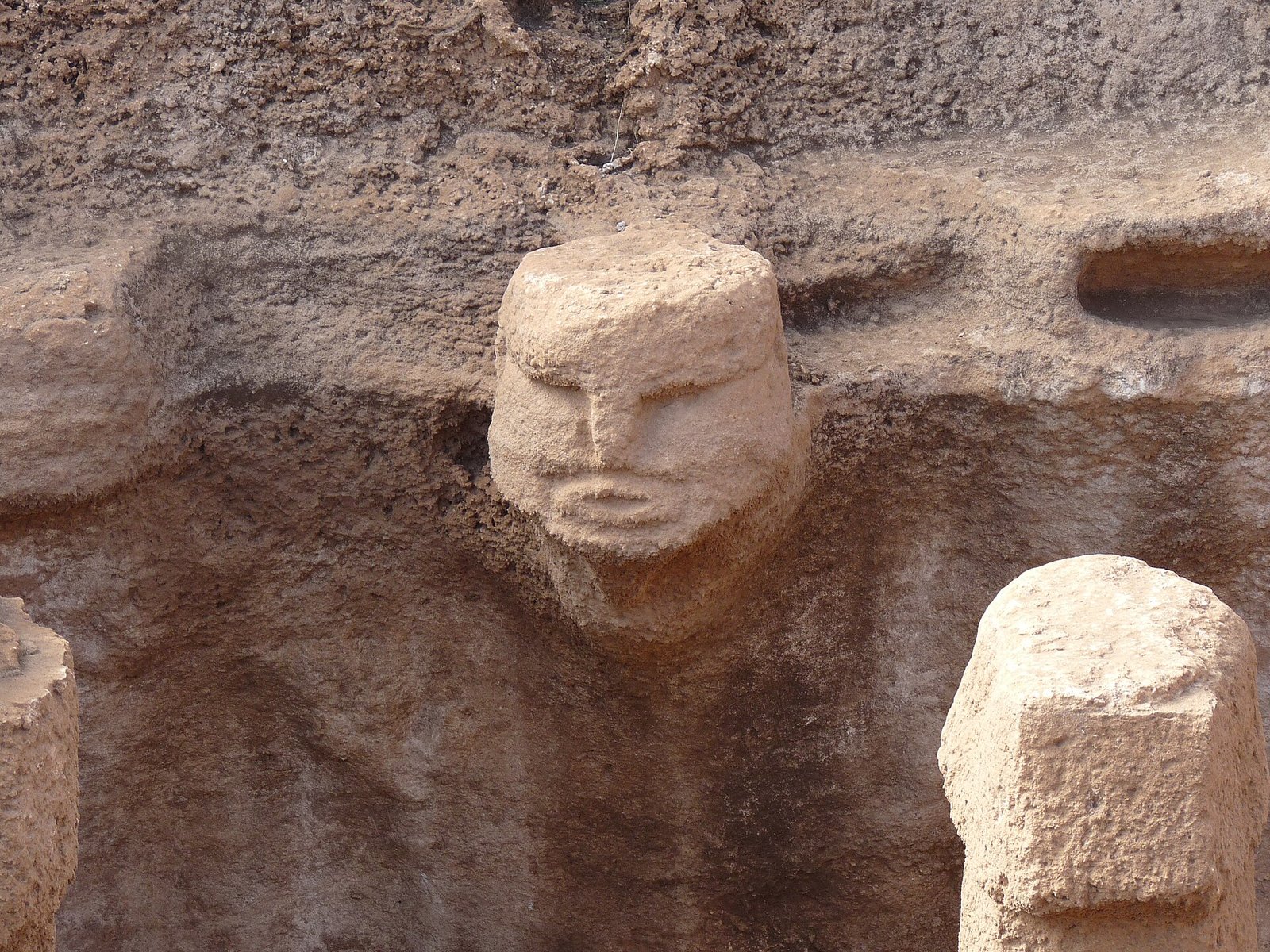
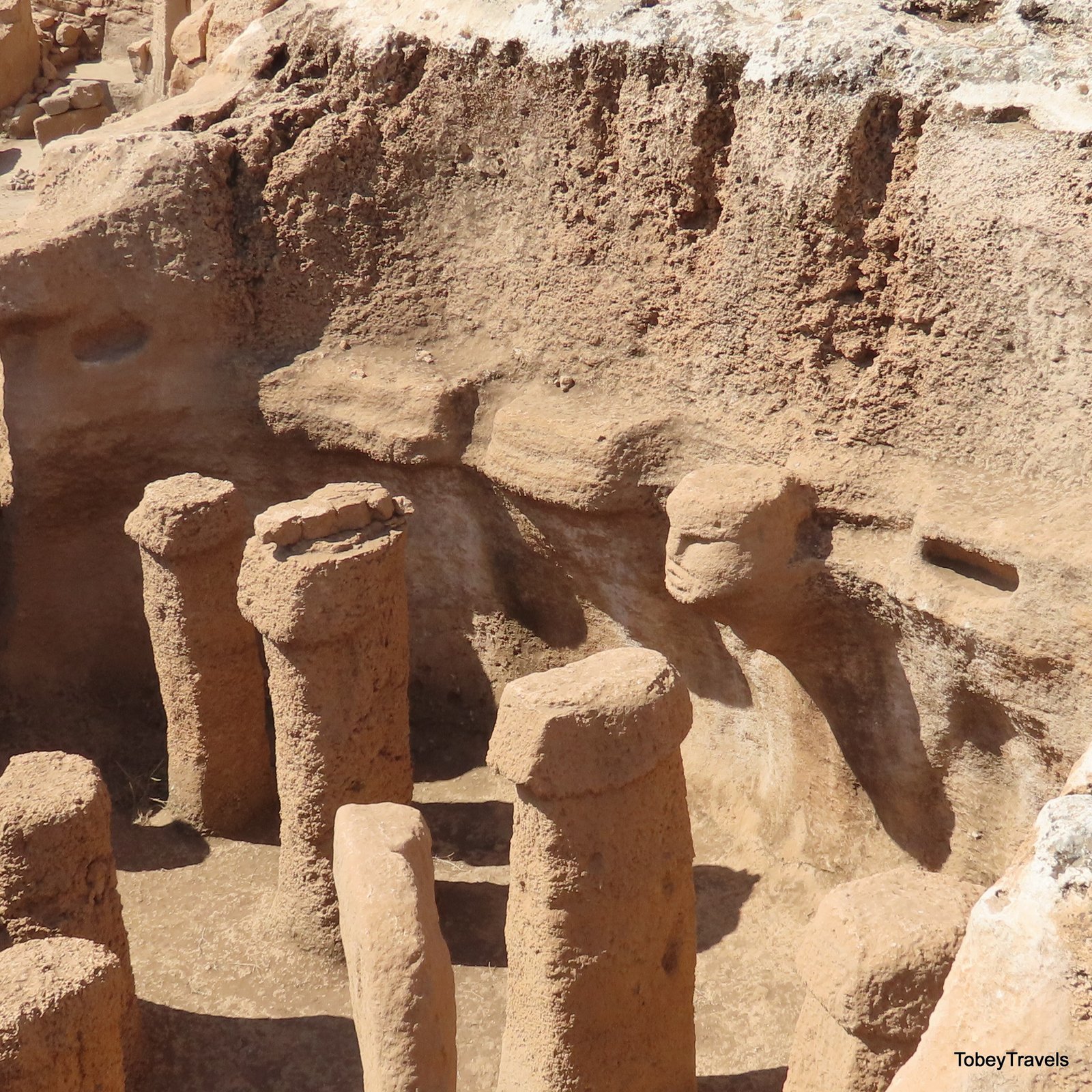
The chamber holds a cluster of tall, rounded, tapering shafts rising straight from the floor — widely described as phallic pillars. Reported counts vary between about ten and eleven. A human head carved from the western wall projects into the room and faces the entrance. A narrow porthole-like opening connects AB to Structure AD, and a channel is cut into the rock. Excavators also record a bench and evidence that the chamber was deliberately filled and sealed at the end of its use.
How it was entered
The room was reached by a small descent opening and stairs, and Karul has described AB as having a separate entrance and exit — a designed route through the space rather than a single doorway. That arrangement, together with the channel and the watching head, has led the excavator to interpret the chamber as a setting for rites of passage (an interpretation reported in interviews, not a settled conclusion). A further upright carved element, compared to the standing animal figures at other Taş Tepeler sites, is reported to have been set into the floor so as to confront anyone entering — a detail that is reporting-grade and awaits full publication.
Why it matters
AB reverses the logic of the better-known enclosures at Göbekli Tepe, where great T-shaped pillars were quarried, moved and raised into built rooms. Here the architecture is negative, defined by what was cut away, which is one reason Karahan Tepe is treated as a distinct achievement rather than a copy of its neighbour. The chamber belongs to the Pre-Pottery Neolithic, on the order of 11,000 years old.
It is worth separating observation from interpretation. That the shafts stand in the bedrock, that a head watches from the wall, and that a channel and staged filling exist are all confirmed. That the pillars were understood specifically as phalluses, what that symbolism meant, and that the room staged rites of passage are interpretations the excavators offer while remaining cautious. A reported winter-solstice light effect in the chamber is a contested popular claim, not peer-reviewed.
Sources & further reading6 references
- Karul, N. (2021). Buried Buildings at Pre-Pottery Neolithic Karahantepe. Türk Arkeoloji ve Etnografya Dergisi 82: 19–29.
- Archaeology Magazine (Archaeological Institute of America) (2021). Prehistoric phallus-shaped pillars found in Turkey. Archaeology Magazine, 22 October 2021. Coverage of the bedrock pillars and carved head in Karahan Tepe's Structure AB. link
- The Art Newspaper (2021). Discovery of Turkish 11,400-year-old village challenges ideas of when and why humans first settled down. The Art Newspaper, 17 November 2021. Interview coverage of Karahan Tepe citing Necmi Karul on Structure AB. link
- Ancient Origins (2024). Karahan Tepe's remarkable underworld encounters. Ancient Origins. Popular coverage of the bedrock carved head in Structure AB; a reported winter-solstice light effect is cited here as a contested claim, not peer-reviewed. link
- Karul, N. (2025). Public lectures and interviews on Karahantepe and the Taş Tepeler project. Transcribed talks and interviews held in the Taş Tepeler research atlas. Spoken material rather than a peer-reviewed publication; positions may be refined in print.
- Clare, L. (2020). Göbekli Tepe, Turkey. A brief summary of research at a new World Heritage Site (2015–2019). e-Forschungsberichte des Deutschen Archäologischen Instituts 2020(2): 81–88.
Full bibliography: the Taş Tepeler reference library →