Inside the site
Şanlıurfa region · Southeastern Türkiye
A Taş Tepeler site that extends the map of the early Neolithic world beyond its best-known hills, adding another piece to the connected landscape around Şanlıurfa.
The evidence
Söğüt Tarlası in context
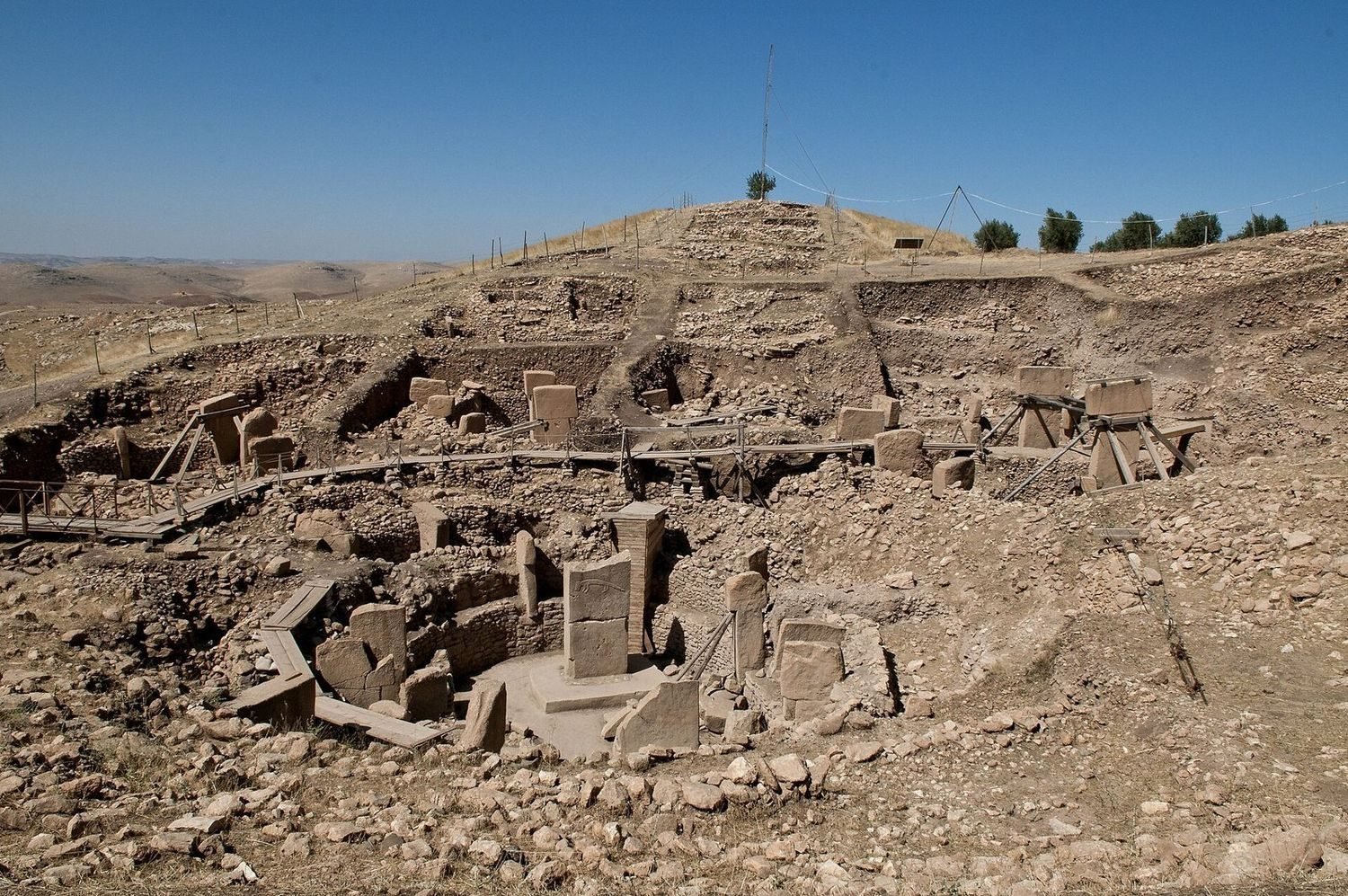
Söğüt Tarlası — more fully Söğüt Tarlası–Biris Mezarlığı — lies about 32 km northwest of Şanlıurfa, near Bozova. It was first recorded in 1963 during the landmark survey of Halet Çambel and Robert Braidwood, the joint Istanbul–Chicago prehistoric project that also first noted Göbekli Tepe, and a small excavation the following year revealed two horizons: a Pre-Pottery Neolithic B settlement and a much later Uruk-period (fourth-millennium-BC) presence.
It is one of the region's less famous sites, but it is far from empty — and its record corrects a common assumption.
Unlike the great T-pillar sites, Söğüt Tarlası reads as an early settlement of tool-makers and farmers. Its finds are pestles (some with modelled heads), greenstone axes, grooved stone smoothers, limestone cups and grinding stones, with older Palaeolithic tools mixed in — a material culture paralleled at Hallan Çemi, Körtik Tepe, Çayönü and Urfa's Yeni Mahalle. No T-shaped pillars or monumental carvings are recorded here.
New excavations resumed in 2022 under the Taş Tepeler programme, run by the Şanlıurfa Museum with the University of Tuscia.
The value of Söğüt Tarlası is its depth in time. Its deposits stack from the Palaeolithic through the Neolithic and into the fourth millennium BC, so the site is prized less for monuments than for its long human story and its early links between this region and southern Mesopotamia. Together with its neighbours it also shows how densely this landscape was occupied at the dawn of settled life — the Taş Tepeler world was a whole inhabited region, not a handful of spectacular hills.
Inside the site
The wider world
Söğüt Tarlası is a Taş Tepeler site with unusual time-depth — a tool-makers' settlement rather than a monumental one, showing how densely and continuously this landscape was occupied around the dawn of settled life.
Visit
Small-group and private tours across the Taş Tepeler landscape, led by people who know the ground.
Full bibliography: the Taş Tepeler reference library →
Last reviewed 7 October 2026. Something wrong?