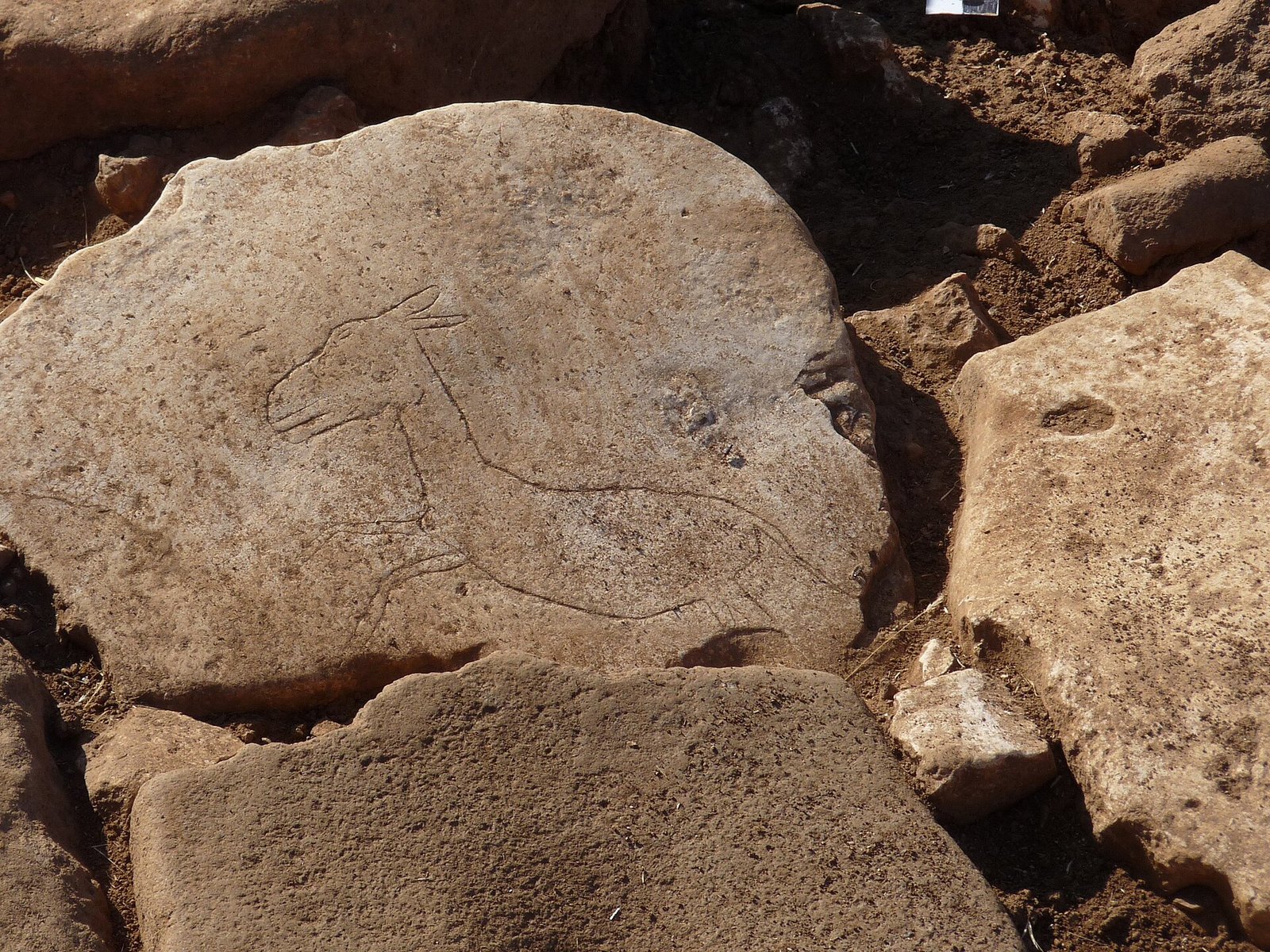
A small stone slab carved with a running wild donkey, about 20 cm long, was set into a floor in a domestic unit near Karahan's central buildings. Where the great chambers stage pressure and gaze, this is the site's quiet image — the animal world, tucked into everyday ground.
A small carved slab bearing a running wild donkey figure, roughly 20 cm long, is reported from a floor context in Structure AO — a small domestic unit around Structure AD. It sits within, or is associated with, a stone-paved floor rather than a monumental chamber.
This find matters precisely because it is not monumental. Karahan's fame is descent, phallus, skull, and predator — pressure on the body. The donkey slab is a reminder that the strangest architecture belonged to a lived landscape: people cooked, slept, and worked here, and someone carved a small running animal into the floor of an ordinary room.
A gentler, almost intimate glimpse — offered as a corrective to reading the whole site as ceremony.
- A carved stone slab with a running wild donkey, about 20 cm long.
- Set into or associated with a stone-paved floor.
- From Structure AO, a small domestic unit near the central buildings.
- A domestic, everyday counterpoint to Karahan's monumental chambers.