What was found
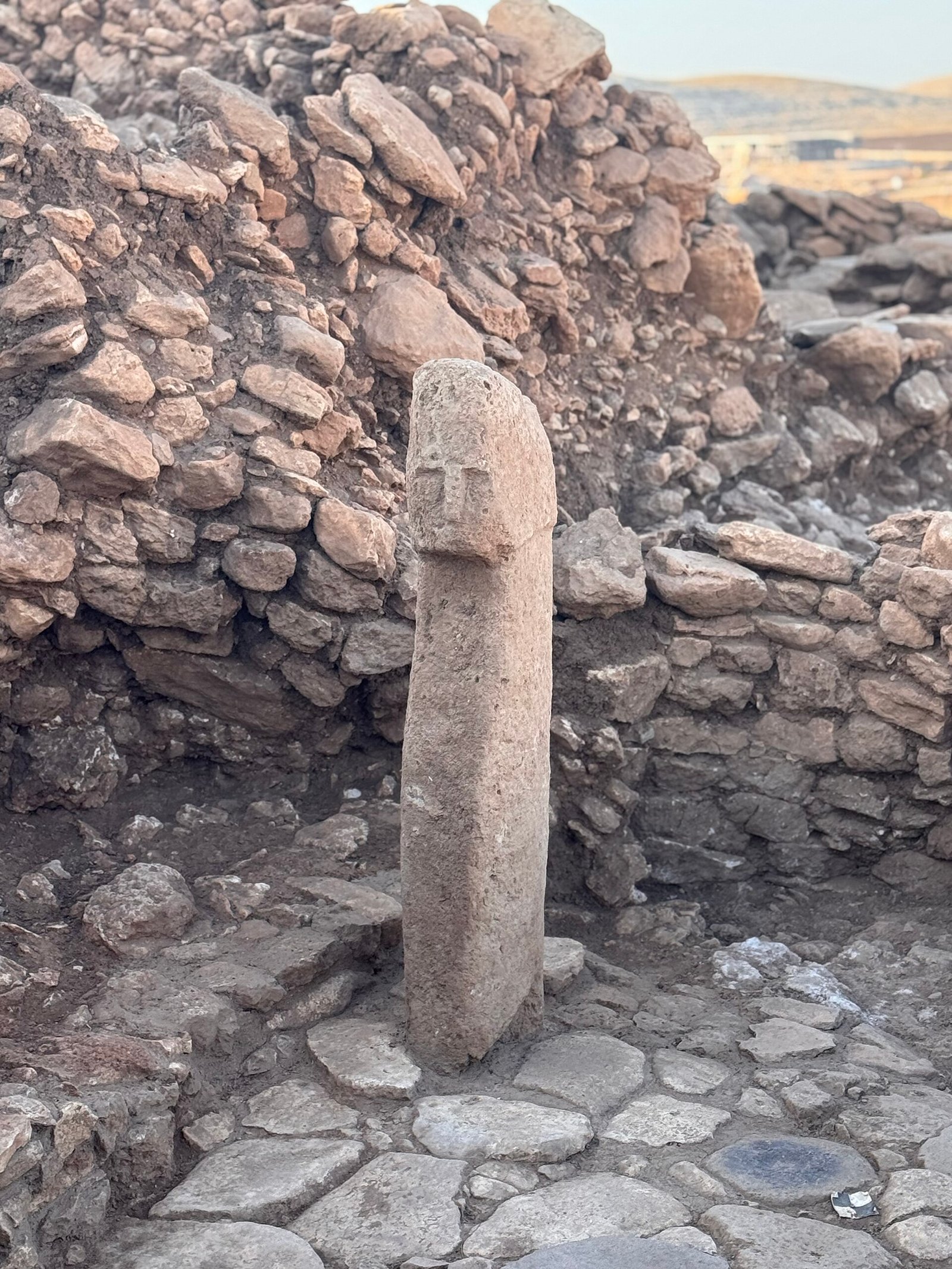
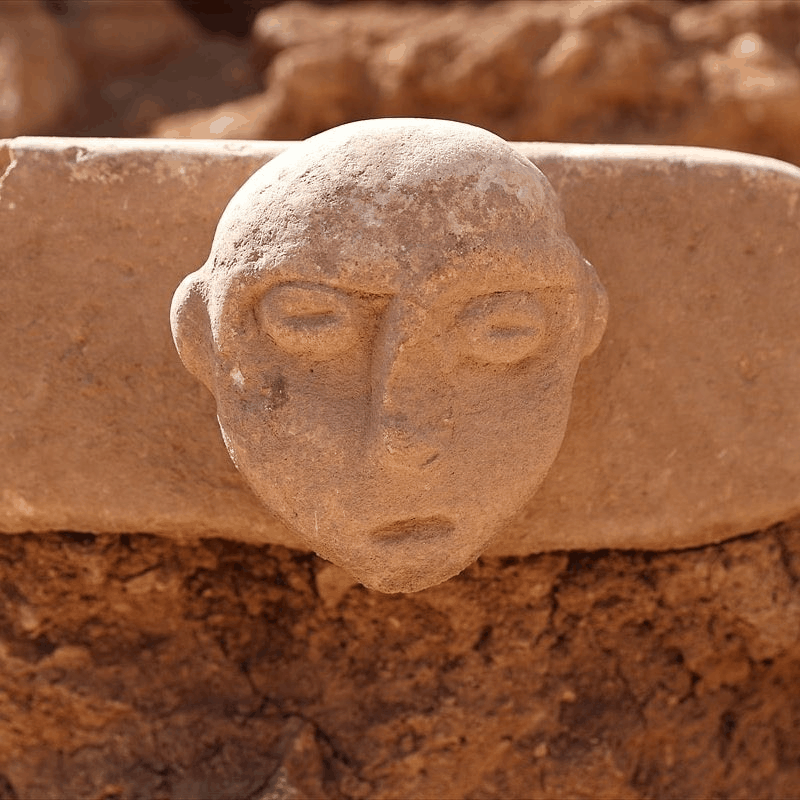
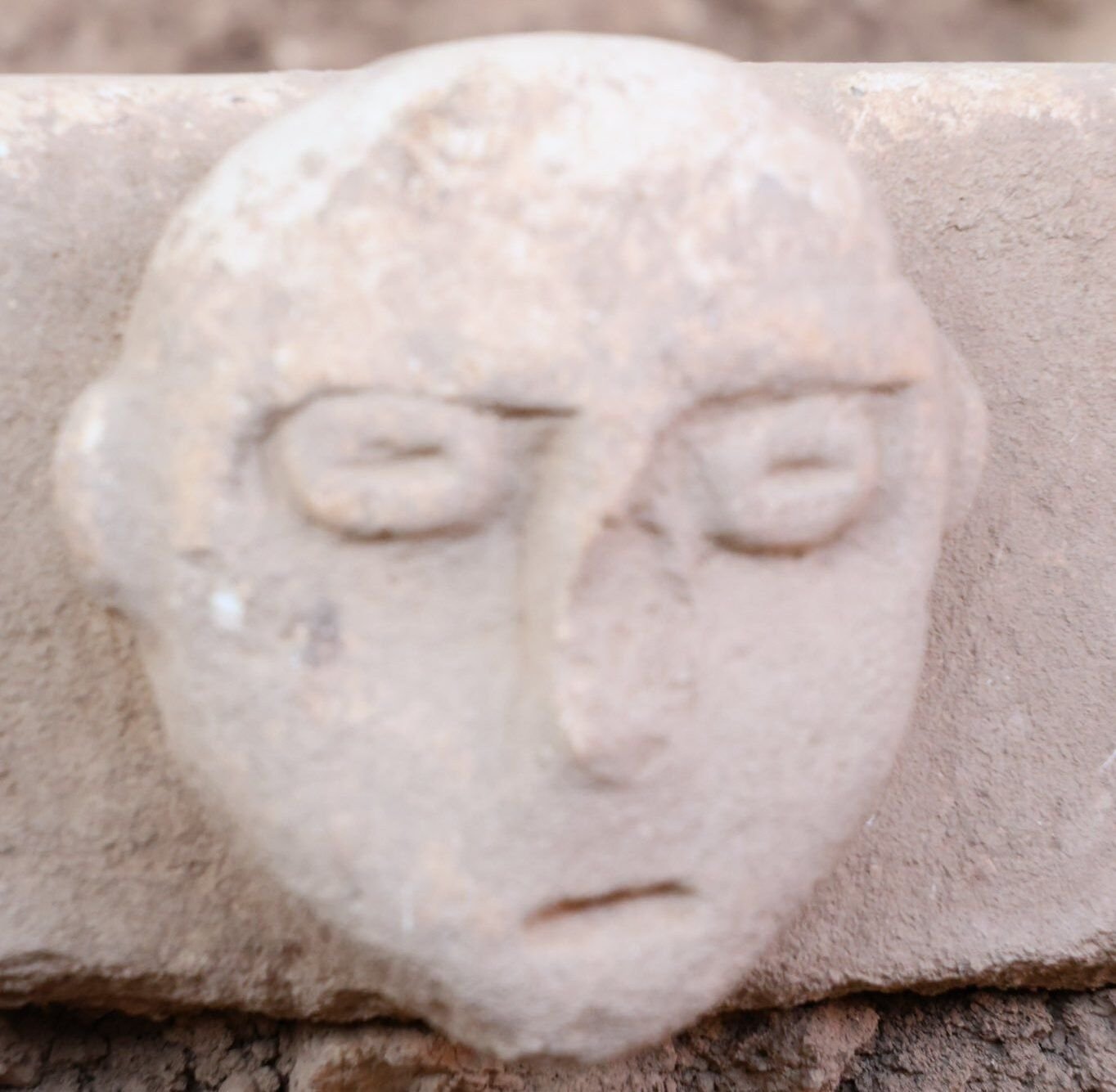
At a briefing held at the Karahan Tepe visitor centre on 26 November 2025, Türkiye's Minister of Culture and Tourism, Mehmet Nuri Ersoy, revealed finds from the fifth year of the Taş Tepeler project. Among them were two human faces from Sefertepe, carved onto neatly dressed stone blocks — one in high relief, one in low relief. From the same area came a small black serpentinite bead carved with a human face on each side.
Reports place the faces at roughly 10,000–12,000 years old. As with any active dig, exact dating will firm up as the material is studied and published.
Why it matters
The striking thing is the style. The cheeks, brows and noses of the Sefertepe faces don't quite match the faces known from Göbekli Tepe, Karahan Tepe or Sayburç — which suggests Sefertepe had developed its own local way of carving a face within the shared Taş Tepeler world.
That is exactly the pattern this whole region keeps revealing: not one central sanctuary with satellites, but a network of communities, each with its own hand, all working through the same deep questions about the human face, the body, and the dead.
The beads say Sefertepe was not isolated
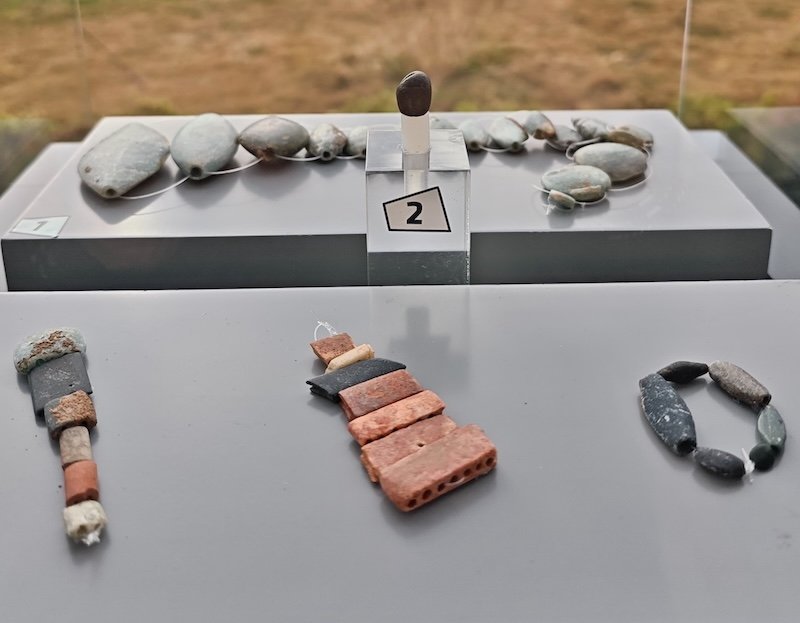
The double-faced bead was not alone. Dozens were recovered in the 2025 season, carved from jade, labradorite and limestone — several shaped as snake heads, others incised with geometric patterns.
Jade and labradorite are not local to this geology. They arrived through exchange, or through procurement routes that took people a long way from Viranşehir.
"Sefertepe's bead assemblage clearly shows that this was not an isolated settlement," says excavation director Assoc. Prof. Emre Güldoğan. "People here were connected — and they expressed those connections in the materials they chose."
This is a quieter finding than a carved face, and arguably a more important one. Monumental architecture tells you a community could organise labour. Imported stone tells you it was plugged into something much larger.
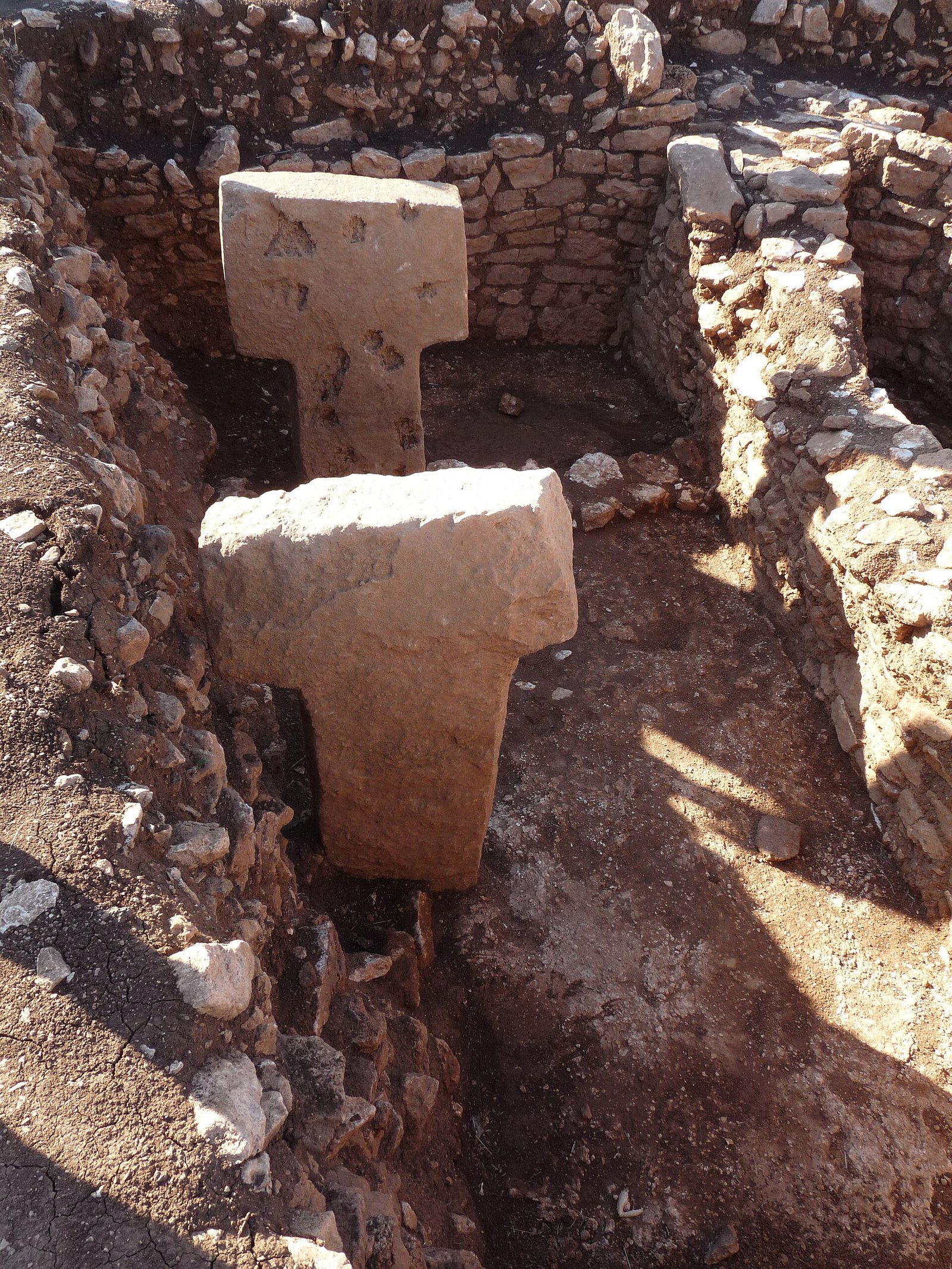
Frantisek Trampota, Sefer Tepe T-stelae, Public domain, via Wikimedia Commons.
Two ways of treating the dead, metres apart
Sefertepe's mortuary evidence is unusual even by the standards of this region. In the small chamber excavators named the skull room, human skulls were deliberately placed — most lacking mandibles, with no other bones present. That is selection, not collapse or disturbance.
Just metres to the north, a contrasting pattern: individuals interred with their full skeletal remains.
So two mortuary logics operated side by side. Some people were curated after death, their skulls gathered into what may have functioned as a communal archive of ancestors. Others were left whole. Fragmentation and wholeness, selection and preservation, coexisted in the same settlement.
Skulls appear in symbolic architecture across the Taş Tepeler region, but this dual system appears to be Sefertepe's own.
One thing the sources disagree about
The Ministry of Culture and Tourism briefing described the double-faced bead as black serpentinite. A later feature on the same season described it as black basalt.
We follow the ministry announcement, as the primary source. But the discrepancy is real and unresolved in the published reporting, and we would rather flag it than quietly pick one. The material will be settled when the season is properly published.
A face carved in a local hand
The most striking thing about the Sefertepe faces is their style. Their cheeks, brows and noses do not quite match the faces known from Göbekli Tepe, Karahan Tepe or Sayburç, which suggests Sefertepe developed its own local way of carving a face within the shared Taş Tepeler world.
That is the pattern this region keeps revealing: not one central sanctuary with satellites, but a network of communities, each with its own hand, all working through the same deep questions about the human face, the body and the dead. A distinct style at Sefertepe is evidence the symbolic world reached well beyond the two famous hills.
What imported stone tells us
The beads carry a quieter but arguably more important message. Dozens were recovered in the 2025 season, carved from jade, labradorite and limestone — several shaped as snake heads, others incised with geometric patterns. Jade and labradorite are not local to this geology; they arrived through exchange or through procurement routes that took people a long way.
As excavation director Emre Güldoğan put it, the assemblage shows this was not an isolated settlement. Monumental architecture tells you a community could organise labour; imported stone tells you it was plugged into something much larger. Set beside the skull room and its selected, mandible-less skulls, Sefertepe emerges as a place with both far-reaching connections and its own distinct treatment of the dead.
What is uncertain
The ages here — faces at roughly 10,000–12,000 years, a bead described elsewhere as 8,500 years old — come from a ministry briefing and press coverage, not a published sequence, and the spread in those figures shows how provisional they are. Expect them to firm up, and possibly narrow, once the fifth season is studied.
The claim that the Sefertepe faces are carved in a distinct local style is an art-historical judgement made on a very small sample of two faces and a bead; it is suggestive, not yet a demonstrated 'school'. Likewise the reading of the skull room as a curated ancestor archive is interpretation drawn from placement and the missing mandibles — a strong pattern, but one the excavation has still to publish in full.
Common questions
What was found at Sefertepe? Two human faces carved on dressed stone blocks, plus a tiny black serpentinite bead with a human face on each side, unveiled at the 2025 Taş Tepeler briefing.
Why do the beads matter? Several were made of jade and labradorite, stones not local to this geology, showing Sefertepe was connected through exchange rather than isolated.
What is the skull room? A small chamber where human skulls — most lacking mandibles — were deliberately placed, sitting just metres from burials with full skeletons.
Key takeaways
- Sefertepe carved human faces in its own local style, distinct from Göbekli, Karahan and Sayburç.
- Beads of jade and labradorite — stones not local here — show Sefertepe was plugged into exchange networks.
- A skull room of selected skulls sat metres from full-body burials — two mortuary logics side by side.
- The finds argue for a network of communities, each with its own hand, not one central sanctuary.
Sources
- Arkeonews — 12,000-year-old human faces emerge from Sefertepe
- Arkeonews — micro-carved bead and the 10,000-year-old skull room at Sefertepe
- HeritageDaily — 10,000-year-old human face reliefs found at Sefertepe
This article is written from the primary literature and excavators' reports cited above. Interpretations are attributed; uncertainties are stated in the text.