Sefertepe · Structure
Beads are the most common find at Sefertepe, and the site's small finds — a double-faced bead, carved figurines, worked stone and tools — carry much of its symbolic evidence, reported from the field ahead of full publication.
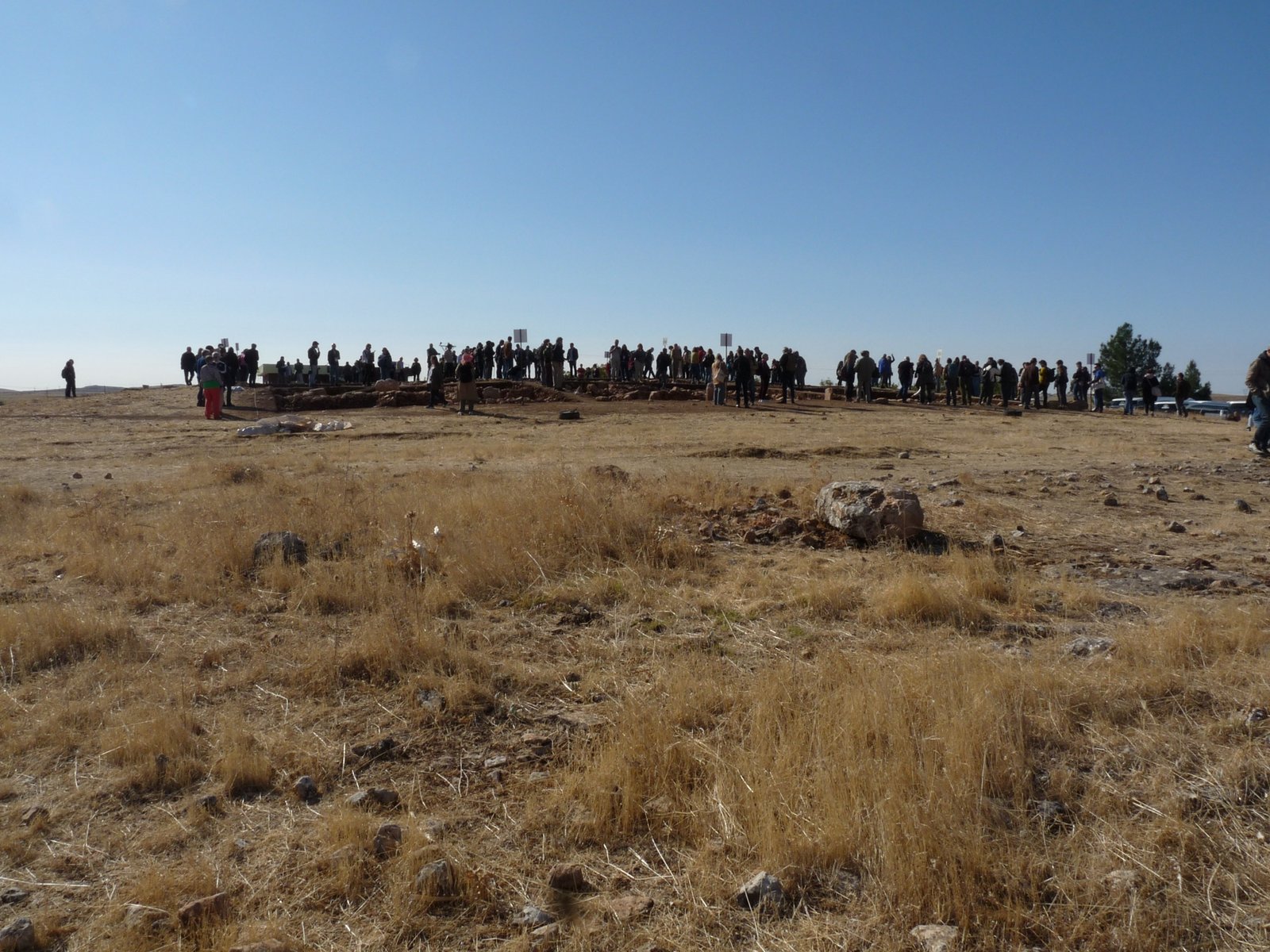
Frantisek Trampota, Sefer Tepe, Public domain, via Wikimedia Commons.
01
02
This entry groups Sefertepe's portable finds rather than a single building. Until exact findspots, catalogue numbers and figure-level detail are published, the objects are best read together as a site-level assemblage. Almost all of it is reported from the 2024–2025 seasons — announced at project briefings and in interviews with excavation director Emre Güldoğan — rather than set out in a peer-reviewed report.
03
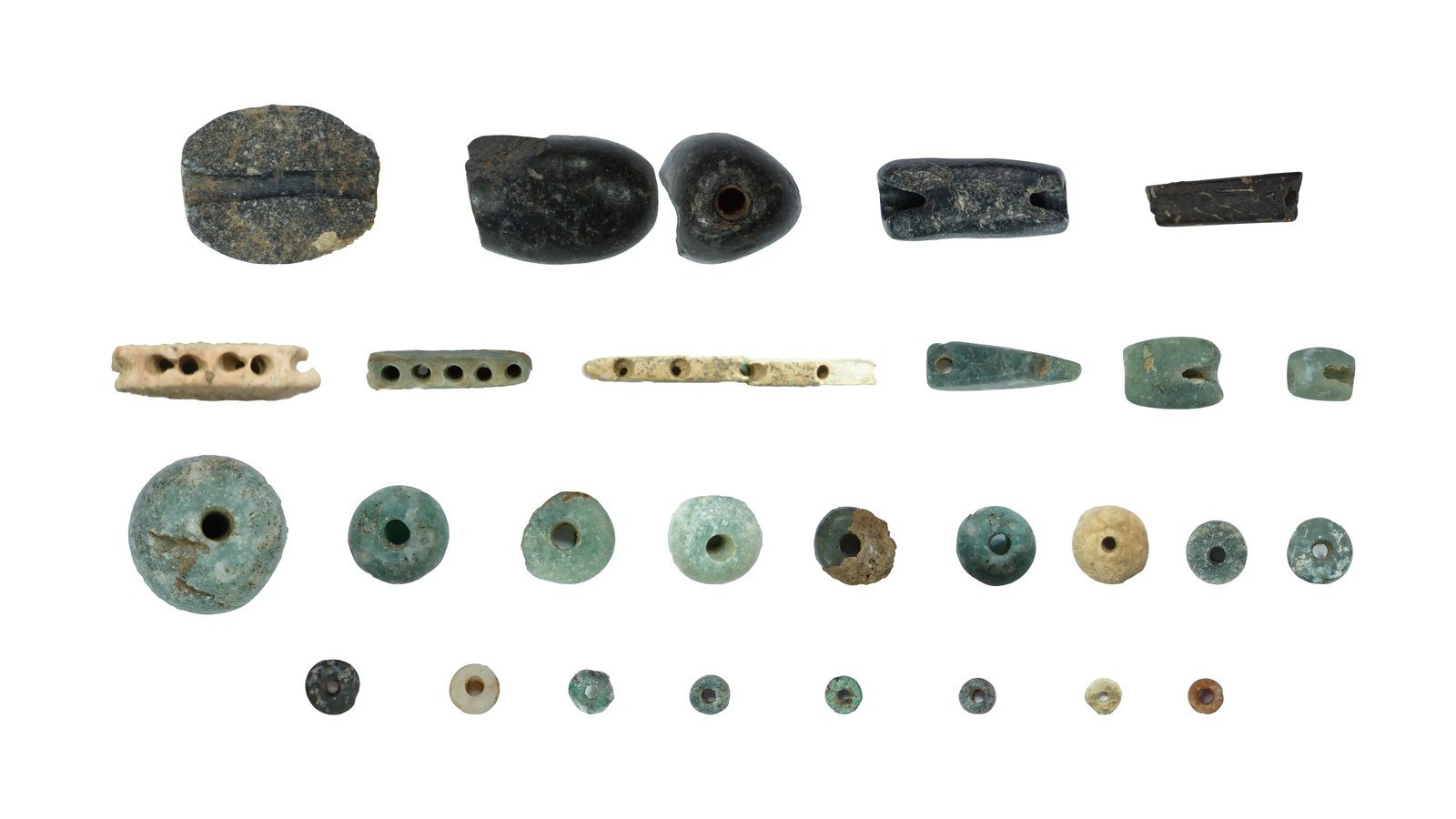
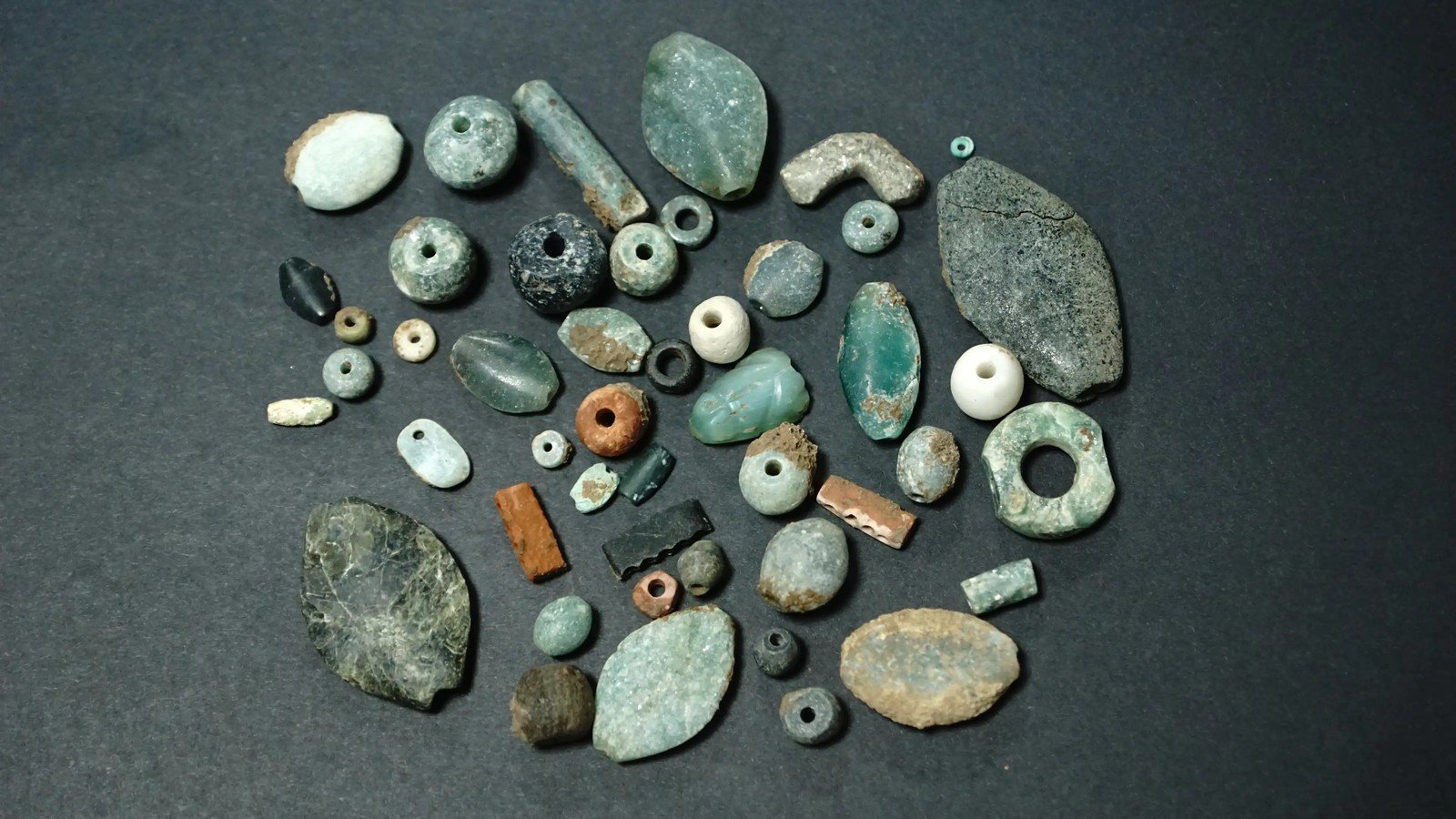
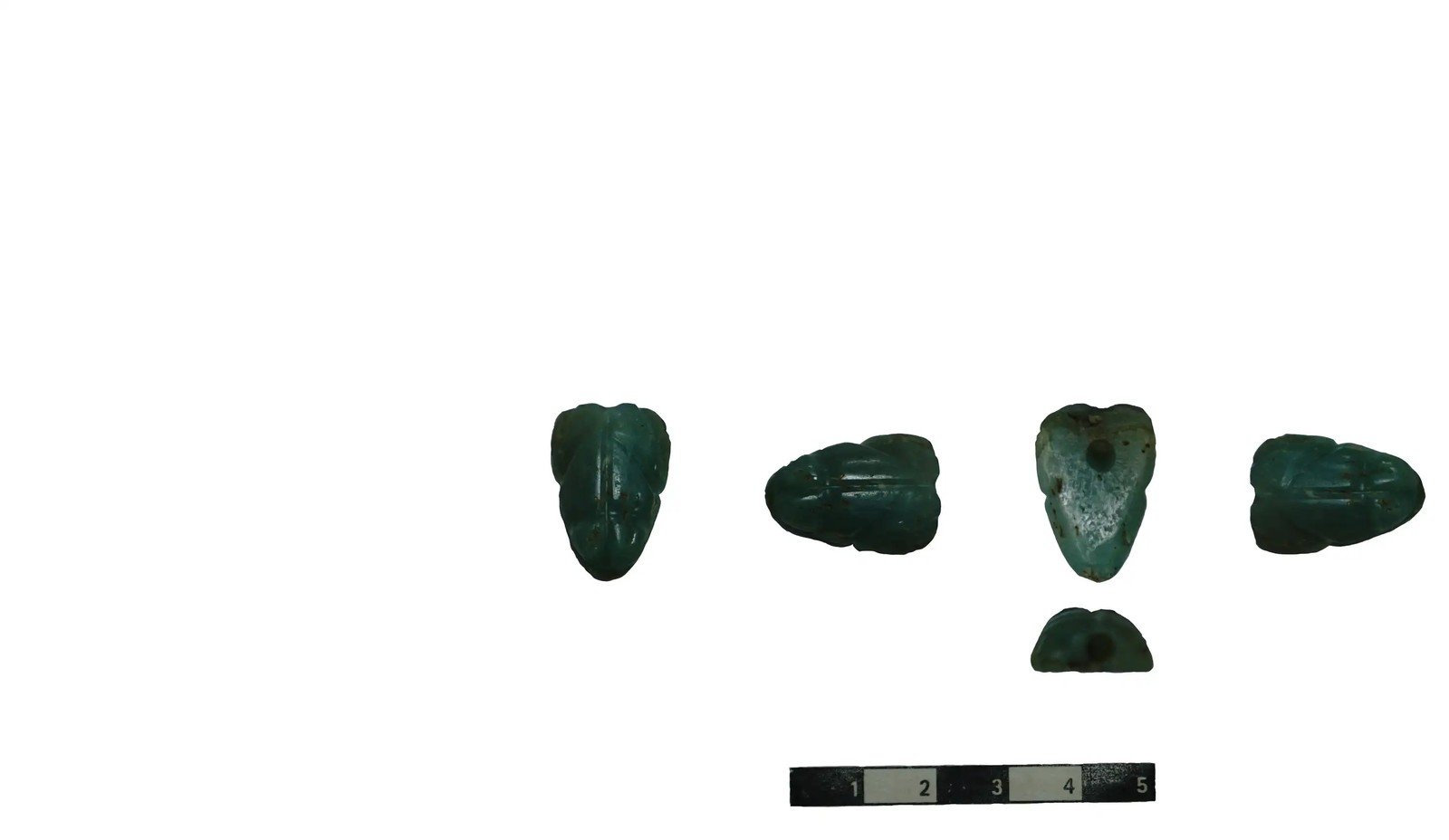
Beads are the dominant symbolic small-find group at Sefertepe, and they vary widely in both raw material and form. The main materials are jade, serpentine, limestone, igneous labradorite and bone; the forms include disc/round, micro-disc, quadrilateral and drop-shaped beads, along with a specimen carved in the shape of an animal head (a toad). Some of these match a distinct 'Sefertepe type', while others repeat forms found at neighbouring settlements — a mix of local character and shared regional fashion.
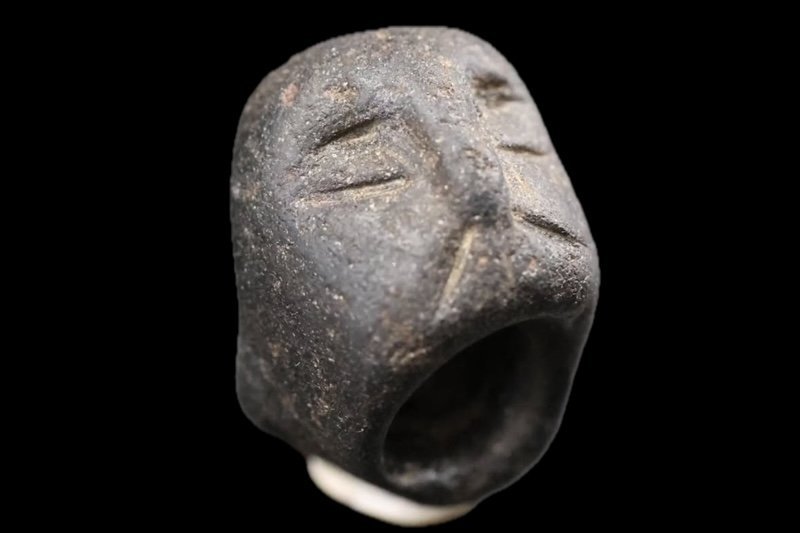
The standout of the 2025 season is a tiny double-faced bead, only a few centimetres across, carved with a human face on each side — micro-carving that is rare for the early Neolithic; reporting describes the material as a dark stone (variously given as black basalt or serpentinite). Because jade and labradorite are not local, the excavators read the bead materials as evidence that Sefertepe was tied into wider exchange networks — a reasonable inference that provenance study would need to confirm.
04
The reported assemblage also includes a leopard figurine and, from earlier reporting, jade ornaments described as a leopard and a vulture-with-human-figure; a juvenile wild-boar image on a heavily used grinding stone; and a worked limestone object bearing thirteen circles on each face, whose purpose is unknown. Lithic, ground-stone and bone tools round out the everyday-work material. Findspots and catalogue metadata for several of these objects remain open, and some may be superseded by the excavation's own figures.
05
Güldoğan's team present the small finds as evidence that Sefertepe's symbolic concerns ran across every scale of material culture — from carved blocks and pillars down to objects a person could wear or carry. That is a reading offered from the field, consistent with the finds rather than proven by them.
Because jade and labradorite do not occur locally, the excavators read the bead materials as signs that Sefertepe was tied into long-distance exchange or procurement. A reasonable inference that raw-material provenance study would need to confirm.
06
The objects recorded for this building, gathered as one catalogue. Where a full object page exists, it is linked from the card.

Sefertepe excavations, Double-faced bead from Sefertepe, Sefertepe excavations, via .
Object
The Double-Faced Bead from Sefertepe
A pebble-sized bead only a few centimetres across, carved with a human face on each of its two sides — micro-work that is rare for the early Neolithic Near East.
Sefertepe excavations
Full page →Object
Juvenile Boar Grinding Stone
Full page →Object
The Leopard Bead from Sefertepe
A small jade ornament in the form of a leopard — one of a pair of animal beads whose stone came from far outside the region, and whose imagery links Sefertepe to Göbekli Tepe and Karahan Tepe.
Full page →Object
Worked Limestone 13 Circles
Full page →07
Full bibliography: the Taş Tepeler reference library →
Last reviewed 7 October 2026. Something wrong?