Short answer
Sefertepe is a Pre-Pottery Neolithic site in the hills east of Şanlıurfa, excavated since 2021 within the Taş Tepeler programme, best known for T-shaped and quadrangular pillars, carved human faces, a bead assemblage, and a chamber where human skulls were gathered.
It sits at the eastern edge of the Taş Tepeler cluster, roughly 50 km from Göbekli Tepe and 20 km from Karahan Tepe. First reported by Bahattin Çelik in 2006 and systematically dug only from 2021, it is one of the thinly published sites of the group — much of what is known comes from annual season reports rather than final publication.
Where it is and who works there
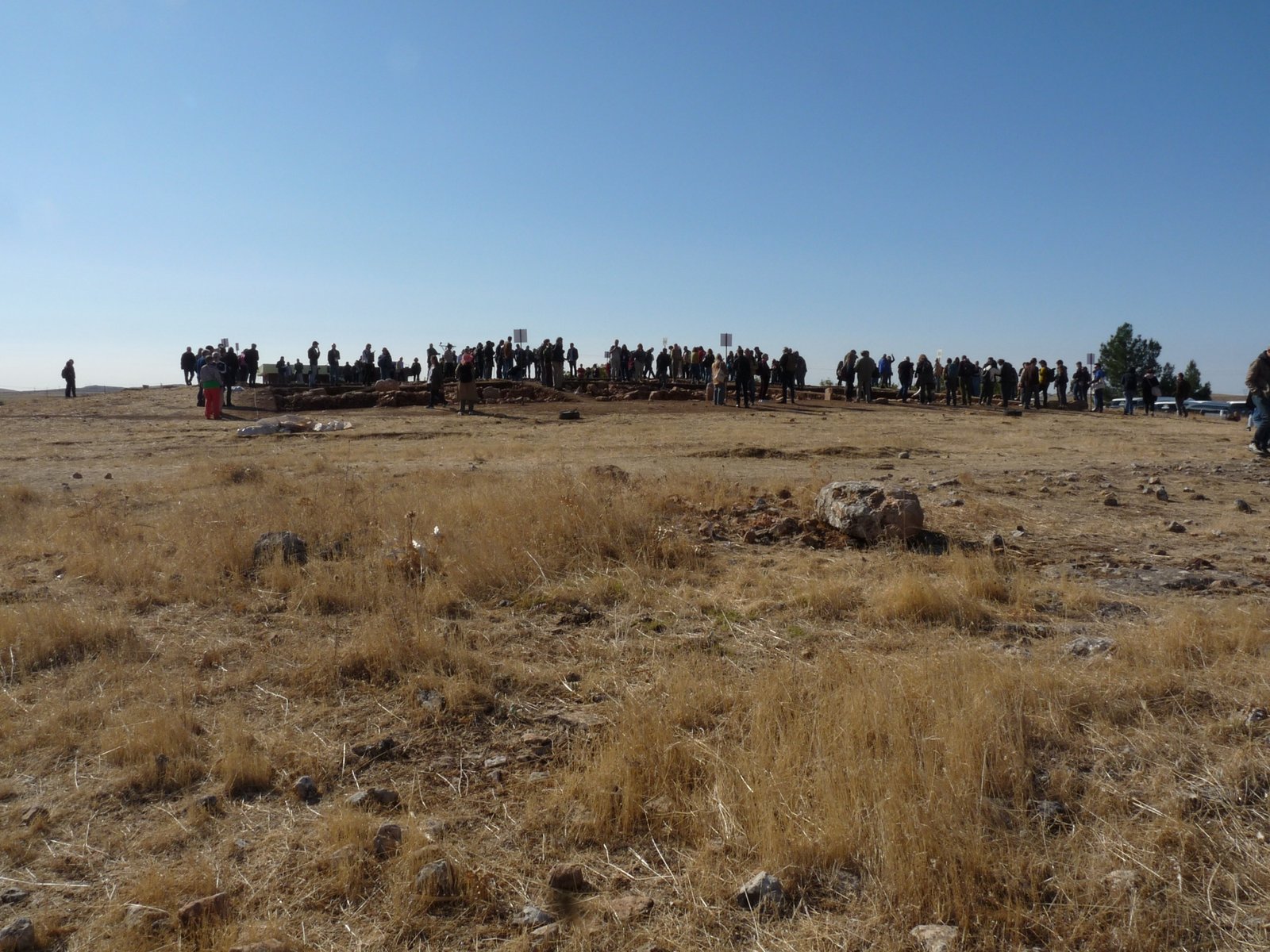
Sefertepe lies roughly 72 km east of Şanlıurfa and about 25 km west of Viranşehir, on the boundary of the Eskikale and Kırbalı districts. It is around 50 km from Göbekli Tepe and about 20 km from Karahan Tepe — far enough east to sit at the edge of the cluster, close enough to belong to it.
The site was first published in the archaeological literature by Bahattin Çelik in 2006. Systematic excavation began in 2021, run by the Department of Prehistoric Archaeology at Istanbul University under the supervision of the Şanlıurfa Museum, as part of the Şanlıurfa Neolithic Research Project — Taş Tepeler.
The pillars
Ten pillars have been reported from the excavations: three T-shaped and seven quadrangular. That mix matters. The T-pillar is the regional signature, but Sefertepe pairs it with plain rectangular pillars, which is a different architectural habit from the great enclosures at Göbekli Tepe.
One space was cleared down to the floor around a T-shaped pillar. Its east-facing side carries decoration on both the upper and lower parts of the shaft — geometric forms worked in relief and incision. Decorated pillars are the exception rather than the rule at most Taş Tepeler sites, and this one is among the better-documented examples outside the two flagships.
The carved faces
In 2025 the excavation reported reliefs cut into the front surfaces of four limestone blocks forming a platform, in what appears to have been a ceremonial setting. Two faces are oriented toward the north.
What was emphasised in the reporting is that these faces are stylistically distinct — they do not simply repeat the conventions known from Göbekli Tepe, Karahan Tepe or Sayburç. If that reading holds, Sefertepe is evidence that the human image was being handled differently at different sites within a single cultural landscape, rather than copied from one template.
This is press-reported excavation news rather than a final publication. Treat the stylistic argument as a working interpretation.
The skull room — and why the numbers differ
Sefertepe's most widely reported feature is a chamber described by excavators as a skull room, containing human skulls and skull fragments.
The counts reported in 2025 do not agree with one another. Some reporting describes a layer containing 31 skulls and fragments. Other reporting describes 12 human skulls across two chambers — eight in the skull room itself and four elsewhere. These are successive snapshots of one continuing excavation: 43 skulls are now documented across two chambers, from individuals ranging from infants of six months to adults of around forty.
We list them separately on purpose. Any page that gives you one confident number for Sefertepe's skulls is choosing between reports without telling you it has done so.
How it fits the wider picture
Deliberate treatment of the human skull is a recurring theme across this region. At Göbekli Tepe, Gresky and colleagues published carved and modified human skull fragments in 2017, evidence read as a skull cult. If the Sefertepe chamber is what it appears to be, it belongs to that broader pattern — but the practice at Sefertepe looks like gathering skulls in a room, which is not the same act as carving them.
The honest position is that Sefertepe is adding a distinct regional variant to a theme we already knew existed, and that the detail will change as excavation continues.
What is still unknown
Sefertepe has no final excavation report. Its internal chronology, its full extent, the relationship between the pillar buildings and the skull chamber, and the phasing of the face platform are all open. Much of what circulates in English comes from annual press announcements rather than peer-reviewed publication.
That is not a criticism of the excavators — it is simply where a five-year-old excavation is. It does mean the picture will keep moving.
Common questions
Where is Sefertepe?
About 72 km east of Şanlıurfa and 25 km west of Viranşehir, on the Eskikale–Kırbalı boundary — roughly 50 km from Göbekli Tepe and 20 km from Karahan Tepe.
How many pillars have been found at Sefertepe?
Ten have been reported: three T-shaped and seven quadrangular. One T-pillar carries geometric relief and incised decoration on its east-facing side.
What is the Sefertepe skull room?
A chamber reported by the excavation as containing human skulls and fragments. Reported counts vary between accounts — one describes a layer of 31 skulls and fragments, another 12 skulls across two chambers (eight plus four). The totals have risen each season; 43 across two chambers is the current documented figure.
Who excavates Sefertepe?
Istanbul University's Department of Prehistoric Archaeology, supervised by the Şanlıurfa Museum, within the Taş Tepeler project. Systematic excavation began in 2021.
Can you visit Sefertepe?
It is an active excavation rather than a developed visitor site, and is best seen with a guide as part of a wider Taş Tepeler itinerary.
Sources & further reading5 references
- Çelik, B. (2006). Sefer Tepe: A New Pre-Pottery Neolithic Site in Southeastern Turkey. Neo-Lithics 1/06: 23–25.
- Clare, L. (2020). Göbekli Tepe, Turkey. A brief summary of research at a new World Heritage Site (2015–2019). e-Forschungsberichte des Deutschen Archäologischen Instituts 2020(2): 81–88.
- Gresky, J., Haelm, J. & Clare, L. (2017). Modified human crania from Göbekli Tepe provide evidence for a new form of Neolithic skull cult. Science Advances 3(6): e1700564. doi:10.1126/sciadv.1700564
- Şanlıurfa Neolithic Research Project — Taş Tepeler (2026). Official project site (Istanbul University / Şanlıurfa Museum). tastepeler.org link
- The Tepe Telegrams (official research blog of the Göbekli Tepe Project, DAI). The Tepe Telegrams. Deutsches Archäologisches Institut. link Accessible, authoritative running commentary from the excavation team.
Full bibliography: the Taş Tepeler reference library →