Sefertepe · Structure
At the base of a special building tied to Sefertepe's skull deposits, excavators reached the bedrock and found it deliberately levelled, with neatly cut pits or holes worked into the rock — a floor prepared for a purpose.
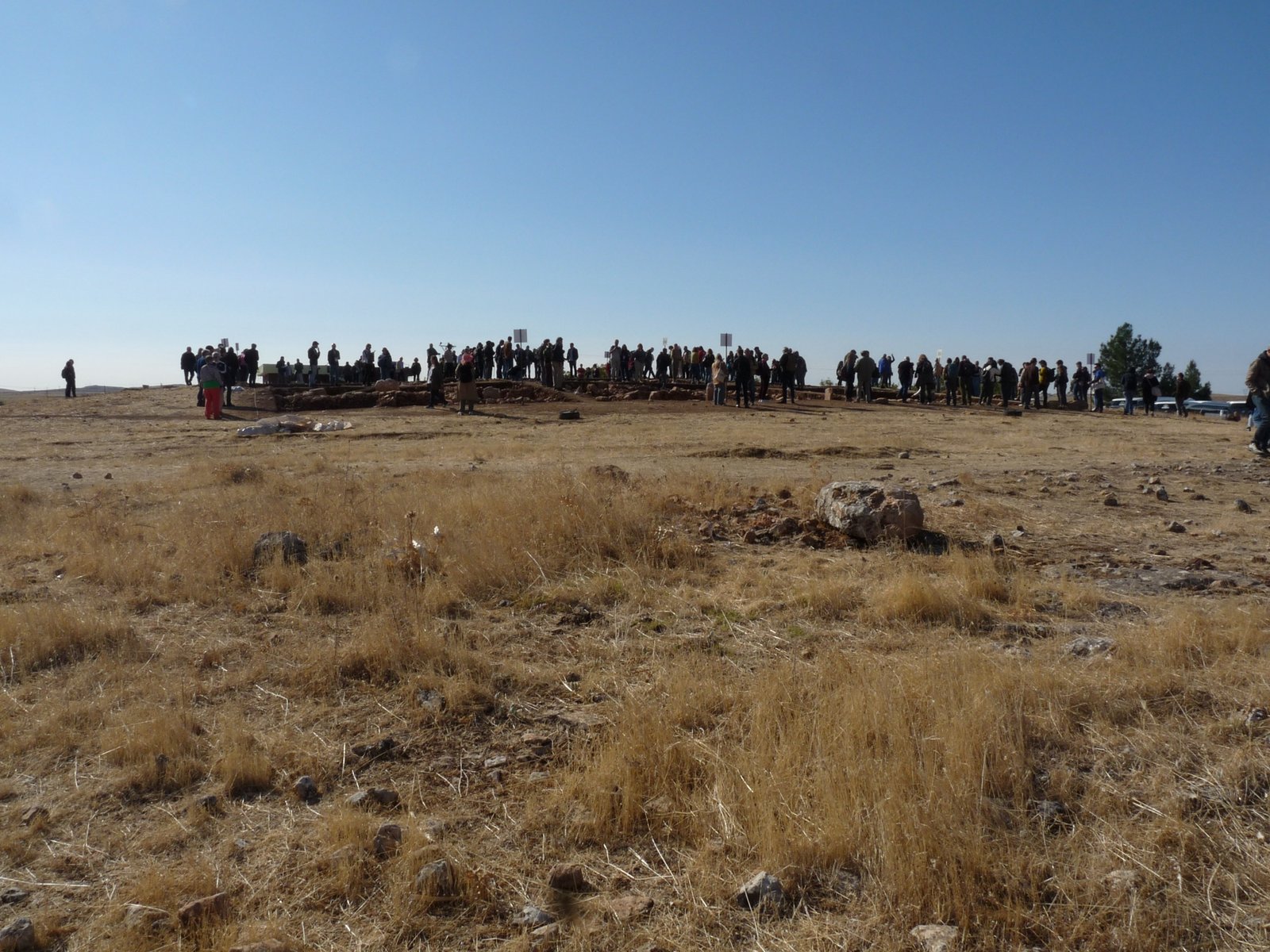
Frantisek Trampota, Sefer Tepe, Public domain, via Wikimedia Commons.
01
02
As excavation reached the base of a special building tied to Sefertepe's skulls, the team recorded that the bedrock had been deliberately levelled, and that carefully cut pits or holes had been worked into the rock surface. In other words the chamber was not simply dug into loose ground: its rock floor was prepared — smoothed and then cut — before it was used.
This detail comes from the 2025-season reporting around the skull room. It is a genuine, concrete observation, but it is reported from the field rather than set out in a formal excavation report.
03
A prepared, levelled bedrock floor with cut pits is the kind of feature that separates a deliberately made ritual or storage space from an ordinary room, and it strengthens the reading of the skull chamber as a purpose-built setting rather than a reused hollow. But the specifics that would carry that argument are not yet published: the number of pits, their dimensions, how they relate stratigraphically to one another and to the building, and — most importantly — whether the pits directly held or related to the skull deposits are all unresolved.
Until the excavation publishes plans and sections, this feature is best read alongside the skull room as part of the same prepared context, without assuming a precise function for the cut pits themselves.
04
Levelling the bedrock and cutting neat holes into it points to a room made deliberately for its role, consistent with the skull deposits nearby. That the cutting is intentional is well supported; what the pits were for is not yet established and should not be assumed.
05
Full bibliography: the Taş Tepeler reference library →
Last reviewed 7 October 2026. Something wrong?