Short answer
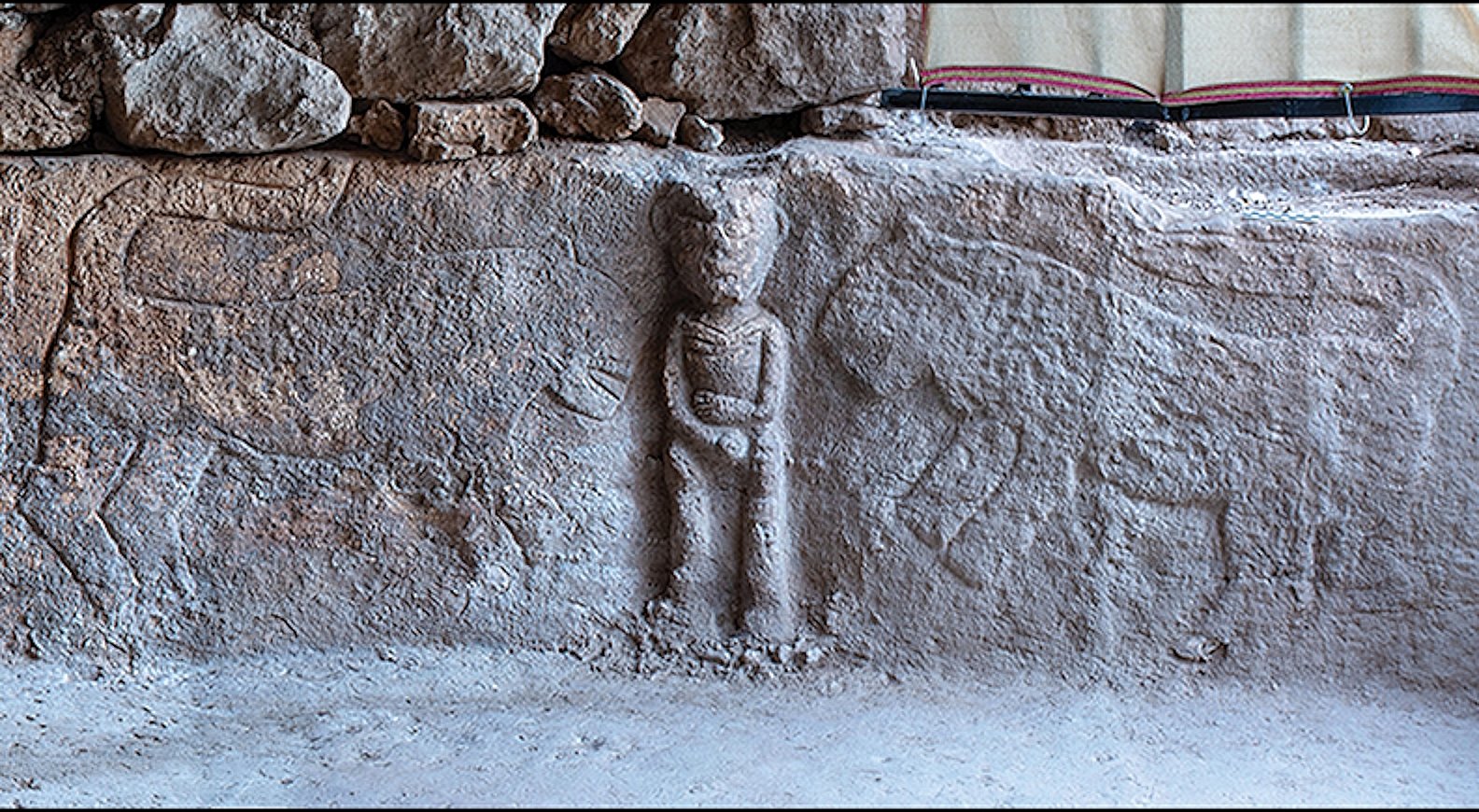
Sayburç matters because its carved narrative relief — a man between two leopards, and a man facing a charging bull — is one of the earliest storytelling scenes ever made, and because that scene sits inside a communal room right among the houses.
Most monumental Neolithic art is a wall of symbols; Sayburç's bench reads more like an event, figures acting on one another. And unlike the remote sanctuary of Göbekli Tepe, the carving sat in a lived-in settlement — sacred imagery in everyday communal space. If the 'narrative' reading holds, a small site under a Şanlıurfa village is important far out of proportion to its size.
The earliest story?
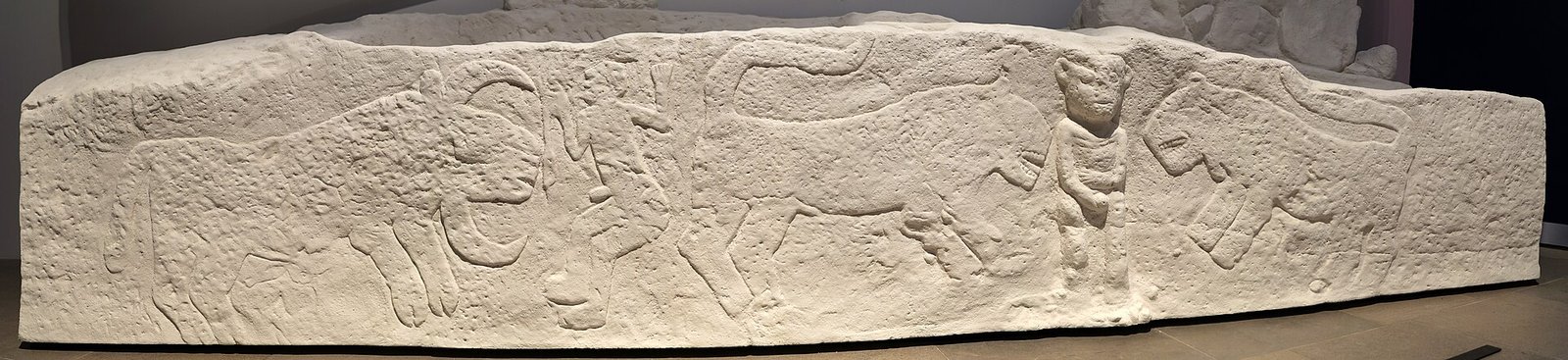
The heart of the case for Sayburç is a relief of five figures in two compositions — a leopard–human–leopard group and a bull–human pair — cut into the front of a bench inside a round communal building. Eylem Özdoğan, who excavates the site, reads it not as a collection of animals but as a situation: an event, a story, or a myth, arranged to be read across like a strip of film.
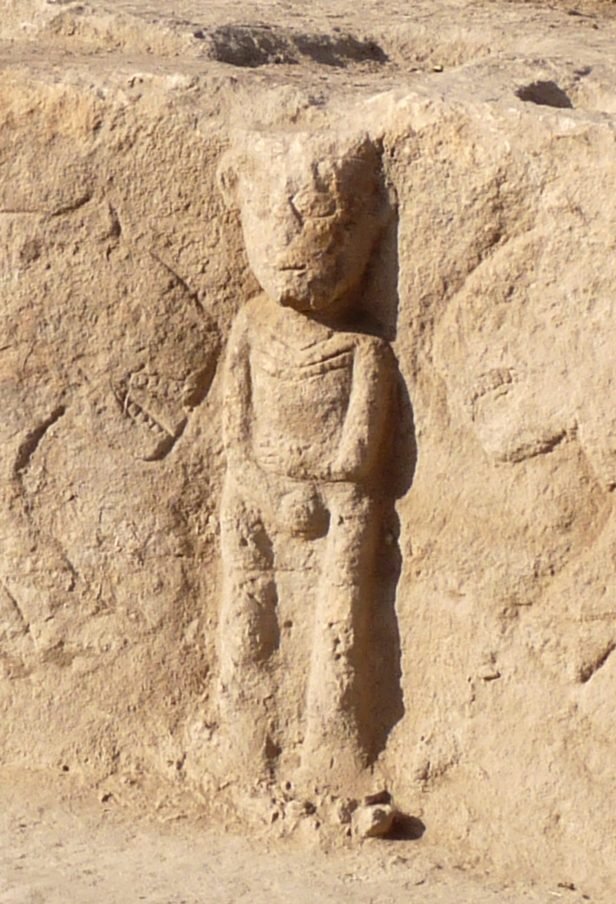
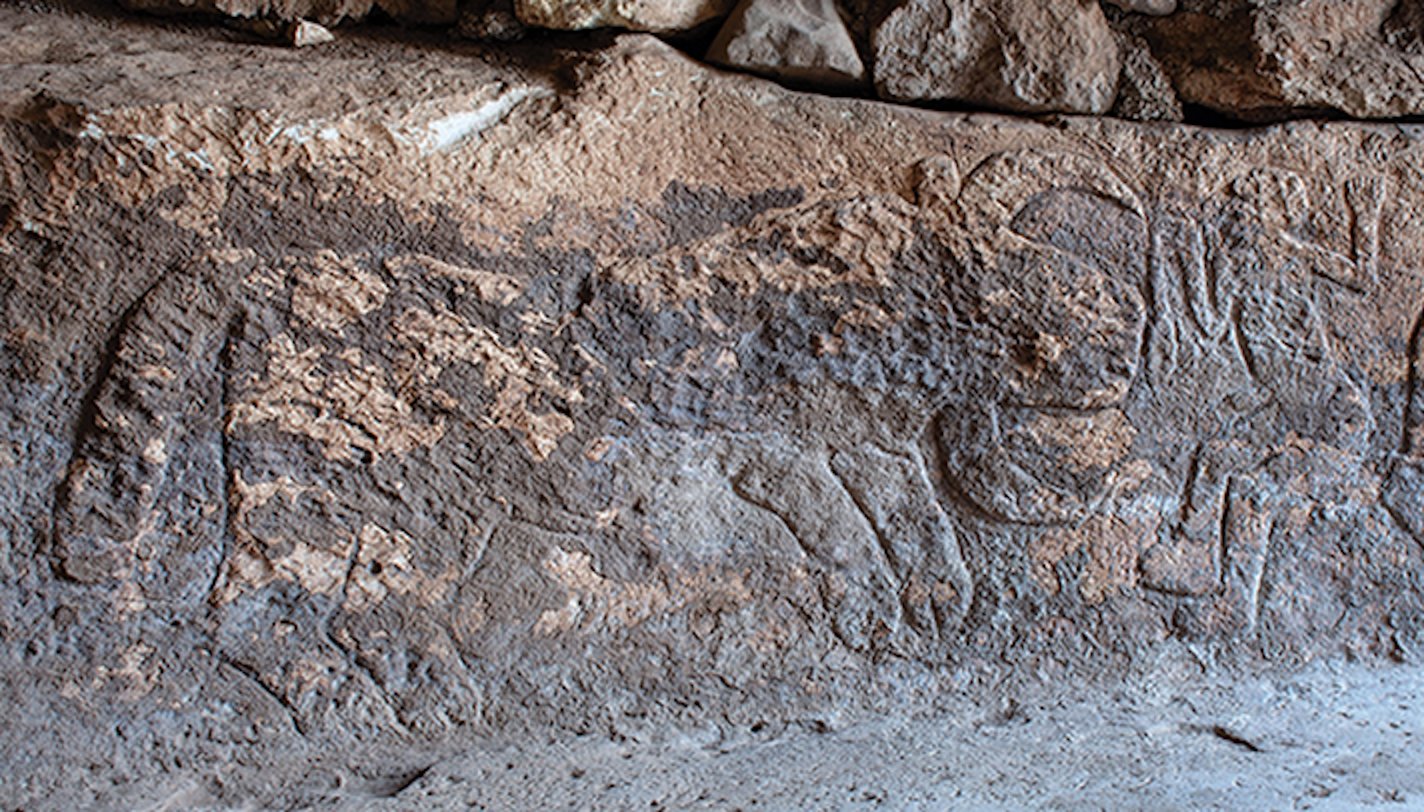
That claim is what makes a modest site extraordinary. Neolithic art is full of animals; animals arranged so that they appear to be acting on one another are rare. If the reading holds, this is among the earliest depictions of a narrative anywhere. For the figures themselves — the phallic man, the leopards, the object that might be a snake or a sling, the charging aurochs — see [the Sayburç relief](/learn/what-is-the-sayburc-relief/).
It is a strong but debated interpretation, not a settled fact. We cannot recover the story, and whether five figures amount to a single 'narrative' is exactly the kind of claim specialists will keep testing.
Art in the room where people lived
What makes Sayburç unusual is not only what it carved but where. This is not a remote hilltop sanctuary — the reliefs run along a bench at the height of people sitting against the wall, inside a building the community gathered in.
That collapses a distinction we tend to assume: that monumental Neolithic art belonged only to special ritual sites set apart from daily life. At Sayburç the same charged imagery of leopards and aurochs sat inside everyday communal space. The sacred and the social shared a wall.
A settlement, not just a shrine
Sayburç is not a sanctuary standing alone. It has residential buildings, several special buildings, and smaller structures of unclear purpose, along with hearths, storage and food-preparation areas — a working village with a remarkable room in it.
Its buildings sit directly on bedrock, the builders cutting into the rock where they needed to and filling where that was easier. The occupation is short and essentially single-layer, which is a real advantage: a site with one main phase is far easier to interpret than one with centuries of rebuilding, and it lets us see the communal building and the ordinary houses as parts of one moment.
Under a living village
Sayburç sits within the modern village of the same name, so the archaeology lies beneath and between people's homes. That is an unusual excavation condition — it limits what can be dug and how fast, and it means the site will probably never be opened the way Göbekli Tepe has been.
It also has a plain consequence: this is somebody's community, not an attraction. It is part of why the site is studied carefully and slowly, and why the reliefs are so precious — they were found in place, in the room they were made for.
What is established, and what is argued
Established: a five-figure relief runs along the bench of a round communal building; the building sits in a genuine settlement with houses and domestic features; the site was excavated under Eylem Özdoğan and published in Antiquity in 2022.
Argued: whether the scene is truly a single narrative and what it depicts; how the communal building relates in time to the houses; and the precise dates. The importance of Sayburç does not rest on winning those arguments — even read cautiously, art in the room where people lived changes how we picture the Neolithic.
The things to see
Common questions
Why is Sayburç important?
It holds a relief of five figures in two compositions that its excavator reads as a narrative scene — figures acting on one another rather than animals arranged on a wall — which would make it among the earliest known depictions of a story.
What does the Sayburç relief show?
Five figures in two compositions: a leopard–human–leopard group, and a bull–human pair, carved into the front face of a bench running around the interior of a round bedrock-cut building.
What is the crouching figure holding?
An upside-down object described variously as a snake or a sling. It is unresolved, and it matters — a snake makes the scene symbolic, a sling makes it a hunt.
How old is Sayburç?
Late Pre-Pottery Neolithic A into the early PPNB, with figures in the region of 8650–8300 BCE discussed from the excavation. The occupation is short and essentially single-layer.
Can you visit Sayburç?
Not as a developed visitor site. It is an active excavation inside a living village, so access is limited and the ordinary courtesies of visiting someone's community apply.
Is Sayburç like Göbekli Tepe?
It shares the regional tradition but is smaller, shorter-lived, and built directly on bedrock. Its relief is more legible as a scene than Göbekli Tepe's imagery, and it has no confirmed perforated skulls of the Göbekli kind.
Sources & further reading4 references
- Özdoğan, E. (2022). The Sayburç reliefs: a narrative scene from the Neolithic. Antiquity 96(390): 1599–1605. doi:10.15184/aqy.2022.125
- Özdoğan, E. (2025). Interviews on the Sayburç excavation and its reliefs. Transcribed interviews held in the Taş Tepeler research atlas. Spoken material, translated from Turkish; paraphrased rather than quoted. See Özdoğan 2022 for the published account.
- Clare, L. (2020). Göbekli Tepe, Turkey. A brief summary of research at a new World Heritage Site (2015–2019). e-Forschungsberichte des Deutschen Archäologischen Instituts 2020(2): 81–88.
- Schmidt, K. (2012). Göbekli Tepe: A Stone Age Sanctuary in South-Eastern Anatolia. Berlin: ex oriente. The foundational monograph by the site's first excavator.
Full bibliography: the Taş Tepeler reference library →