Short answer
Not the way you can visit Göbekli Tepe — Sayburç is an active excavation inside a living village, with no shelter, walkways or visitor centre, so access is limited and depends on the season and on permission.
There is nothing set up to walk around: turning up independently usually means viewing a fenced area from a village street. For most visitors the practical route is the Şanlıurfa Archaeology Museum plus Göbekli Tepe and Karahan Tepe, which are set up for visitors. Seeing Sayburç itself needs a guide with current access, and the situation changes year to year.
The short answer
Sayburç is not a developed visitor site. There is no shelter, no walkway circuit, no visitor centre and no standard opening hours of the kind Göbekli Tepe has.
It is a working excavation, and it sits inside the modern village of Sayburç in Şanlıurfa province. Access depends on the season, on whether a team is on site, and in practice on permission.
Turning up independently will most likely mean looking at a fenced area from the edge of a village street.
Why it is under a village
The archaeology at Sayburç lies beneath and between people's homes. The site was identified in the course of ordinary village life rather than out in open country.
That shapes everything about the excavation. Only certain areas can be opened, work has to fit around residents, and the site will probably never be exposed the way Göbekli Tepe has been.
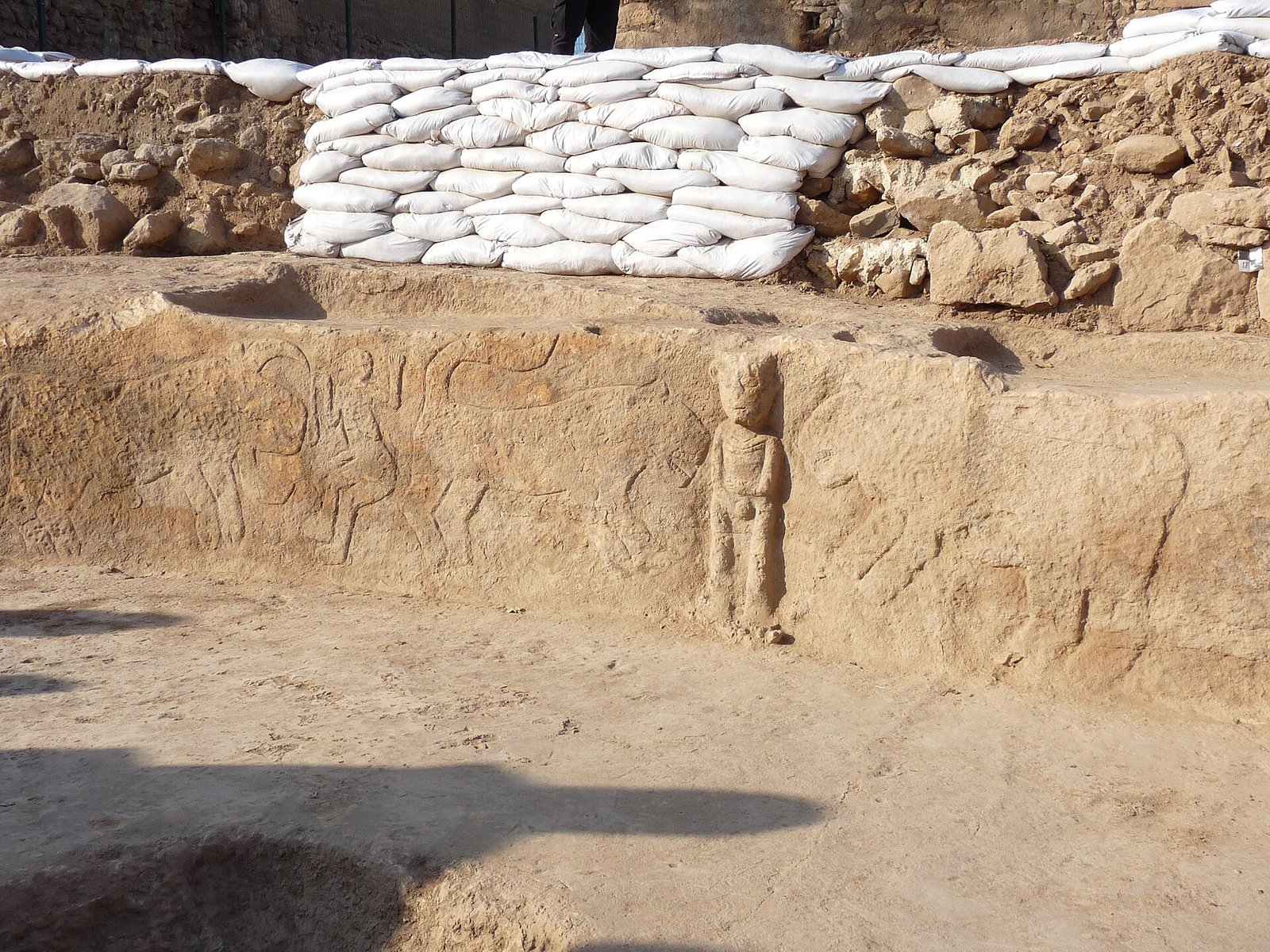
It also means the relief — potentially among the earliest narrative scenes known anywhere — sits in the middle of a functioning community rather than in a protected archaeological park.
The courtesy point
This is worth stating directly, because it is not obvious to people used to archaeological sites as destinations.
Sayburç is somebody's village. The people living there did not choose to have an internationally significant Neolithic site under their houses, and they are not staff.
Photographing homes, entering enclosed ground, or wandering excavation areas unaccompanied are not reasonable things to do. A visit here is closer to visiting a community than to visiting a monument.
How to actually see it
With a guide who has current knowledge of access and, where relevant, arrangements with the excavation. That is the only reliable route, and the situation changes year to year.
For most visitors the practical answer is different: see the Şanlıurfa Archaeology Museum, which holds material from across the region, then Göbekli Tepe and Karahan Tepe, which are properly set up for visitors.
If Sayburç specifically matters to you — and the relief is a genuine reason it might — it needs planning rather than a detour.
What is certain, and what changes
Certain: Sayburç is not, and for the foreseeable future will not be, a developed visitor attraction. The famous relief is not readily viewable on site.
Changes year to year: whether any access is possible at all, which depends on the excavation season, the state of the dig and permissions. Treat anything you read about 'visiting Sayburç' as provisional, and check before you travel.
Common questions
Can you visit Sayburç?
Not as a developed visitor site. It is an active excavation inside a living village, with no shelter, walkways or visitor centre, and access depends on season and permission.
Why is access to Sayburç restricted?
The archaeology lies beneath and between houses in a working village. Only certain areas can be opened, work fits around residents, and it is a community rather than an archaeological park.
What should I visit instead?
Göbekli Tepe and Karahan Tepe are set up for visitors, and the Şanlıurfa Archaeology Museum holds excavated material from across the region.
Can I see the Sayburç relief?
Not readily on site. Seeing Sayburç at all requires a guide with current access knowledge, as the situation changes year to year.
Is it rude to turn up at Sayburç?
Visiting the village is not itself a problem, but entering enclosed ground, wandering excavation areas unaccompanied or photographing homes is not reasonable. Residents are not site staff.
Sources & further reading3 references
- Özdoğan, E. (2022). The Sayburç reliefs: a narrative scene from the Neolithic. Antiquity 96(390): 1599–1605. doi:10.15184/aqy.2022.125
- Şanlıurfa Neolithic Research Project — Taş Tepeler (2026). Official project site (Istanbul University / Şanlıurfa Museum). tastepeler.org link
- Clare, L. (2020). Göbekli Tepe, Turkey. A brief summary of research at a new World Heritage Site (2015–2019). e-Forschungsberichte des Deutschen Archäologischen Instituts 2020(2): 81–88.
Full bibliography: the Taş Tepeler reference library →