Sayburç · Residential area
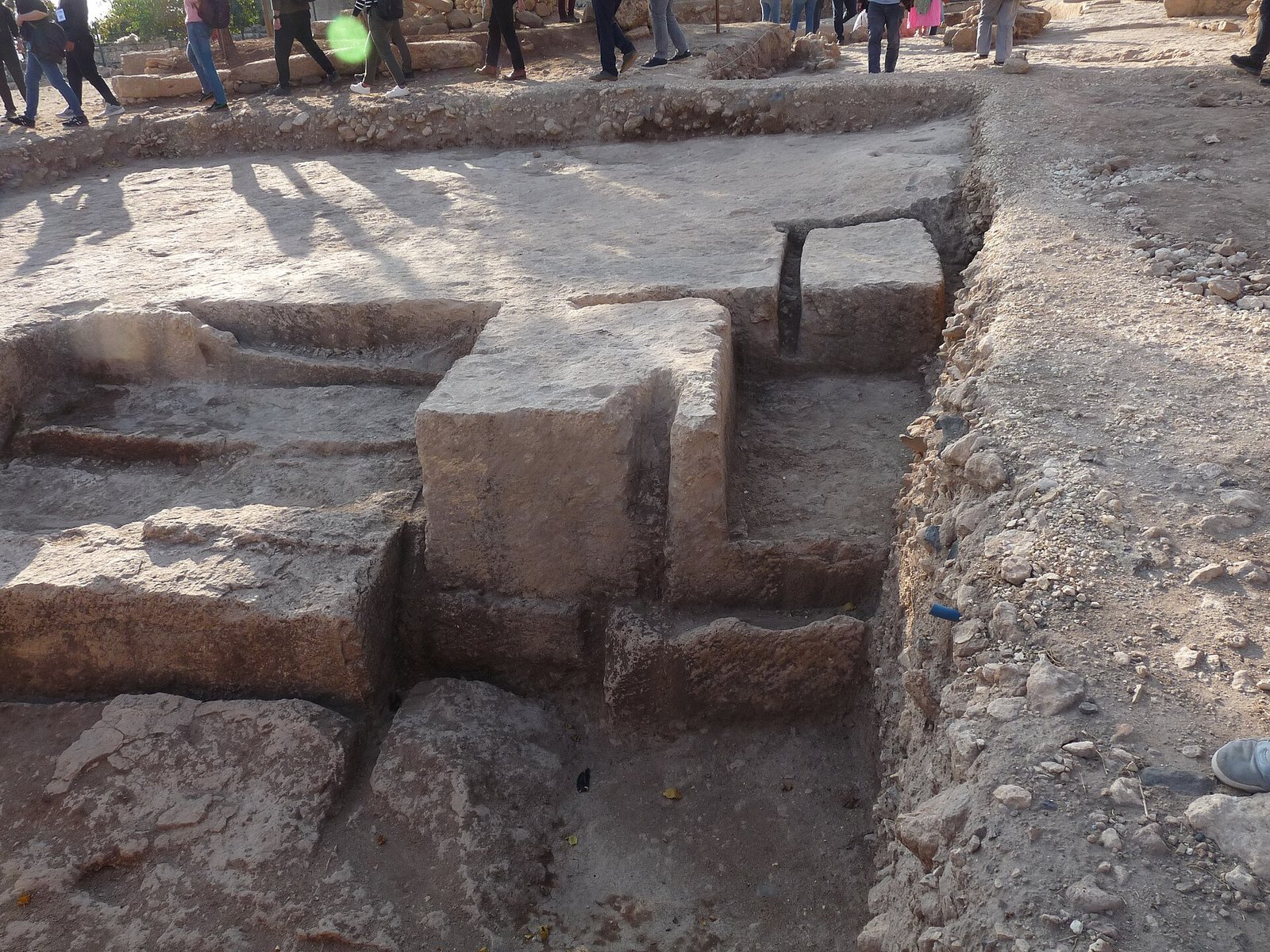
The cluster of houses in Sayburç's southern area — bedrock-floored dwellings with hearths, storage, grinding tools and, in places, carved pillars — showing that the settlement's symbolic and everyday life shared the same ground.
01
02
The southern area is where Sayburç looks most like an ordinary lived-in place. Özdoğan describes it as holding residential buildings alongside several special-purpose buildings and a set of smaller, ambiguous structures, all fitted with the equipment of daily life: bedrock floors, benches, niches, hearths, storage and food-preparation areas, and grinding stones and other tools. Like the rest of the site, these buildings were made with the rock — cut where cutting was needed, filled where filling was easier — rather than imposed as a rigid plan.
What makes the area important is not any single house but the mixture. The southern buildings are where the everyday and the symbolic sit side by side: T-shaped monolithic pillars — the same kind of stone that marks out communal buildings — appear inside dwellings here, typically as a single stone per house. Structure BB, fully excavated, is the clearest example, with a central human-featured pillar standing in a domestic room.
03
The southern domestic buildings are also where Sayburç's mortuary evidence is concentrated: human remains showing secondary treatment — selected long bones and skull fragments, with burning in some contexts — are reported in clusters within these houses rather than in a separate cemetery. The treatment of the dead was folded into the ordinary settlement, not set apart from it.
04
A genuine research question hangs over the area: which of the southern buildings are houses, which are special-purpose, and which are ambiguous hybrids is not yet resolved, and a building-by-building breakdown awaits fuller, feature-level publication. The picture here is a domestic-area cluster drawn from preliminary reporting, not a finished plan of individual structures.
05
The recurring reading of the southern area — offered by Özdoğan and consistent with the finds — is that at Sayburç the symbolic and the domestic were not kept in separate zones. Carved pillars stand in houses; the dead are curated inside dwellings; special buildings sit among the homes. This is interpretation of the pattern, not a claim about what any individual pillar or deposit meant.
How to classify each southern building is an open question the excavation itself has flagged, not something this page can settle. The safest position is to treat the area as a mixed residential cluster and let fuller publication draw the lines.
06
Full bibliography: the Taş Tepeler reference library →
Last reviewed 7 October 2026. Something wrong?