Taş Tepeler

Taş Tepeler / Göbekli Tepe / Building F

Structure · Göbekli Tepe

Building F

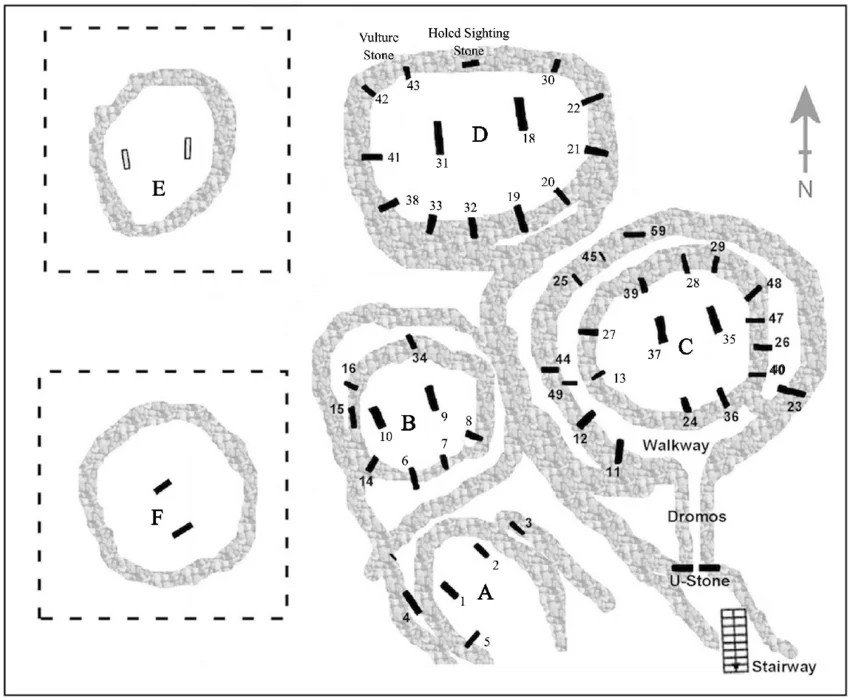
A smaller oval building on the western slope of Göbekli Tepe. Its pillars are unusually informative: several carry arms, hands and V-shaped necklaces, and more than one shows signs of having been reused and recut.

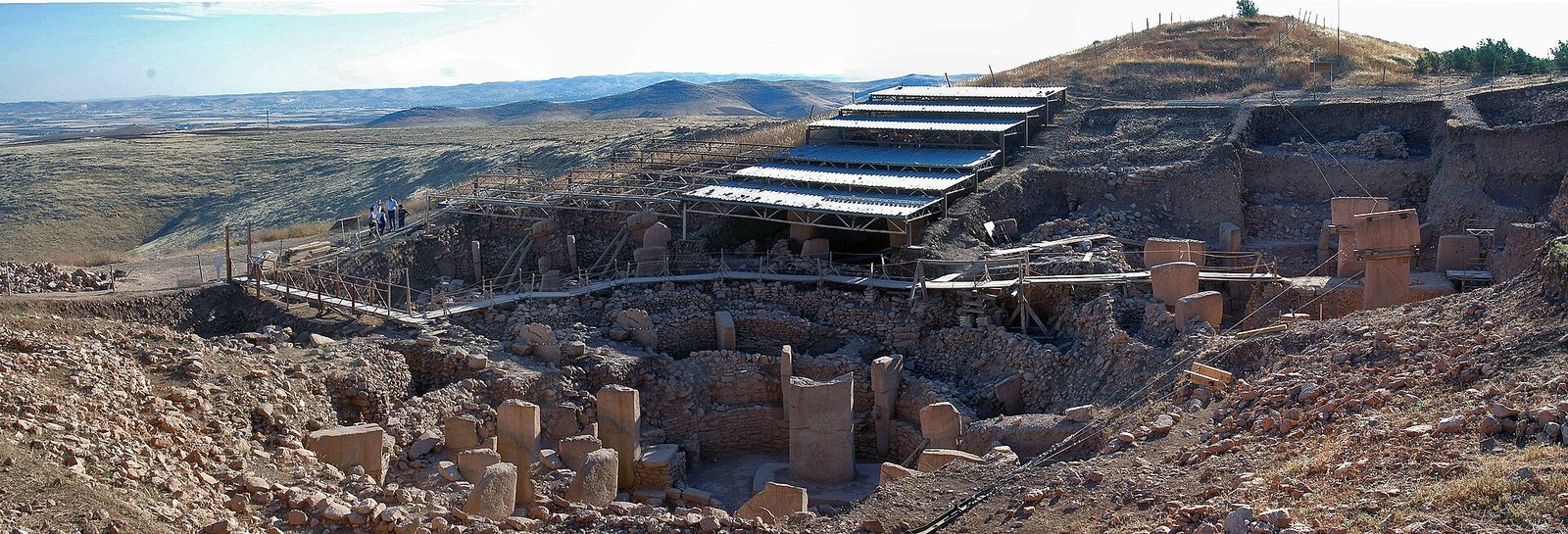
Göbekli Tepe — the enclosures under their shelter. (Site view; not a photograph of this find.)

Rolf Cosar, Göbekli Tepe - 100525, CC BY-SA 4.0, via Wikimedia Commons.

Göbekli Tepe — the enclosures under their shelter. (Site view; not a photograph of this find.) — Wikimedia Commons

A small building that answers big questions

Building F sits on the western slope and is modest beside the great enclosures. It matters because its pillars preserve the anthropomorphic details — arms, hands, belts, necklaces — more legibly than many larger examples, and because several of them were clearly not left as first made.

The pillars, one by one

Pillar 71 — the southern central pillar, surviving as a stump embedded in the floor.

Pillar 74 — carries the building's human-and-animal relief.

Pillar 75 — in the south-east, with arms, hands and a V-shaped necklace, and strong evidence that it stands in a secondary context and was refashioned more than once.

Pillar 76 — in the east, preserving a predator, possibly a leopard, together with a deeper bird relief showing a curved beak.

Pillar 77 — in the east, with relief bands running along its rear narrow side.

Pillars 72 and 73 — recorded in the building's inventory, but without detailed published imagery.

Pillar 70 — the fox and arm-bend pillar, which has its own page.
Reused, recut, re-made

The most interesting thing about Building F is not any single pillar but the pattern across them. Pillar 75 in particular shows secondary context and repeated refashioning — a stone that was shaped, used, moved and worked again.

That fits a wider observation from the excavation: imagery at Göbekli Tepe was not fixed. Reliefs were erased, reworked and re-made, and Lee Clare has emphasised that the site should not be read as a finished, static composition. The pillars had working lives.

Associated features here include bench masonry, bench platforms and wedge stones — the practical carpentry of holding heavy uprights in place.

What is still unclear

Building F's phasing, the original positions of its reused pillars, and the relationship between its smaller oval plan and the great enclosures are all open. Pillars 72 and 73 remain effectively undocumented in public sources.

Sources & further reading4 references
  1. Clare, L. (2020). Göbekli Tepe, Turkey. A brief summary of research at a new World Heritage Site (2015–2019). e-Forschungsberichte des Deutschen Archäologischen Instituts 2020(2): 81–88.
  2. Schmidt, K. (2012). Göbekli Tepe: A Stone Age Sanctuary in South-Eastern Anatolia. Berlin: ex oriente. The foundational monograph by the site's first excavator.
  3. Notroff, J., Dietrich, O. & Schmidt, K. (2014). Building Monuments, Creating Communities. Early monumental architecture at Pre-Pottery Neolithic Göbekli Tepe. In J.F. Osborne (ed.), Approaching Monumentality in Archaeology: 83–105. Albany: SUNY Press.
  4. Clare, L. (2025). Public lectures and interviews on Göbekli Tepe (Göbekli Tepe Project, DAI). Transcribed talks and interviews held in the Taş Tepeler research atlas. Spoken material rather than a peer-reviewed publication; positions may be refined in print.

Full bibliography: the Taş Tepeler reference library →

See it for yourself

We run small-group and private tours across the Taş Tepeler landscape.

Plan a visit →

Last reviewed 21 July 2026. Something wrong?