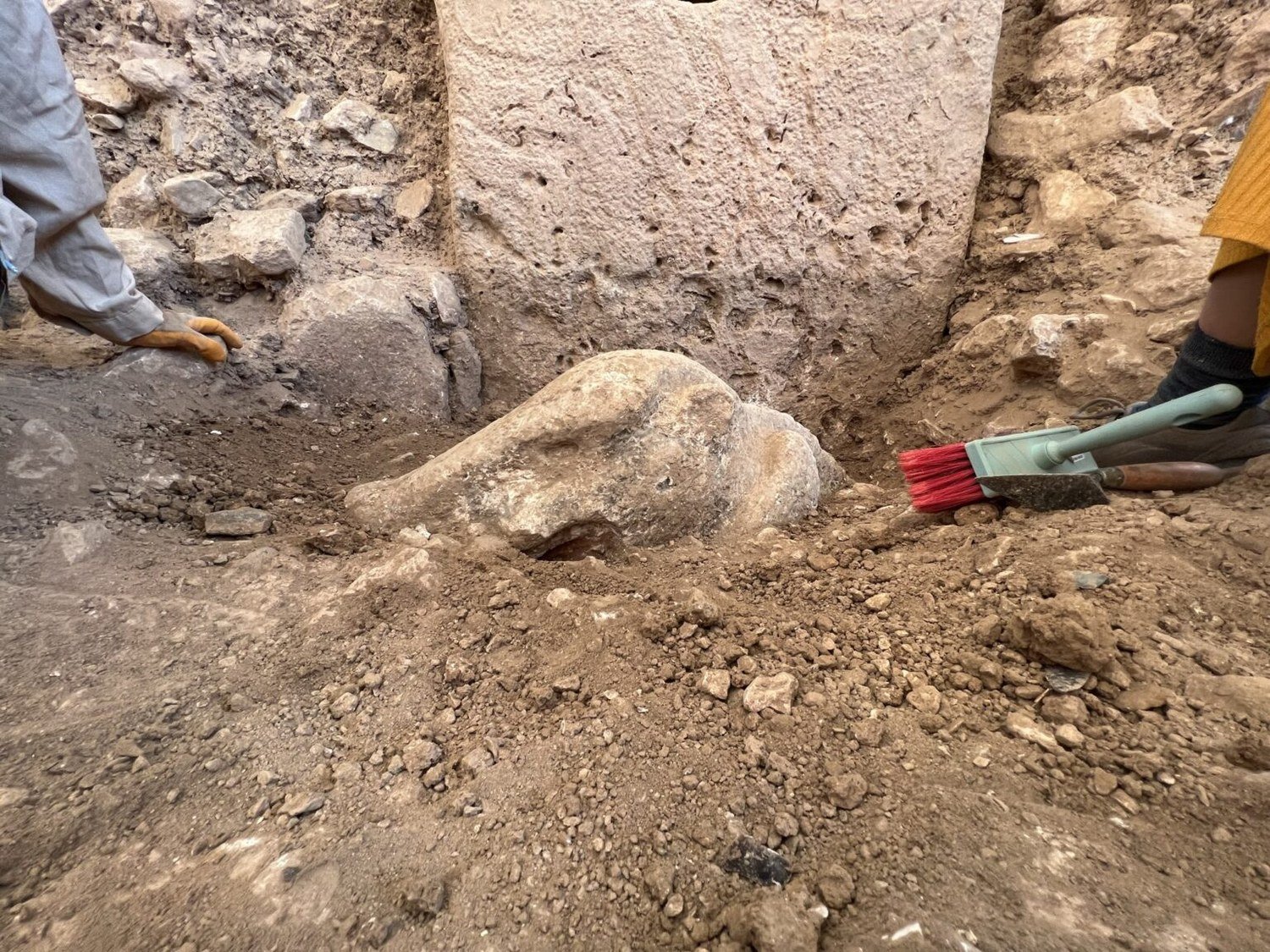
In 2023, excavators lifted a life-sized wild boar from the floor of one of Göbekli Tepe's oldest buildings. It still held flecks of red, black, and white pigment — making it the first known painted statue of the Neolithic period, and proof that this world was not the bare grey stone we imagine.
Where it stood
The boar wasn't lying in rubble by chance. It was found in the northern part of Special Building D — one of Göbekli Tepe's great round enclosures — set on a stone bench between two of the building's pillars (P43 and P78) and directly in front of a third (P67). In other words, it stood at the visual focus of the room, facing anyone who entered.
The bench it rested on is itself carved. Running left to right along its front are low reliefs of an H-shaped symbol, a crescent, two snakes, and three human faces or masks. The boar was the centrepiece of a deliberately composed scene — not decoration, but a statement the builders wanted seen.
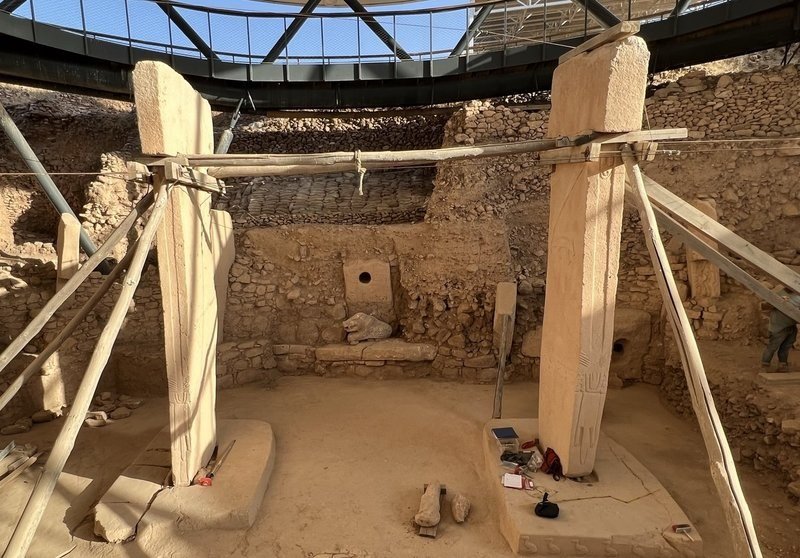
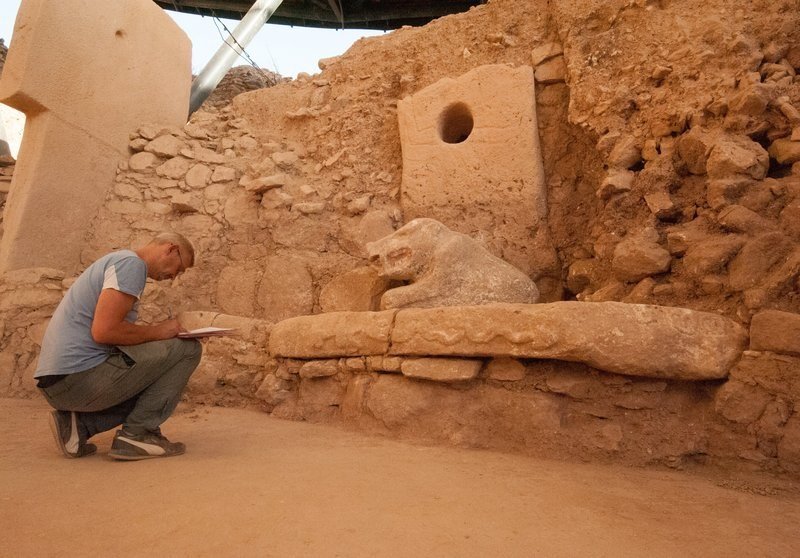
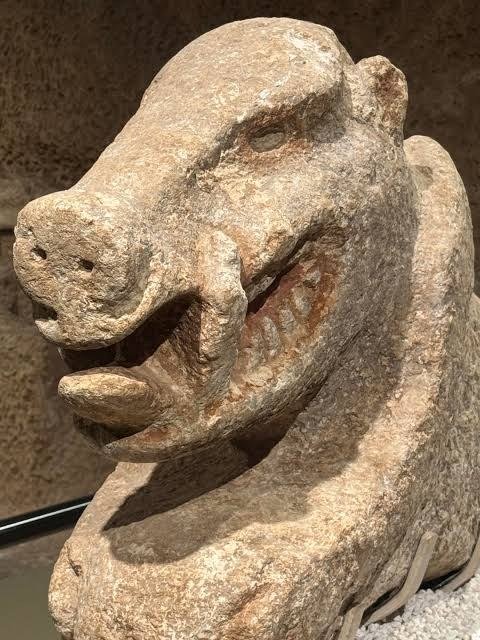
The 2023 discovery in Special Building D. © DAI Istanbul — Göbekli Tepe Project.
Residues of red, black, and white pigment survived on the statue's surface. The tongue was coloured red; black and white pigment appear elsewhere on the body.
Archaeologists had long suspected that the pillars and statues of Göbekli Tepe were painted — but suspicion isn't proof. The pigment on this boar is the first unambiguous evidence.
It changes how we should picture the whole site. The enclosures we see today are weathered grey limestone. Eleven thousand years ago, they may have been vivid — painted animals looming in colour by firelight. The boar is our best clue to that lost, brighter world.
Why it matters
This single find rewrites a detail that touches everything. If the boar was painted, the T-pillars and the other carved animals almost certainly were too. Every reconstruction, every mental image of Göbekli Tepe as austere bare stone needs a coat of colour added back.
It also tells us something about care and intention. A community of hunter-gatherers quarried the block, carved a convincing animal, painted it in three colours, and placed it at the heart of their most important building. That is craft, meaning, and ceremony — thousands of years before the first cities.
Boars across Göbekli Tepe
The wild boar was clearly a charged animal here. Beyond this statue, boars appear again and again in the site's art — carved in relief on the pillars, sculpted in the round, sometimes shown with bared teeth. The gallery below shows a few of the other boars found across the enclosures.
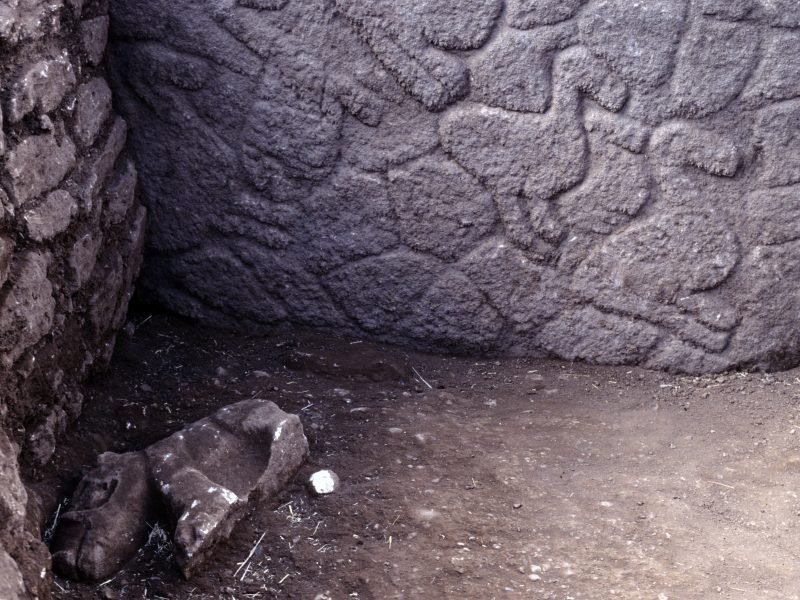
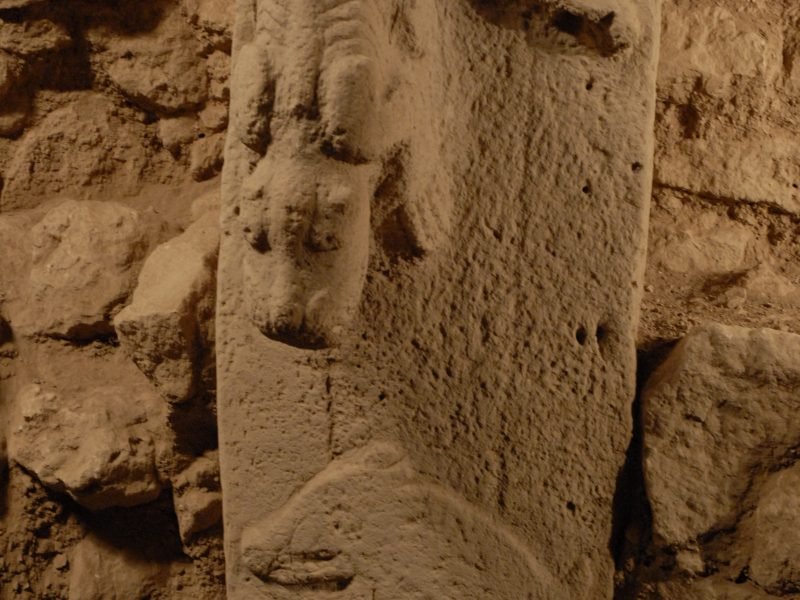
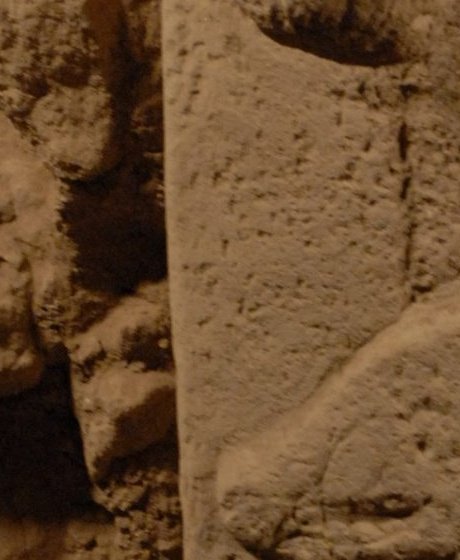
Relief and sculpture details, Göbekli Tepe. © DAI / Nico Becker & Göbekli Tepe archive.
German Archaeological Institute, Göbekli Tepe Project, Boar relief, Enclosure C, Göbekli Tepe, Copyright: DAI — used with permission, via .
German Archaeological Institute, Göbekli Tepe Project, Predator and boar detail, Pillar 27, Göbekli Tepe, Copyright: DAI — used with permission, via .
German Archaeological Institute, Göbekli Tepe Project, Boar sculpture at Pillar 12, Göbekli Tepe, Copyright: DAI — used with permission, via .
Sources & further reading3 references
- German Archaeological Institute (DAI), Istanbul Department (2023). Life-size statue of a wild boar found in Special Building D of Göbekli Tepe (press release, 8 Oct 2023). DAI Newsroom. Announcement; a formal excavation publication is pending.
- The Tepe Telegrams (official research blog of the Göbekli Tepe Project, DAI). The Tepe Telegrams. Deutsches Archäologisches Institut. link Accessible, authoritative running commentary from the excavation team.
- Schmidt, K. (2012). Göbekli Tepe: A Stone Age Sanctuary in South-Eastern Anatolia. Berlin: ex oriente. The foundational monograph by the site's first excavator.
Full bibliography: the Taş Tepeler reference library →