Göbekli Tepe · Şanlıurfa, Türkiye · The great buildings beyond the main area
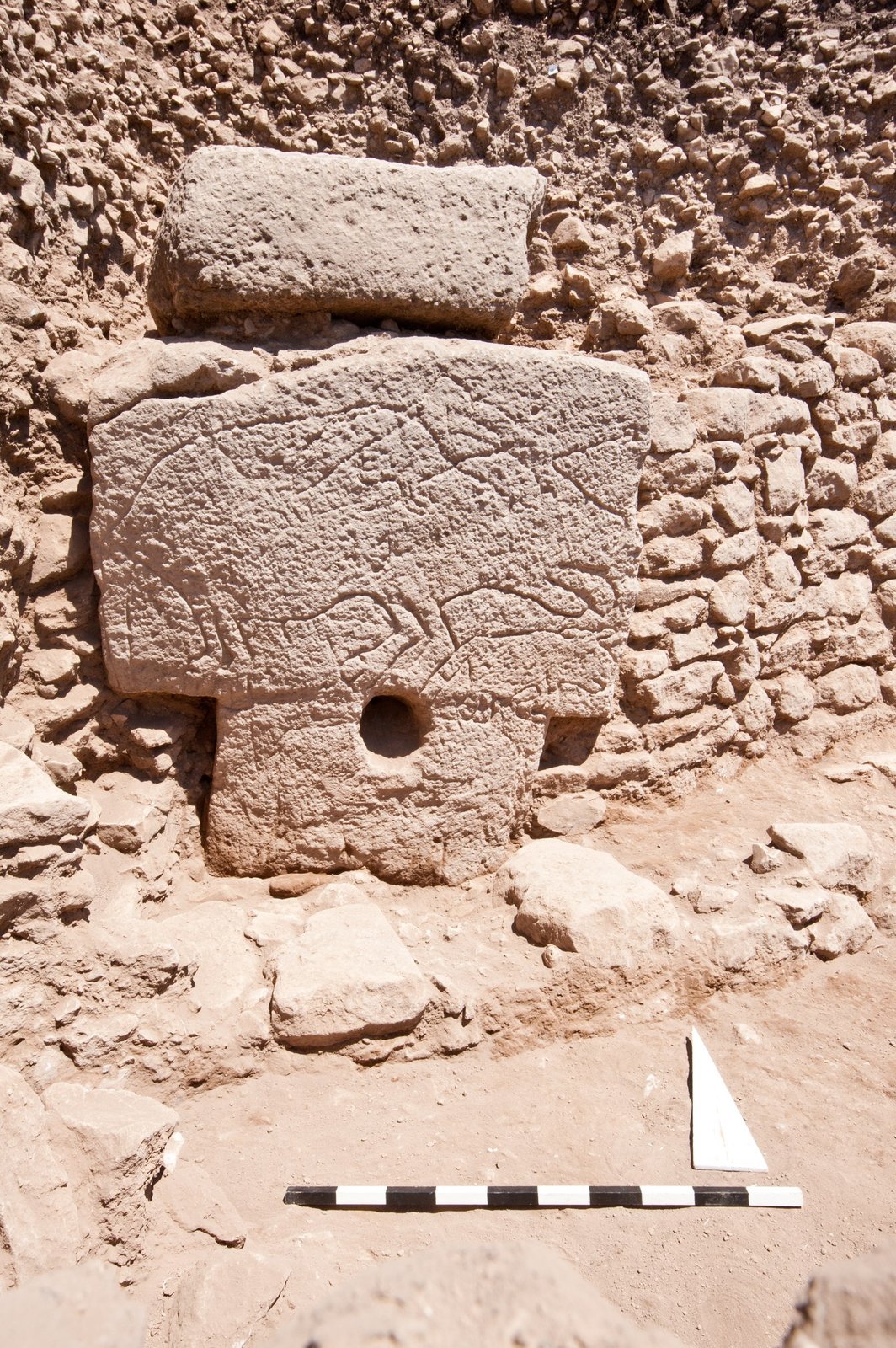
PPNA · Layer III · 10th millennium BCE · northwestern depression · probably elliptical, >10 m across · central Pillar 51 (big cat)
A large, only partly excavated enclosure in Göbekli Tepe's northwestern hollow — proof that the great T-pillar buildings continued well beyond the famous main area — home to Pillar 56, one of the most densely carved surfaces at the whole site.
German Archaeological Institute, Göbekli Tepe Project, Pillar 51, Enclosure H, Göbekli Tepe, Copyright: DAI — used with permission, via .
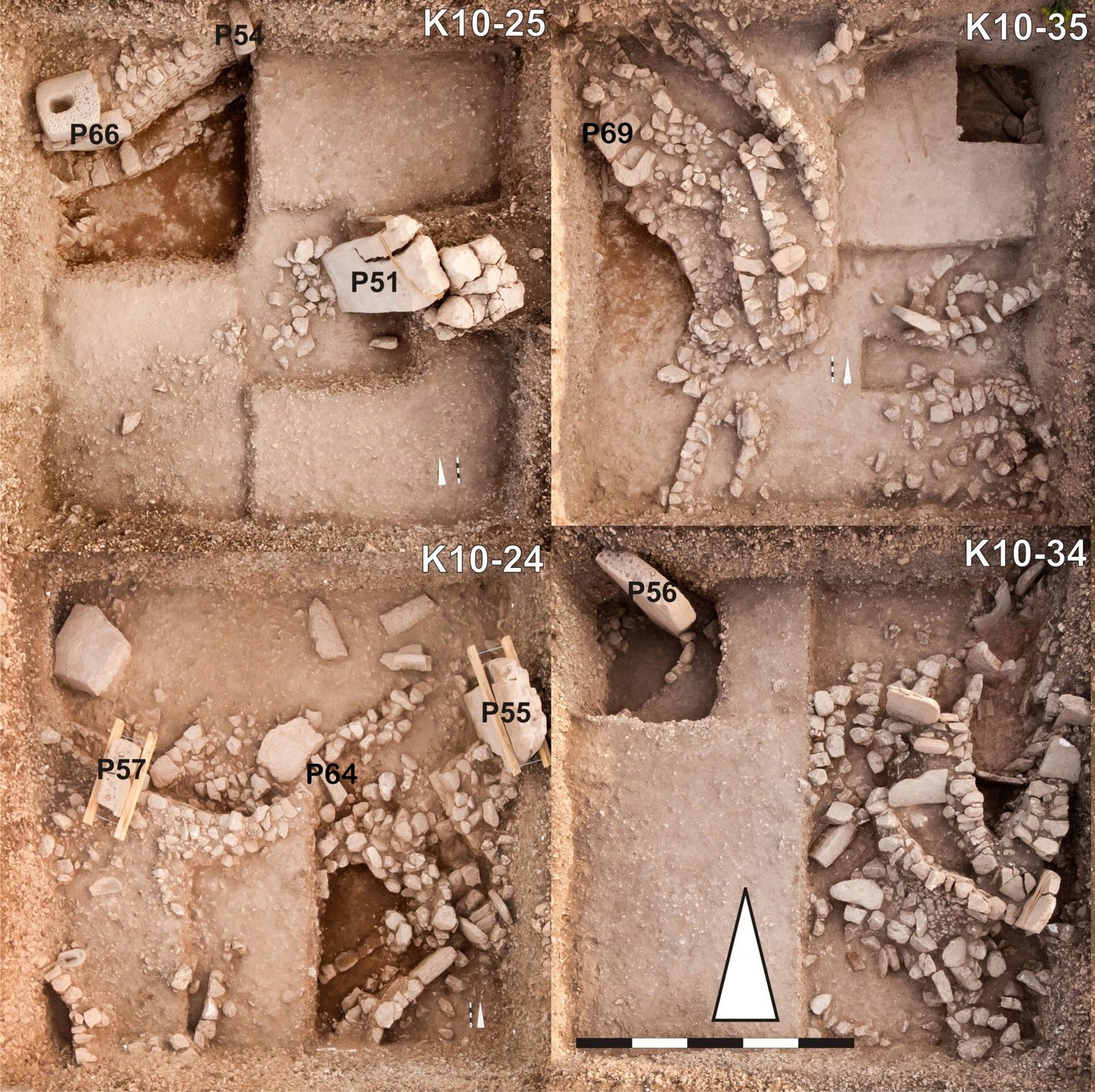
A pillar, not the building as a whole: Enclosure H is only partly dug, and no aerial photograph is possible under the protective works. See the trench mosaic and site plan under Architecture.
01
Enclosure H was found by geophysical survey and dug from 2011 — a reminder that the monumental buildings spread across the whole mound, not only the famous main cluster. It is only partly excavated, so its plan is provisional.
Location, georadar discovery, the 2011 start, the probable elliptical plan and the eight reported pillars are from the excavation team (DAI, "Introducing: Enclosure H"). The western central pillar has not been recovered, so the centre's full scheme cannot be reconstructed from Pillar 51 alone.
02
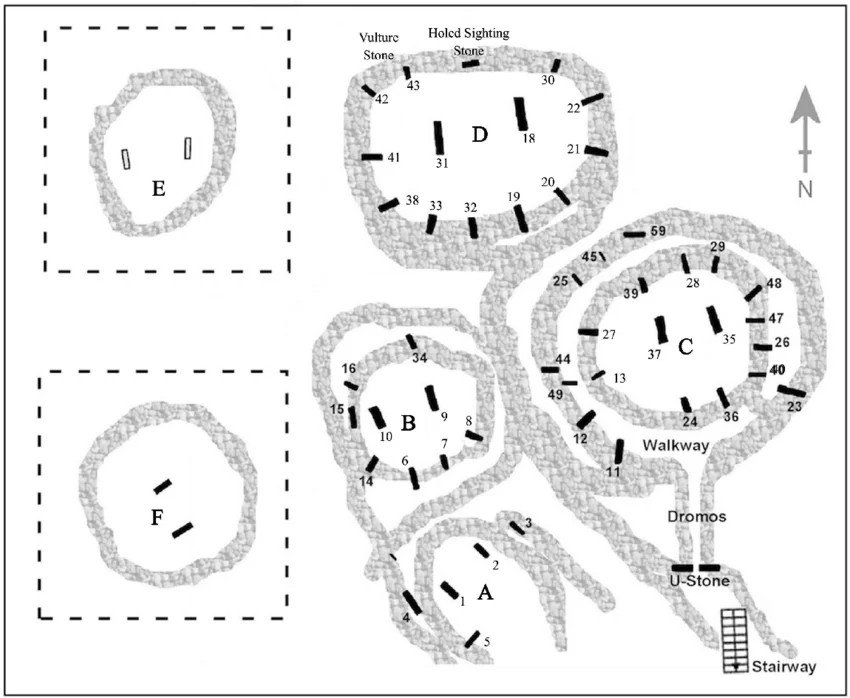
Enclosure H lies in the northwestern depression, away from the main cluster of enclosures that made the site famous. It was recognised through geophysical survey and excavated from 2011 onward. The wall line suggests a structure that is probably elliptical, with an inner diameter of more than 10 metres, and eight pillars have been reported (51, 54, 55, 56, 57, 64, 66 and 69). Its eastern central pillar, Pillar 51, was found toppled but still in its original position, its head damaged; its western partner has not been recovered.
After a period of use, Enclosure H was backfilled and buried like the main-area enclosures. But its southern section shows that people came back: the wall there was found in a chaotic state, with broken benches and pillar fragments out of place, marking at least one later intervention — a short flight of steps there may even be an entrance. This return to a filled building echoes Enclosure C, where a later pit was dug down specifically to smash the central pillars; the same pattern of deliberately disturbing the centre of a buried monument was recognised at H.
German Archaeological Institute, Göbekli Tepe Project, Enclosure H, Göbekli Tepe, Copyright: DAI — used with permission, via .
Key to the building —
Central pillar 51 the eastern central stone, with a big cat on its broad side; the western central pillar is not recovered.
Ring / wall pillars the reported wall pillars 54, 55, 56, 57, 64, 66 and 69 — including Pillar 56 (the crowded menagerie), 57 (a bucranium) and 66 (a scratched, dying aurochs).
Disturbed south a chaotic southern section — broken benches and displaced pillar fragments recording a later intrusion, echoing Enclosure C.
03
The density of carving on Pillar 56 makes Enclosure H important out of all proportion to how little of it has been dug. Big cats, birds and snakes dominate — the repertoire of the better-known enclosures, off the main stage.
Central · P51
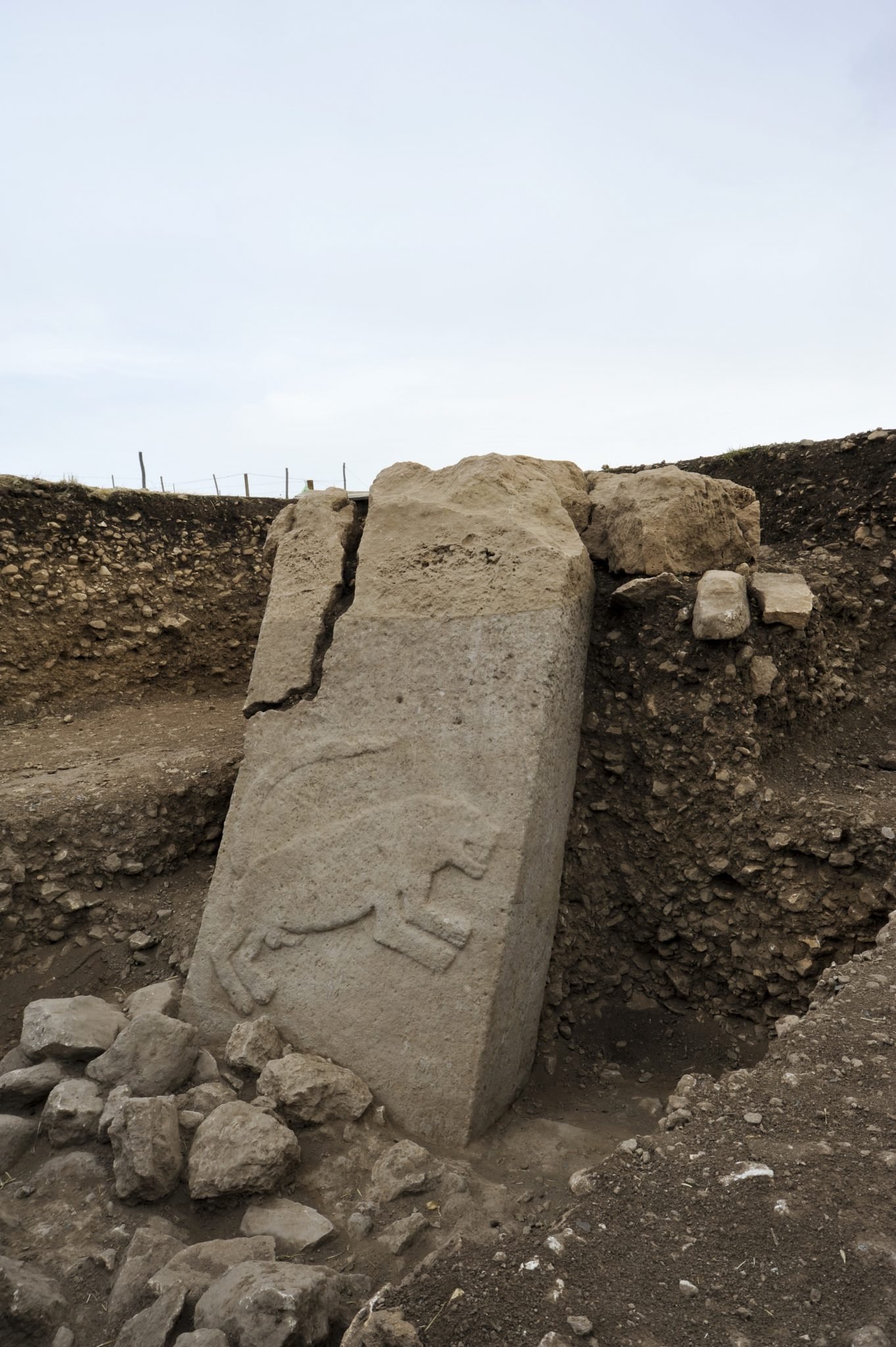
The eastern central pillar, and so far the only central pillar recovered: a garment-like band down its front and a big cat prowling down its western broad side. Found toppled in situ with its head heavily damaged.
Ring wall · P56
Pillar 56 — the crowded menagerie
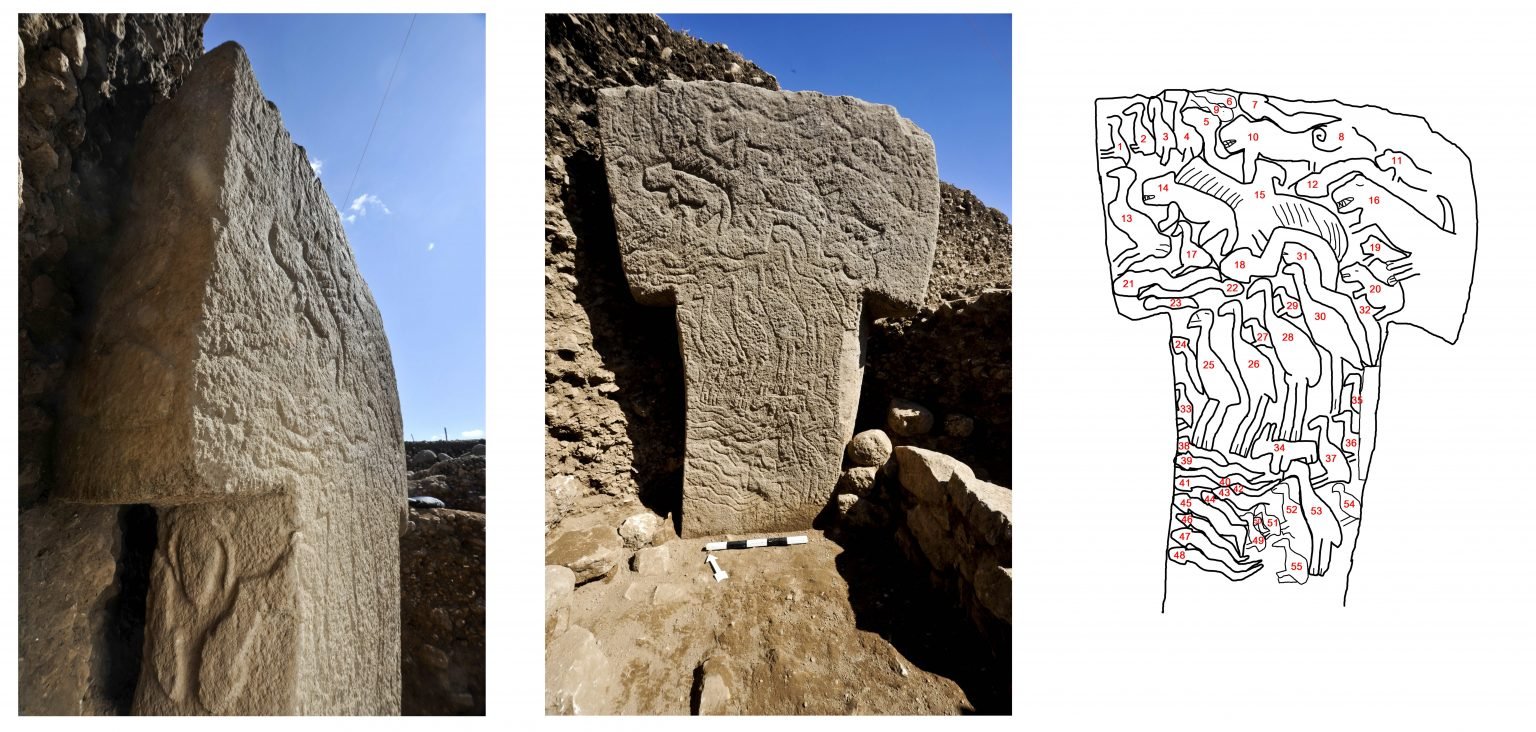
One of the most crowded carved surfaces at Göbekli Tepe: about fifty-five animals packed so tightly each outline runs into the next, with a bucranium framed by two snakes on the narrow front.
German Archaeological Institute, Göbekli Tepe Project, Pillar 56, Enclosure H, Göbekli Tepe, Copyright: DAI — used with permission, via .
Full page →Ring wall · P57
Pillar 57 — no page yet
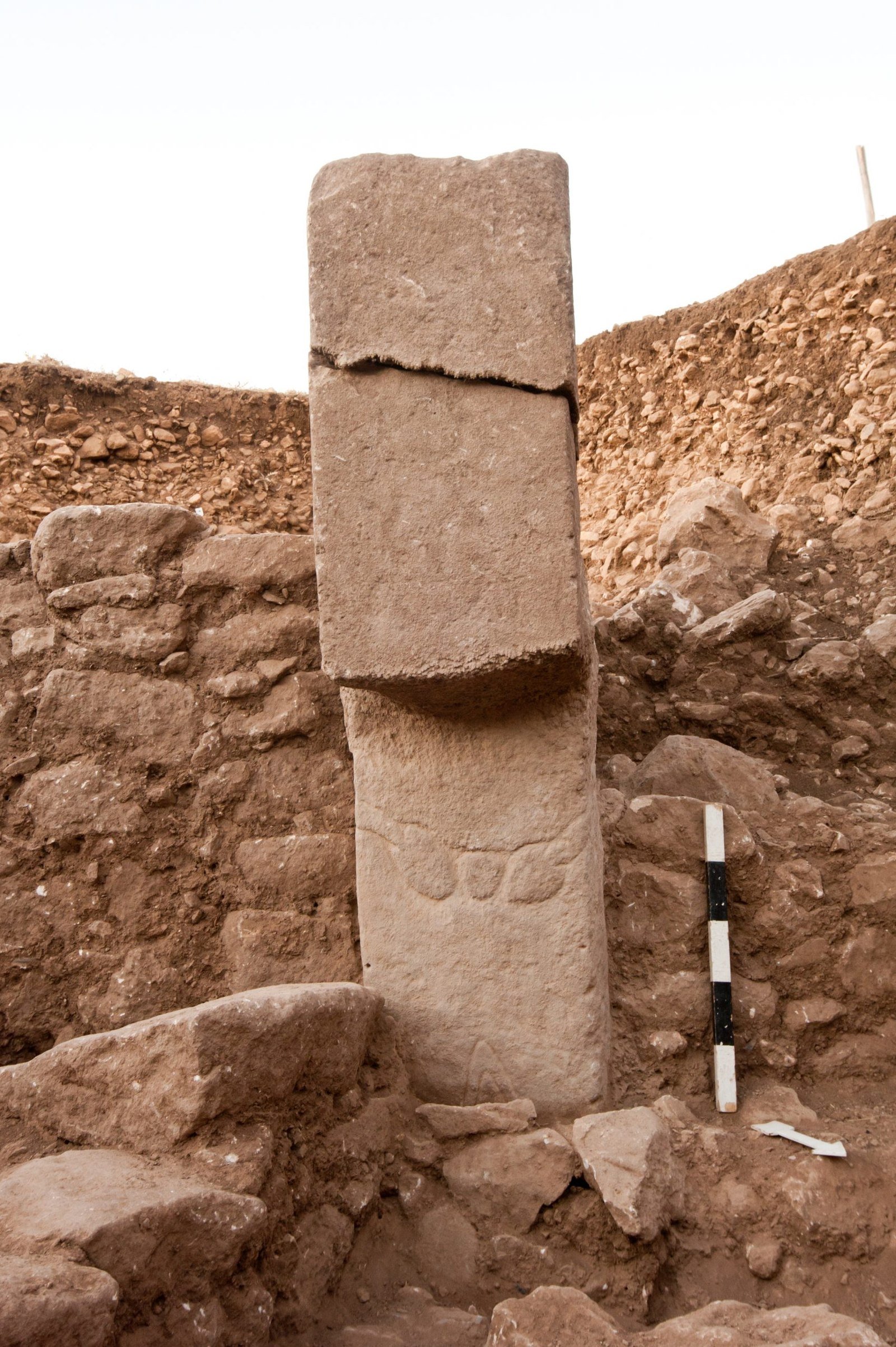
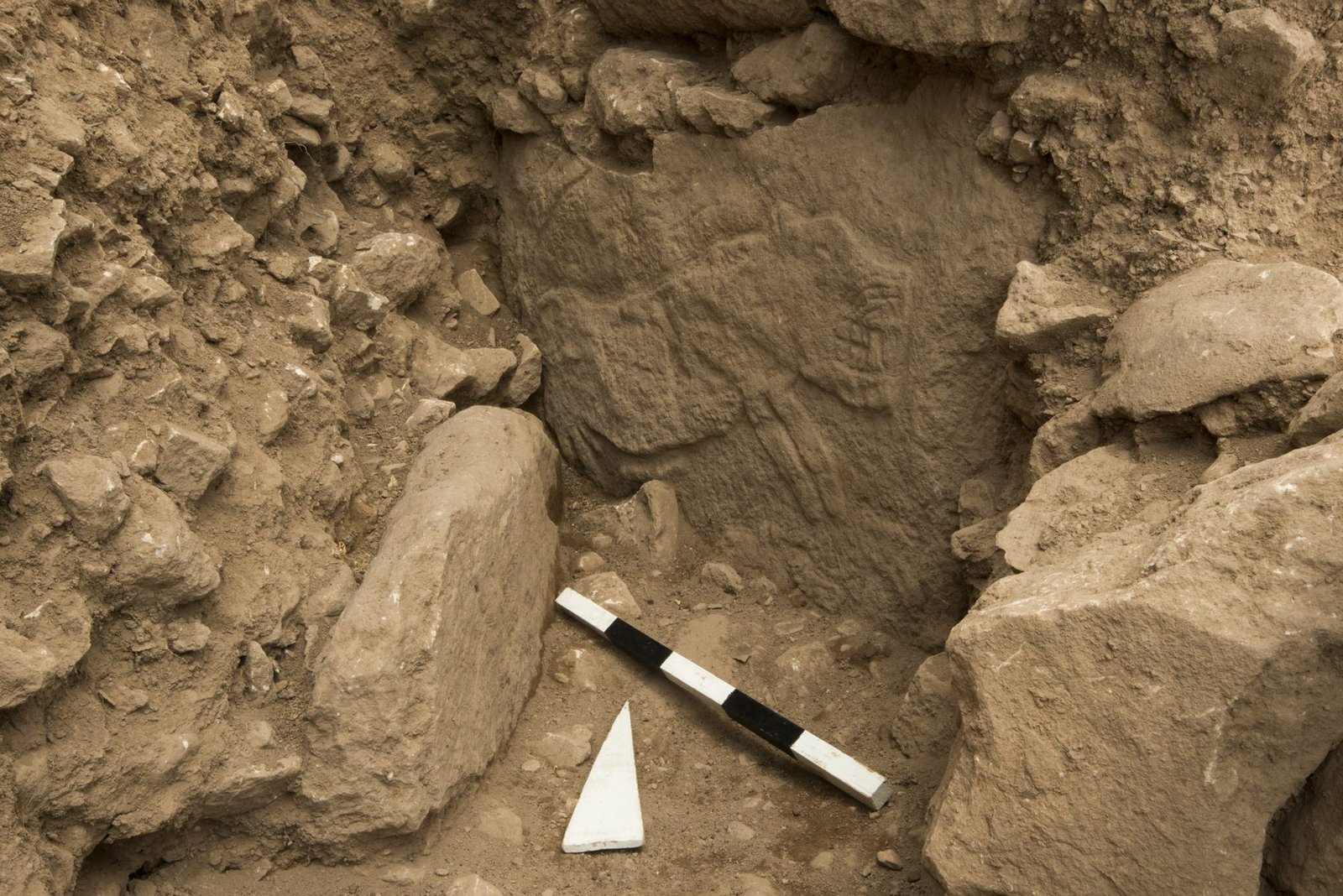
Standing in the trench with a bucranium (bull's-head motif) low on its shaft; two snakes face a round object among its carvings.
Ring wall · P66
Pillar 66 — no page yet
Set unusually parallel to the wall rather than facing the centre, carrying a large horned beast — probably an aurochs — engraved in rough, scratched lines, legs flexed and tongue out, read as a dying animal. Traces of an older relief beneath suggest a reused, recut stone.
German Archaeological Institute, Göbekli Tepe Project, Pillar 66, Enclosure H, Göbekli Tepe, Copyright: DAI — used with permission, via .
Ring wall · P69
Pillar 69 — no page yet
Recorded in situ in the trench; its worn broad face carries a low relief read as a big cat, though the surface is too eroded for the animal to be made out with confidence.
04
Pillar 56's southwestern broad side is covered edge to edge with animals — the excavators counted roughly 55 of them, packed so densely that the contour of one image becomes the contour of its neighbour, with almost no empty stone between. Reading down the crowd: ducks at the top, then snakes and a run of quadrupeds most plausibly read as felids, with a large bird of prey gripping a snake; cranes and more water birds below, then more snakes. It is less a scene than a swarm. Turn to the narrow front and the crowding gives way to a single deliberate motif — a bucranium flanked by two snakes.
The temptation with a surface this rich is to decode it — to treat the fifty-five animals as a list, a calendar, or a coded message. The evidence does not support that. The same creatures recur across pillar after pillar, so no single animal here is likely to be a unique sign. What Pillar 56 shows, unusually clearly, is a deliberate aesthetic of density and a repeated grammar of dangerous animals, worked with real control of the stone. Its meaning we can see but not translate.
05
Enclosure H's carved stones, gathered as one catalogue. Where a full object page exists, it is linked from the card. All cards use real archive photographs.

Ring wall · P56
Pillar 56 — the crowded menagerie
About fifty-five animals — ducks, snakes, big cats and a bird of prey clutching a snake — packed so tightly each outline runs into the next, with a snake-framed bucranium on the narrow front. Among the most intensely carved single surfaces at the whole site.
Photo & drawing: N. Becker, DAI, Göbekli Tepe Project.
Full page →
Central · P51
Pillar 51 — the big-cat central pillar
The one central pillar so far found — a garment-like band down its front and a big cat on its western broad side. Found near the surface, toppled where it stood, its head badly damaged. Its western partner has not been recovered.
Photo: DAI, Göbekli Tepe Project.
Full page →
Ring wall · P66
Pillar 66 — the dying aurochs
A large horned beast, probably an aurochs, engraved in rough scratched lines with legs flexed and tongue out — read as a dying animal. Set unusually parallel to the wall, and with traces of an older relief beneath, so it looks like a reused, recut stone.
Photo: N. Becker, DAI, Göbekli Tepe Project.

Ring wall · P57
Pillar 57 — the bucranium
A tall wall pillar carrying a bucranium (bull's-head motif) low on its shaft, with two snakes facing a round object among its carvings — the same vocabulary of bulls, snakes and discs seen elsewhere at the site.
Photo: DAI, Göbekli Tepe Project.

Ring wall · P69
Pillar 69 — the eroded relief
A wall pillar recorded in situ, its worn broad face carrying a low relief read as a big cat — though the surface is too eroded for the animal to be made out with confidence. Shown for completeness, with that honest caveat.
Photo: DAI, Göbekli Tepe Project.
Five cards, all real archive photographs. Full object pages exist for Pillar 56 and Pillar 51; Pillars 57, 66 and 69 are shown as photographed pillars without a separate page. Pillars 54, 55 and 64 are recorded in the trench mosaic but have no verified individual photograph here.
06
Secure — attested by the architecture and the carvings.
Readings, not facts.
An open question. The imagery is securely recorded; what it meant, and exactly why people returned to disturb the buried building, are not established.
07
08
The carved pillars of Enclosure H are catalogued above under The carved pillars. Below are the related buildings and ways to visit.
To visit — Göbekli Tepe lies northeast of Şanlıurfa, Türkiye; Enclosure H is in the northwestern part of the mound, away from the main shelter, and is not always accessible to visitors. Finds are conserved at the Şanlıurfa Archaeology Museum.
Last reviewed 7 October 2026. Something wrong?