Euphrates valley · Southeastern Türkiye
A Pre-Pottery Neolithic village on the Euphrates that produced T-shaped pillars and a cult building years before Göbekli Tepe was understood — a crucial early clue to this whole world, now submerged beneath a dam reservoir.
The evidence
Nevalı Çori in depth
Nevalı Çori sat on a tributary of the Euphrates in southeastern Türkiye, and it was excavated in a hurry — the rising reservoir of the Atatürk Dam was about to drown it. Work by a team from the University of Heidelberg and the Şanlıurfa Museum, led by Harald Hauptmann, ran from 1983 to 1991 before the waters came.
In those years they exposed five levels of a Pre-Pottery Neolithic B village: around two dozen rectangular houses built of limestone chunks in thick mud mortar, each new house raised on the foundations of an older one. It was an ordinary settlement — and, buried in the middle of it, something that would change how the whole region was understood.
The village held a series of special 'cult buildings', rebuilt one over another. The best known was cut about 3 m into the slope, almost square at roughly 13.9 by 13.5 m, with a floor of polished lime plaster (terrazzo) and two steps leading down into the sunken interior.
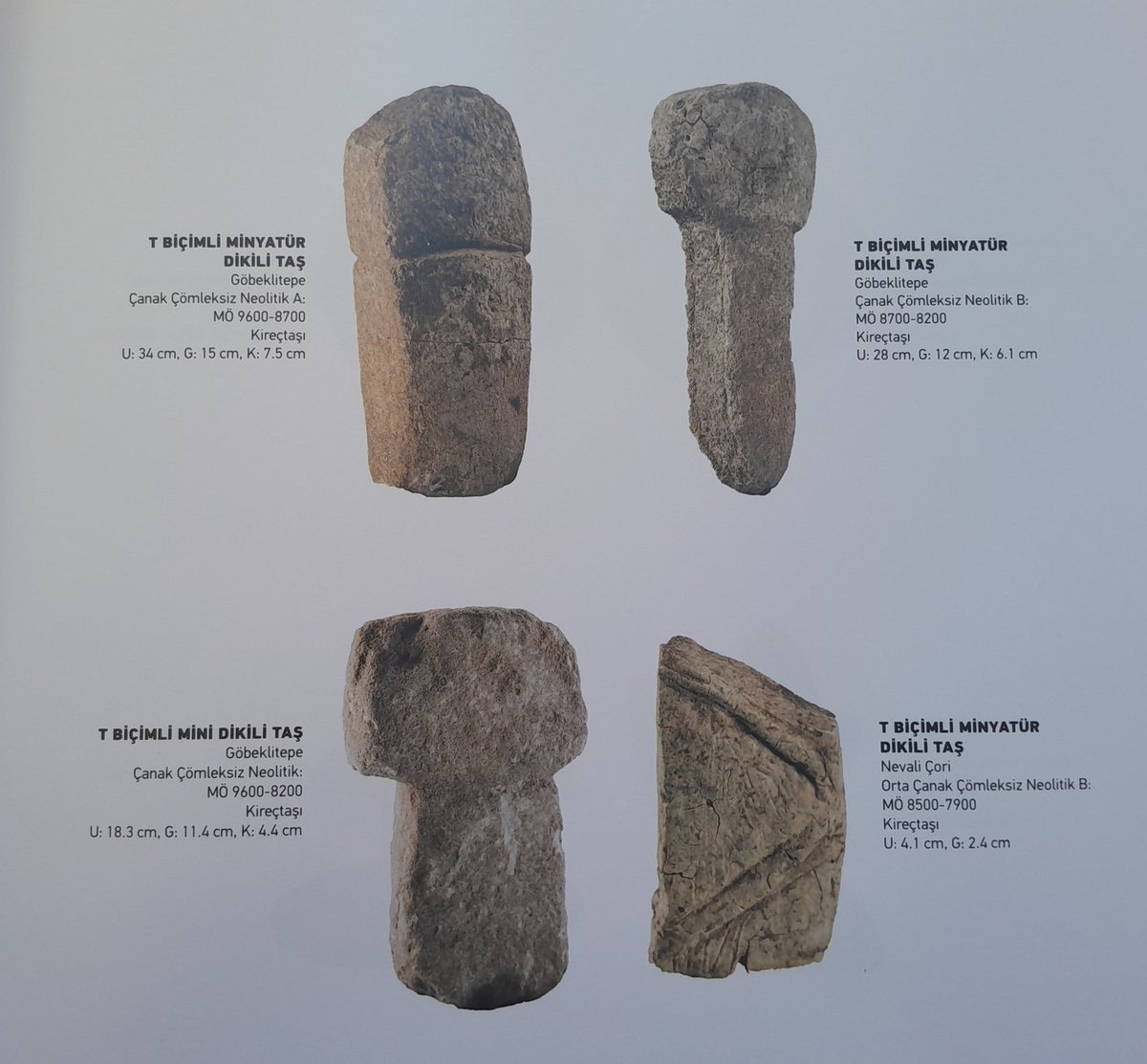
Around the walls ran a bench of quarry-stone, and set into it stood thirteen T-shaped monolithic pillars, with probably two more free-standing in the centre — the T-pillar plan later made famous at Göbekli Tepe, in miniature. Along one wall the bench stepped back to form a niche, hidden from anyone entering, and in one spot a large sculpted bird was buried in a podium built on the bench.
Nevalı Çori is as famous for its carvings as its architecture: a life-size limestone head with a carved tuft or 'ponytail'; a statue crowned by a bird, probably a vulture; composite human-and-bird figures. Its most extraordinary find is a stacked, totem-pole-like limestone sculpture from the cult building — the older cousin of the celebrated Göbekli Tepe 'totem pole', with a predator over human arms and a head, a second figure below, and flanking snakes.
Several sculptures had been deliberately buried within the later cult building — broken, retired and interred, exactly the treatment later seen when Göbekli Tepe's enclosures were filled in. The site also produced several hundred small fired-clay figurines, evidence of pyrotechnology before true pottery.
For decades Nevalı Çori's date rested on the shape of its flint and only a handful of radiocarbon readings placing it in the ninth millennium BC. A *2023 study in PNAS (Wang and colleagues) added new radiocarbon dates and, for the first time, genetic and isotopic evidence from the people buried there, tightening the chronology and setting the community within a wider Neolithic world of movement and exchange*. (The finest date boundaries from that study are best checked against its published tables before being quoted exactly.)
Its snakes and bird-and-head imagery belong to motifs that run right across the Taş Tepeler — part of the same network of ideas that reached, a 2023 study argues, as far south as WF16 in Jordan.
Because it was dug first, in the 1980s, Nevalı Çori is the reason the world knew what it was looking at when Göbekli Tepe's pillars emerged: it proved the T-pillar cult was regional, not a one-off. Its tragedy is that the site itself is gone, submerged beneath the Atatürk Dam reservoir — what survives are the finds, rescued and now displayed in the Şanlıurfa Archaeology Museum. Chronologically it overlaps the later phases of Göbekli Tepe, and here too the cult building sat right among the houses, sacred and domestic in one settlement — the intertwining later seen so clearly at Sayburç.
The wider world
Nevalı Çori isn't part of the Taş Tepeler landscape itself, but it was the first place to reveal T-pillars and a cult building — the clue that helped archaeologists recognize what Göbekli Tepe and its neighbours really were.
Visit
Small-group and private tours across the Taş Tepeler landscape, led by people who know the ground.
Full bibliography: the Taş Tepeler reference library →
Last reviewed 7 October 2026. Something wrong?