Short answer
Çakmaktepe is an early Neolithic settlement about 20 km from Şanlıurfa where people cut circular houses straight into the bedrock — a rare, everyday counterpart to the great monuments a short distance away.
Identified from satellite imagery in 2021 and excavated within the Taş Tepeler project, it has produced around fifty rock-cut houses, larger communal buildings, grinding installations and deliberate deposits of burnt animal heads. It is often called older than Göbekli Tepe, but the reported dates overlap rather than clearly precede it, and no radiocarbon series has been published in English to settle the question.
Found from orbit
Çakmaktepe was identified in 2021 through satellite image analysis carried out for the Prehistoric Survey of Şanlıurfa City Centre and Surroundings (ŞAYA). Excavation began the same year, run jointly by Çukurova University and the Şanlıurfa Museum within the Taş Tepeler project.
It sits on the Eocene limestone plateau of the Fatik mountains at around 670 m above sea level, roughly 20 km south-west of central Şanlıurfa and some 30 km from Göbekli Tepe. The settlement covers about 150 m across, with further traces beyond that core.
Houses cut into rock
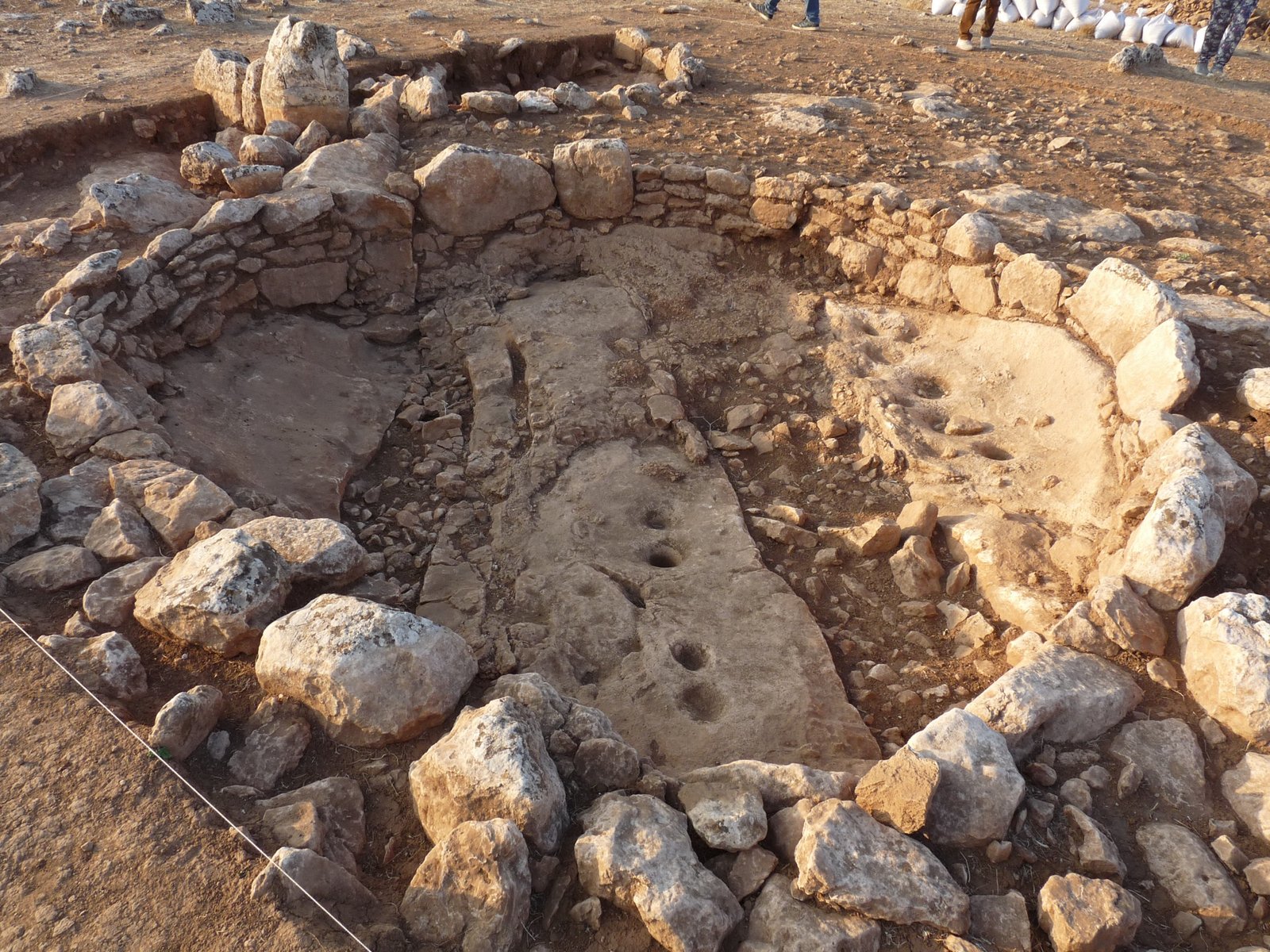
The striking thing about Çakmaktepe is that its buildings were not raised — they were carved. Excavation has exposed circular, single-room dwellings cut directly into the bedrock, roughly 3.5 to 6 m in diameter, with sunken floors.
Around fifty of these have been identified. They are not improvised shelters. Their geometry and finish indicate deliberate planning and real labour invested in making durable living space.
Alongside the houses are much larger rock-cut buildings, reaching up to about 16 m across, with wide open interiors, benches and postholes. These read as gathering spaces — communal architecture, but of a different kind from the T-pillar enclosures a short distance away.
What people were doing there
The house floors carry the residue of ordinary life: grinding stones, mortar holes cut into the rock, and tools for food preparation and craft work. This is a site that tells you about processing, storing and eating rather than about ritual display.
That domestic emphasis is why Çakmaktepe matters. Şahin and Massa's 2025 study in Antiquity on mass-hunting in south-west Asia at the dawn of sedentism draws on evidence from the Şanlıurfa region, placing sites like this in the argument about how communities fed themselves as they began to stay put.
Is it older than Göbekli Tepe?
You will see this claim often, and it needs care.
Reporting linked to the excavation places Çakmaktepe in the early Pre-Pottery Neolithic A, around 9600–8800 BCE — which overlaps Göbekli Tepe rather than preceding it. Other accounts describe the site as Late Epipalaeolithic to early PPNA, around 10500–9500 BCE, which would put part of its life earlier.
Both ranges circulate. Neither is currently backed in English by a published radiocarbon series you can check. What is clear is that Çakmaktepe's architecture belongs to an earlier tradition than the great enclosures — round bedrock houses rather than monumental rings. Being architecturally earlier in character is not the same thing as being chronologically older, and the two get conflated constantly.
Why it changes the picture
For years the Taş Tepeler story was told through monuments, which left an obvious hole: where were these people actually living?
Çakmaktepe is part of the answer. Fifty rock-cut houses with grinding equipment and communal buildings is a settlement, not a sanctuary. Set beside Göbekli Tepe, it suggests a landscape in which monumental and domestic life were both present and reasonably close together — and it undercuts the older idea of ceremonial centres standing empty in an unpopulated countryside.
What is still unknown
Çakmaktepe has been excavated for only a few seasons. Its internal phasing, its full extent, the relationship between the small houses and the large rock-cut buildings, and above all its absolute chronology are open questions. Most of what circulates in English comes from season reporting rather than final publication.
The Turkish-language excavation reports (Kazı Sonuçları Toplantısı) and the Arkeoloji Dergisi article on the site's hunter-gatherer settlers carry more detail than anything currently available in English.
Common questions
What is Çakmaktepe?
An early Neolithic settlement about 20 km from Şanlıurfa where circular single-room houses were cut directly into bedrock, along with larger rock-cut communal buildings up to about 16 m across.
How old is Çakmaktepe?
Reported ranges conflict. Excavation-linked reporting gives early PPNA, roughly 9600–8800 BCE; other accounts give Late Epipalaeolithic to early PPNA, around 10500–9500 BCE. No published radiocarbon series settles it in English.
Is Çakmaktepe older than Göbekli Tepe?
Often claimed, not established. Its architecture belongs to an earlier tradition, but the reported date ranges overlap Göbekli Tepe rather than clearly preceding it.
Who excavates Çakmaktepe?
Çukurova University with the Şanlıurfa Museum, within the Taş Tepeler project. The site was identified from satellite imagery in 2021 during the ŞAYA survey.
How many houses have been found at Çakmaktepe?
Around fifty circular single-room dwellings, roughly 3.5–6 m in diameter, cut into the bedrock.
Sources & further reading4 references
- Şahin, F. & Massa, M. (2025). Mass-hunting in South-west Asia at the dawn of sedentism: new evidence from Şanlıurfa, south-east Türkiye. Antiquity.
- Şahin, F. et al. (2023). Çakmaktepe Kazısı 2022 Yılı Kazı Çalışmaları. Kazı Sonuçları Toplantısı (Turkish Ministry of Culture and Tourism excavation reports).
- Clare, L. (2020). Göbekli Tepe, Turkey. A brief summary of research at a new World Heritage Site (2015–2019). e-Forschungsberichte des Deutschen Archäologischen Instituts 2020(2): 81–88.
- Şanlıurfa Neolithic Research Project — Taş Tepeler (2026). Official project site (Istanbul University / Şanlıurfa Museum). tastepeler.org link
Full bibliography: the Taş Tepeler reference library →