Short answer
Çakmaktepe matters because it shows the everyday, domestic side of the world that built Göbekli Tepe — where people actually lived, worked and performed ritual — rather than yet another monumental sanctuary.
Its rock-cut houses, grinding installations and deliberate burnt animal-head deposits put settlement, food and ritual in one place, undercutting the old picture of ceremonial hilltops standing empty in an unpeopled landscape. It is also one of the sites repeatedly called older than Göbekli Tepe — a claim that is debated rather than settled, because the reported date ranges overlap and no radiocarbon series has been published in English.
The missing half of the story
The fame of Taş Tepeler rests on standing stones — the T-pillars of Göbekli Tepe and Karahan Tepe. But a landscape of sanctuaries raises an awkward question: who was using them, and where were those people the rest of the time?
Çakmaktepe is one of the clearest answers yet. It is not a monument. It is a place people lived, cooked, ground grain and buried meaning in the ground. That makes it valuable in a way the great enclosures are not: it fills in the daily life behind the ceremony.
A settlement, not a sanctuary
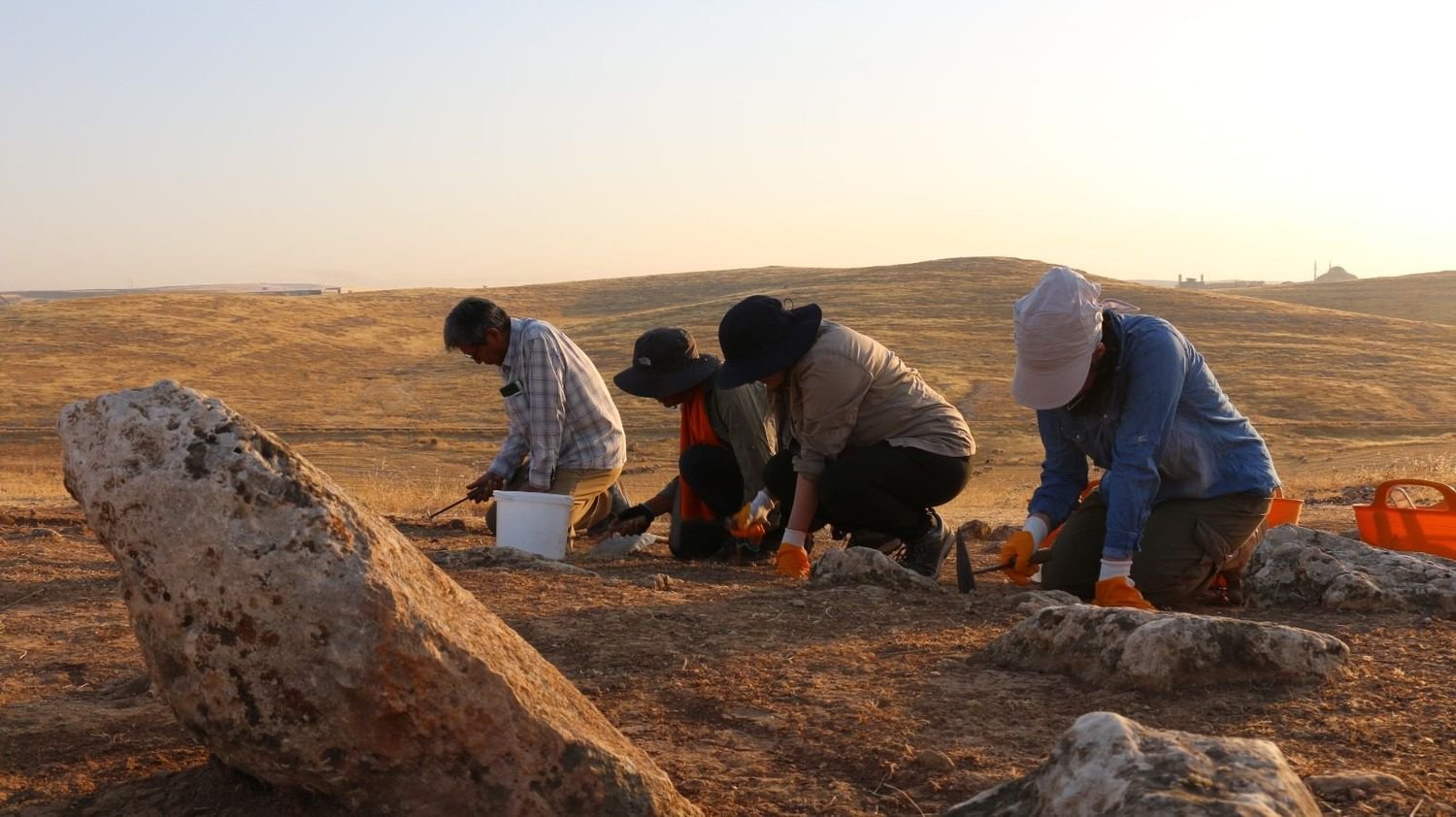
Excavation has exposed circular, single-room houses cut directly into the bedrock — around fifty of them — roughly 3.5 to 6 m across, alongside larger rock-cut buildings with open interiors, benches and postholes.
That mix of ordinary houses and bigger communal structures is what a real community looks like. The care taken in cutting and finishing the rooms shows planning and invested labour, not improvised shelter. Set beside Göbekli Tepe some 30 km away, Çakmaktepe suggests monumental and domestic life existed close together, not in separate worlds.
Ritual in an everyday place
Çakmaktepe is not only houses and grinding stones. It has also produced deliberate deposits of burnt animal heads — most dramatically, more than thirty burnt gazelle skulls recorded in 2025 outside a special building, with earlier head deposits found inside another.
That matters because it shows the symbolic treatment of animals — so visible carved into stone at Göbekli Tepe and Karahan Tepe — was also practised in the ordinary places where people lived. We flag this as reported and still being published: its meaning is genuinely open.
Food, and the road to farming
The house floors carry mortars cut into the rock and grinding stones — the heavy equipment of processing wild plant food, especially cereals, at scale.
This is the unglamorous engine of the Neolithic. The wild ancestor of einkorn wheat grew in this region, and the intensive handling of wild cereals is part of the long road that led, over many generations, from gathering toward cultivation. Çakmaktepe is a window onto that process while people were still hunter-gatherers.
The age question — why it keeps coming up
Çakmaktepe is often described as older than Göbekli Tepe, and this is where care is needed.
Reporting linked to the excavation places it in the early Pre-Pottery Neolithic A, around 9600–8800 BCE, which overlaps Göbekli Tepe rather than preceding it. Other accounts give Late Epipalaeolithic to early PPNA, around 10500–9500 BCE, which would put part of its life earlier. Both ranges circulate; neither is currently backed in English by a published radiocarbon series you can inspect.
What is settled is that Çakmaktepe's architecture belongs to an earlier tradition than the great enclosures — round bedrock houses rather than monumental rings. Being architecturally earlier in character is not the same as being chronologically older, and the two are constantly conflated.
Why it changes the picture
Çakmaktepe undercuts the tidy old idea of ceremonial centres standing empty in an unpopulated countryside. Fifty rock-cut houses with grinding equipment and communal buildings is a settlement.
It is also, honestly, a work in progress. The site has been dug for only a few seasons; its phasing, full extent and absolute chronology are open, and most of what circulates in English is season reporting rather than final publication. Its importance is real — and its story is still emerging from the ground.
Common questions
Why is Çakmaktepe important?
It shows the domestic, everyday side of the Taş Tepeler world — rock-cut houses, food-processing equipment and ritual animal-head deposits in one place — rather than another monumental sanctuary, and it undercuts the idea that ceremonial sites stood in an empty landscape.
Is Çakmaktepe older than Göbekli Tepe?
Often claimed, not established. Reported ranges overlap Göbekli Tepe rather than clearly preceding it, and no radiocarbon series has been published in English. Its architecture is earlier in character, which is not the same as being older.
What kind of site is Çakmaktepe?
A settlement: around fifty circular houses cut into bedrock, plus larger communal buildings, with grinding installations and deliberate deposits of burnt animal heads.
How much of this is settled?
The broad picture — a rock-cut settlement with food-work and animal-head ritual — is reasonably clear. The precise dating, full building plans and the meaning of the deposits are still being established by ongoing, not-yet-fully-published excavation.
Sources & further reading4 references
- Şahin, F. et al. (2023). Çakmaktepe Kazısı 2022 Yılı Kazı Çalışmaları. Kazı Sonuçları Toplantısı (Turkish Ministry of Culture and Tourism excavation reports).
- Şahin, F. & Massa, M. (2025). Mass-hunting in South-west Asia at the dawn of sedentism: new evidence from Şanlıurfa, south-east Türkiye. Antiquity.
- Clare, L. (2020). Göbekli Tepe, Turkey. A brief summary of research at a new World Heritage Site (2015–2019). e-Forschungsberichte des Deutschen Archäologischen Instituts 2020(2): 81–88.
- Şanlıurfa Neolithic Research Project — Taş Tepeler (2026). Official project site (Istanbul University / Şanlıurfa Museum). tastepeler.org link
Full bibliography: the Taş Tepeler reference library →