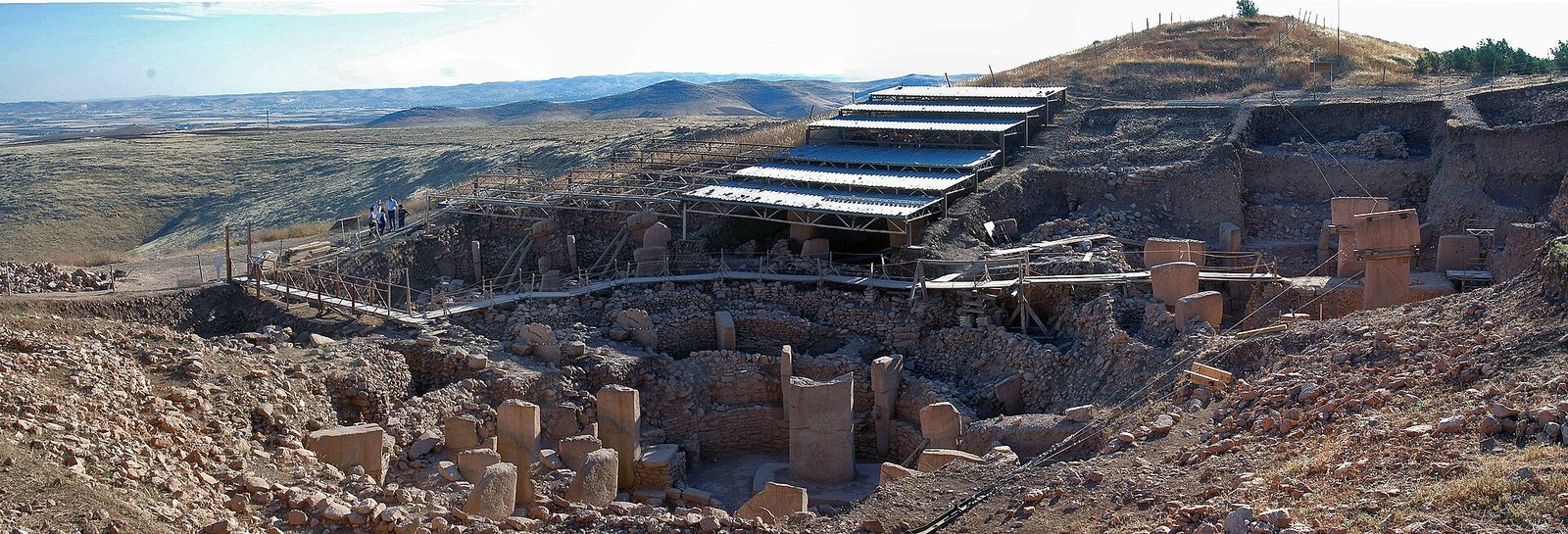
A widely shared theory reads the animals on Pillar 43 — the Vulture Stone — as constellations, and the scene as a memory of a comet impact around 10,900 BCE. It is a genuinely published idea. It is also strongly disputed. Both of those things are true, and worth understanding.
Pillar 43 carries a vulture with an outstretched wing, a scorpion, birds, and a small disc, above a row of bags and a headless human figure. In 2017 two engineers argued the creatures map onto constellations and encode a date — around 10,900 BCE — for a comet strike tied to a cold snap called the Younger Dryas. Excavators and many archaeologists reject the reading: the pillar was carved centuries after that date, the animal 'constellations' are a modern overlay, and the site's own imagery points to death and the afterlife, not astronomy.
Our position: the star-map date is not supported, and we don't present it as fact. But the pillar clearly is a composed scene, not decoration — the headless figure and the vulture belong to a real Göbekli language of death and the body. The honest answer is that it is a story we can see but cannot yet read.
We separate the popular claim from the evidence on purpose. You deserve both.
Why this page exists
Search for Göbekli Tepe and the comet theory is everywhere, usually with the doubts stripped out. Being the trustworthy source means carrying the exciting idea and the reasons specialists push back — so you can weigh it yourself instead of being sold one side.
- Pillar 43 shows a vulture, scorpion, birds, a disc, and a headless figure.
- 2017 claim: the animals are constellations dating a comet strike (~10,900 BCE).
- Objection: the pillar was carved centuries after that date.
- Objection: the 'constellations' are a modern overlay, not a Neolithic one.
- Mainstream reading: a scene about death and the body, not the sky.
Sources & further reading5 references
- Schmidt, K. (2012). Göbekli Tepe: A Stone Age Sanctuary in South-Eastern Anatolia. Berlin: ex oriente. The foundational monograph by the site's first excavator.
- Clare, L. (2020). Göbekli Tepe, Turkey. A brief summary of research at a new World Heritage Site (2015–2019). e-Forschungsberichte des Deutschen Archäologischen Instituts 2020(2): 81–88.
- Notroff, J., Dietrich, O. & Schmidt, K. (2014). Building Monuments, Creating Communities. Early monumental architecture at Pre-Pottery Neolithic Göbekli Tepe. In J.F. Osborne (ed.), Approaching Monumentality in Archaeology: 83–105. Albany: SUNY Press.
- The Tepe Telegrams (official research blog of the Göbekli Tepe Project, DAI). The Tepe Telegrams. Deutsches Archäologisches Institut. link Accessible, authoritative running commentary from the excavation team.
- Peters, J. & Schmidt, K. (2004). Animals in the symbolic world of Pre-Pottery Neolithic Göbekli Tepe, south-eastern Turkey: a preliminary assessment. Anthropozoologica 39(1): 179–218.
Full bibliography: the Taş Tepeler reference library →