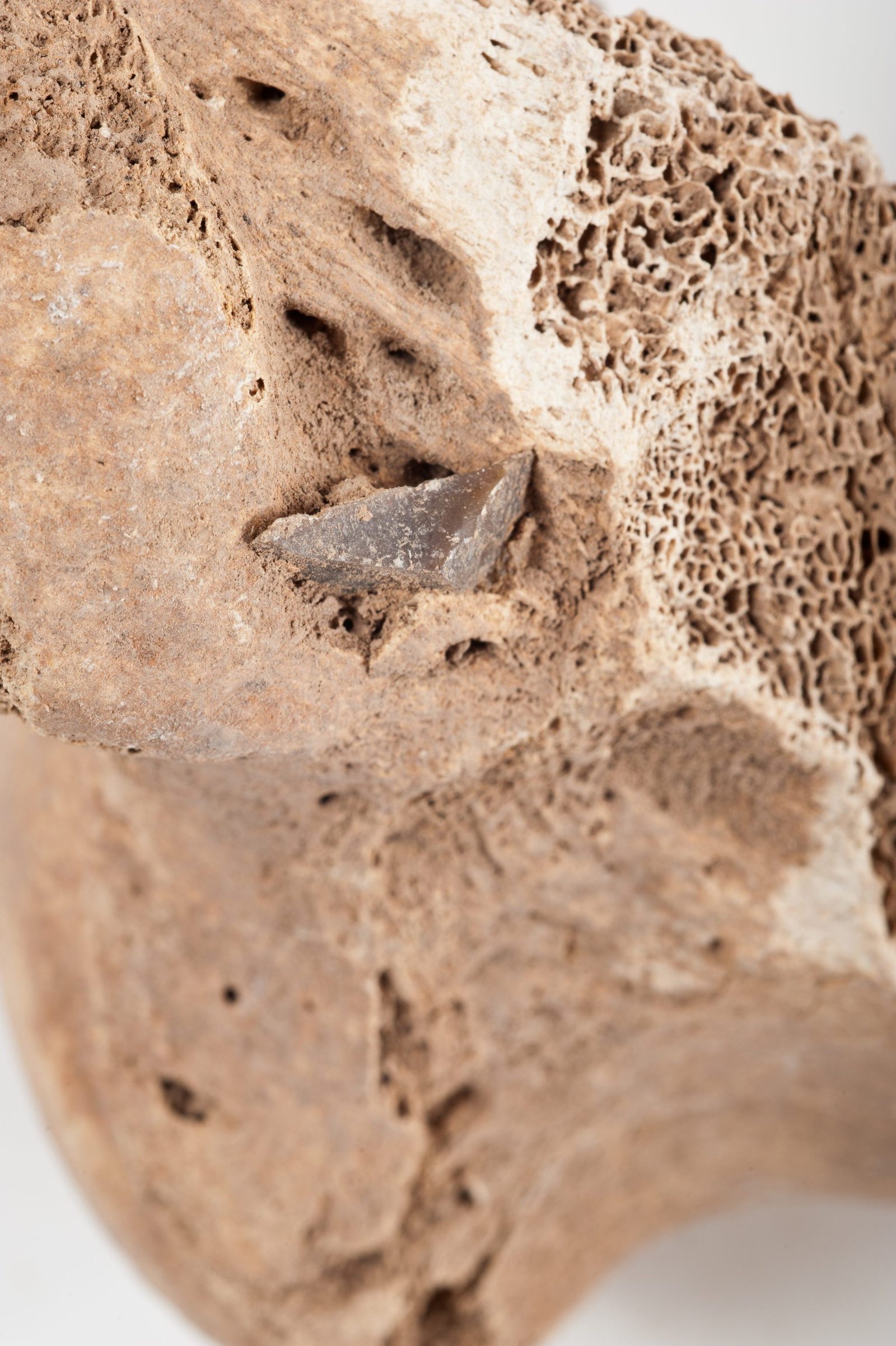
The people who built Göbekli Tepe were hunter-gatherers — no farms, no herds. They ate wild game and wild plants. But the sheer quantity of animal bone and food-processing equipment on the hill points to something more than daily meals: large communal feasts that may have been the very reason people gathered.
The remains of the hunt
The bones tell the story: this was a community of skilled hunters living off a rich wild landscape. Gazelle dominate the assemblage, alongside wild cattle, wild ass, boar, and birds. There is no sign of domestication when the great enclosures were built — which is exactly what makes the site so important. Monuments came before farming.
But the quantities are the striking part. Feeding the many hands needed to quarry, move, and raise multi-ton pillars required organised provisioning — and the debris suggests it happened in bursts, as feasts.
Göbekli Tepe has yielded enormous quantities of wild animal bone and large numbers of grinding stones, stone vessels, and installations for processing plant food.
Oliver Dietrich and colleagues argued that communal feasting was not a by-product of Göbekli Tepe but close to its purpose: bringing people together to build and to eat. They even raised the possibility of large-scale cereal processing and early fermentation — a step toward brewing — though that remains debated.
The deeper implication is profound. To feed recurring gatherings on this scale, communities may have been pushed to manage wild cereals ever more intensively — nudging them, over generations, toward cultivation. The appetite of the gathering place may have helped set the table for farming itself.
Sources & further reading3 references
- Dietrich, O., Heun, M., Notroff, J., Schmidt, K. & Zarnkow, M. (2012). The role of cult and feasting in the emergence of Neolithic communities. New evidence from Göbekli Tepe, south-eastern Turkey. Antiquity 86(333): 674–695.
- Peters, J. & Schmidt, K. (2004). Animals in the symbolic world of Pre-Pottery Neolithic Göbekli Tepe, south-eastern Turkey: a preliminary assessment. Anthropozoologica 39(1): 179–218.
- Schmidt, K. (2012). Göbekli Tepe: A Stone Age Sanctuary in South-Eastern Anatolia. Berlin: ex oriente. The foundational monograph by the site's first excavator.
Full bibliography: the Taş Tepeler reference library →