Short answer
Karahan Tepe matters because it proved Göbekli Tepe was not a one-off — a second monumental site of the same age and tradition, about 35 km away — and then showed the tradition was varied, by doing things Göbekli Tepe never did.
Its makers carved rooms and pillars down into the living bedrock instead of raising quarried stone, set a human head into a chamber wall to meet anyone entering, and left evidence that people lived and cooked on site. Excavated only since 2019, it turned a single famous site into a whole landscape — the twelve-site Taş Tepeler programme.
It ended the 'unique site' problem
For years Göbekli Tepe was an outlier, and outliers are difficult. A single extraordinary site invites the suspicion that it is an exception — a freak occurrence explained by some local peculiarity, or by something we have got wrong.
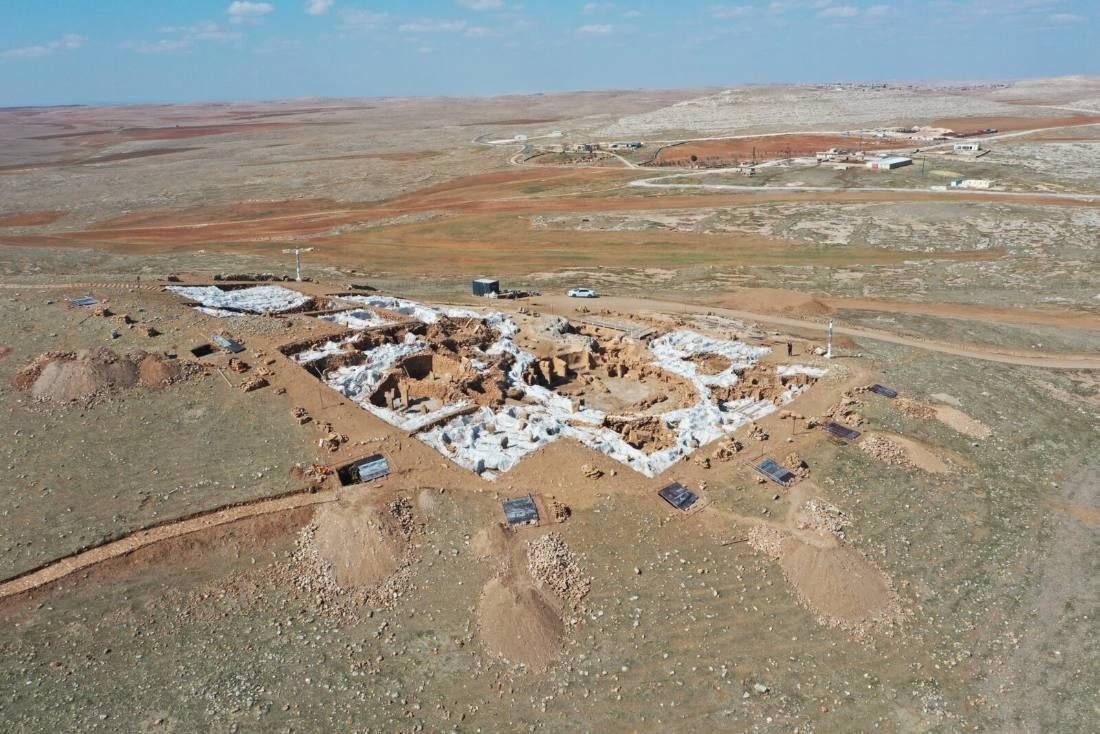
Karahan Tepe removed that difficulty. A second major monumental site, roughly 35 km away in the Tek Tek mountains east of Şanlıurfa, with comparable architecture and imagery, means Göbekli Tepe was not an isolated event but part of a regional phenomenon. It is excavated under Necmi Karul of Istanbul University, within Turkey's Taş Tepeler programme.
That single fact changed the research programme. What had been a site became a landscape, and Taş Tepeler now runs a dozen active excavations.
It carves instead of building
The most striking difference is method. Göbekli Tepe's builders quarried, moved and raised limestone pillars. Karahan Tepe's carved down into bedrock and left pillars standing where the surrounding rock was removed.
Subtractive architecture is unforgiving — nothing removed can be restored, so the entire design must be settled before cutting. It demonstrates planning at a level that assembled construction does not require.
It also means the buildings are inseparable from the ground. Göbekli Tepe's pillars could in principle stand anywhere. Karahan Tepe's chamber exists only there, because it is there.
Different imagery, same tradition
Göbekli Tepe is dominated by T-pillars carved with animals. Karahan Tepe's central chamber contains upright shafts widely described as phallic, and a human head emerging from the wall.
The head is the site's signature image, and it does something no Göbekli Tepe carving does — it is positioned to meet a person entering the room.
So the two sites share a symbolic world without sharing its execution. That variation is scientifically more valuable than similarity would be: it shows these were communities making choices, not copying a template.
It is very young as an excavation
Systematic excavation began in 2019. Göbekli Tepe has been dug since 1995.
This is the most important thing to understand about how Karahan Tepe is reported. Its published record is thin relative to its fame, its radiocarbon chronology is still being assembled, and much of what circulates about it rests on comparison with Göbekli Tepe rather than on its own dated sequence.
It also means findings arrive quickly and the picture keeps moving. Claims that Karahan Tepe is older than Göbekli Tepe surface periodically; they run ahead of the published evidence. The defensible statement is that the two are broadly contemporary.
It has a settlement attached
Karahan Tepe is not only a monumental chamber. Excavation has revealed domestic structures, kitchen and food-preparation contexts, grinding stones, and evidence for gazelle consumption and legumes.
That matters because it undercuts the older image of these places as empty sanctuaries visited only for ceremony. People were living, cooking and working here.
The same correction has happened at Göbekli Tepe, where domestic evidence has now been found on the mound. Between them the two sites have shifted the interpretation of the whole horizon: these were communities with remarkable buildings, not shrines in a wilderness.
What's established, and what is claimed too fast
Established: Karahan Tepe is a major Pre-Pottery Neolithic monumental site of the same tradition as Göbekli Tepe, 35 km away; its architecture is largely subtractive, cut into bedrock; it has a carved rock-face head, phallic pillars and a life-size seated statue found in 2023; and people lived and cooked on site. Its importance rests on those facts, not on any single interpretation.
Debated or unresolved: whether Karahan Tepe is older than Göbekli Tepe — this is not established, and claims that it is run ahead of the published radiocarbon record. What the pillars, head and bedrock channel meant is interpretation, not fact. And how the monumental and domestic parts of the site relate in time is still being worked out.
Because the dig is young and much of it reaches the public through ministry briefings before formal publication, the sensible reader treats precise dates and confident ritual stories with caution. Karahan Tepe is important enough that it does not need the hype — the honest version is remarkable on its own.
Why it is worth visiting
Because the experience is different in kind. At Göbekli Tepe you look down into the enclosures from a walkway under a protective shelter. Karahan Tepe puts you closer to architecture cut directly out of the ground.
And because it is visibly unfinished business. Göbekli Tepe is well interpreted and well presented; Karahan Tepe still reads as a site being worked out.
For some visitors that is the more affecting of the two — standing in front of a face carved from bedrock eleven thousand years ago that nobody can yet explain.
Common questions
Why is Karahan Tepe important?
It showed Göbekli Tepe was not unique but part of a regional phenomenon, and it varies from Göbekli Tepe in method and imagery — carving into bedrock rather than raising quarried pillars, with a human head set into the chamber wall.
How is Karahan Tepe different from Göbekli Tepe?
Its architecture is subtractive, cut down into bedrock with pillars left standing from the rock. Its central chamber has upright shafts rather than T-pillars, and a human head carved into the wall facing the entrance.
Is Karahan Tepe older than Göbekli Tepe?
Not established. Such claims run ahead of the published radiocarbon evidence. The defensible position is that the two sites are broadly contemporary.
Did people live at Karahan Tepe?
Yes. Excavation has found domestic structures, food-preparation contexts, grinding stones, and evidence for gazelle and legume consumption alongside the monumental architecture.
When was Karahan Tepe excavated?
Systematic excavation began in 2019 under Necmi Karul, which is why its published record is thin relative to its fame and its chronology is still being assembled.
Is Karahan Tepe worth visiting?
Yes, and it is open to visitors. The experience differs from Göbekli Tepe — closer to architecture cut from the bedrock, with less on-site interpretation, so it rewards preparation or a guide.
Sources & further reading5 references
- Karul, N. (2021). Buried Buildings at Pre-Pottery Neolithic Karahantepe. Türk Arkeoloji ve Etnografya Dergisi 82: 19–29. link
- Karul, N. (2025). Public lectures and interviews on Karahantepe and the Taş Tepeler project. Transcribed talks and interviews held in the Taş Tepeler research atlas. Spoken material rather than a peer-reviewed publication; positions may be refined in print.
- Clare, L. (2020). Göbekli Tepe, Turkey. A brief summary of research at a new World Heritage Site (2015–2019). e-Forschungsberichte des Deutschen Archäologischen Instituts 2020(2): 81–88.
- Schmidt, K. (2012). Göbekli Tepe: A Stone Age Sanctuary in South-Eastern Anatolia. Berlin: ex oriente. The foundational monograph by the site's first excavator.
- The Tepe Telegrams (official research blog of the Göbekli Tepe Project, DAI). The Tepe Telegrams. Deutsches Archäologisches Institut. link Accessible, authoritative running commentary from the excavation team.
Full bibliography: the Taş Tepeler reference library →