A surface find with a paper trail
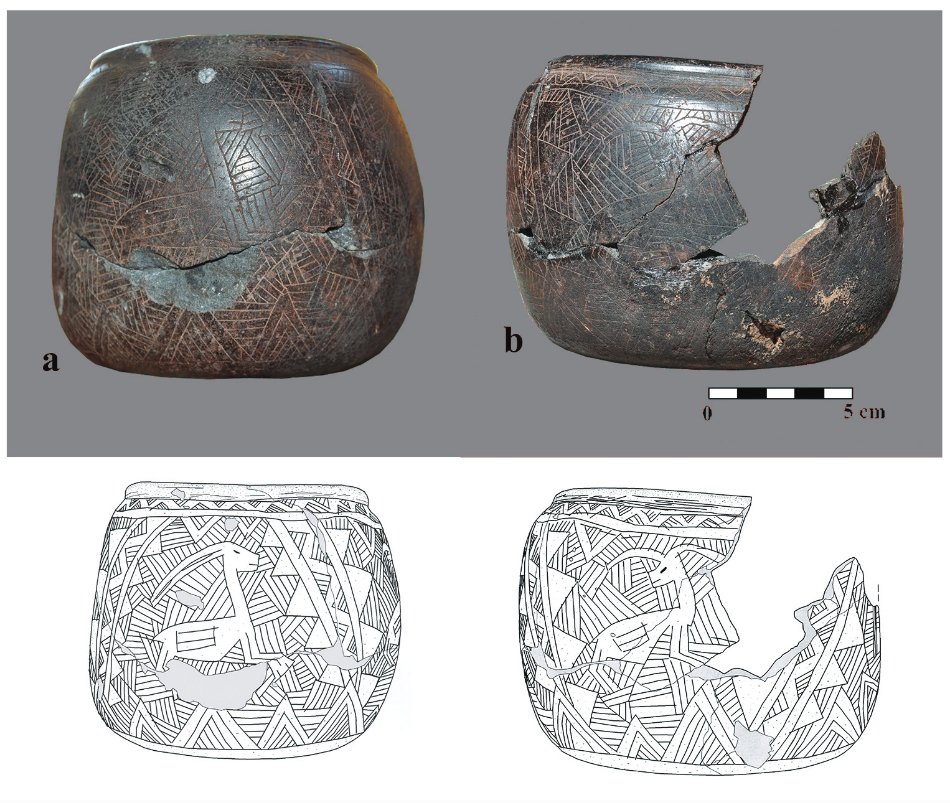
Unlike the other objects in this group, the Ayanlar vessel is not a 2025 excavation discovery but a surface find with a published record. It was among three Pre-Pottery Neolithic artefacts delivered to the Şanlıurfa Archaeology Museum and at first attributed to the village of İnlice; survey work later established that no Neolithic settlement exists there and that the pieces had in fact been carried from Ayanlar Höyük. Bahattin Çelik published the vessel, with the site, in Documenta Praehistorica in 2017.
The object is a decorated stone vessel. Çelik's conclusion emphasises that Ayanlar produced an almost intact stone vessel — a notable point, since only a handful of decorated stone-vessel fragments were recovered from the far larger excavations at Göbekli Tepe. Because it comes from the surface rather than a dated deposit, its exact form and completeness are best read from the publication itself.
The Körtik Tepe connection
The vessel matters because of what it resembles. Çelik records that it — together with a stone dish from the same site — shows great similarities to the finds from Körtik Tepe, the Pre-Pottery Neolithic site on the upper Tigris renowned for its richly decorated stone vessels, many of them associated with burials. On that comparison he suggests Ayanlar's burial traditions may have had something in common with Körtik Tepe's.
Decorated stone vessels are one of the threads that tie the smaller and larger sites of the region together. Reading Ayanlar's vessel alongside Körtik Tepe's — and its other finds alongside Göbekli Tepe, Nevalı Çori and Karahan Tepe — is how Çelik places this large but lightly investigated mound within the wider Neolithic world of Şanlıurfa.
Dating and caution
On the strength of these comparisons, Çelik dates Ayanlar Höyük between the early and middle Pre-Pottery Neolithic B. There is no published radiocarbon series for the site, so both its date and the vessel's belong to a typological argument rather than an absolute chronology.
With a permanent Turkish–Japanese excavation opened at Ayanlar in 2025, the context that a surface find can never supply — where such vessels sit in the settlement, and in time — is exactly what future seasons may provide. Until then the vessel stands as the site's most telling single object: modest, portable, and pointing firmly toward Körtik Tepe.
Sources & further reading1 reference
- Çelik, B. (2017). A new Pre-Pottery Neolithic site in Southeastern Turkey: Ayanlar Höyük (Gre Hut). Documenta Praehistorica 44: 360–367. doi:10.4312/dp.44.22 link
Full bibliography: the Taş Tepeler reference library →