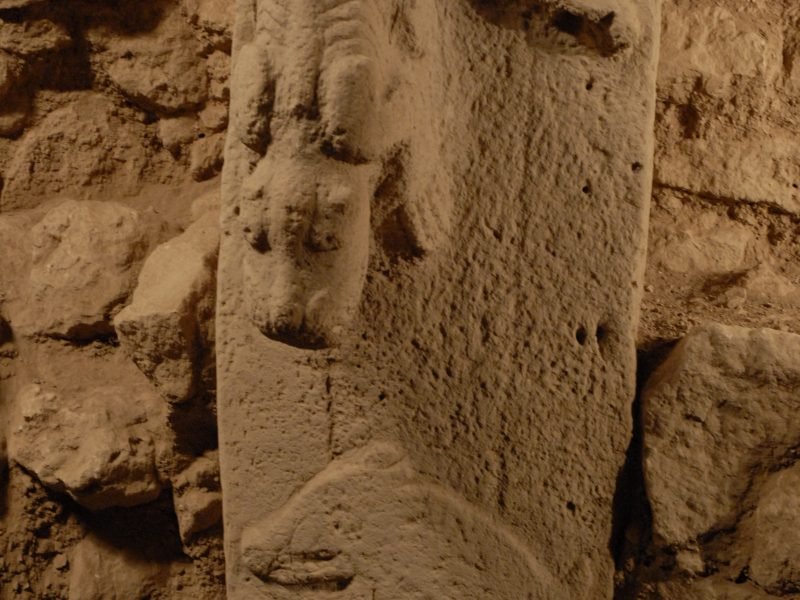
Schmidt 2010 refers to a predator found atop the wall east of Pillar 36 in Enclosure C. The passage discusses several high reliefs on limestone slabs of unknown size and shape. Schmidt says these slabs now seem to have originally been parts of porthole stones, giving the Pillar 36 predator a possible porthole-stone origin.
What to notice
The Pillar 36 porthole-predator lead is a predator high relief found atop the wall east of Pillar 36 in Enclosure C, discussed as a possible limestone-slab fragment from a porthole stone rather than as a predator carved on Pillar 36. This object fixes an easy accuracy trap. The source does not say a predator was carved on Pillar 36. It says a predator was found on top of the wall east of Pillar 36, and Schmidt discusses it among high-relief limestone slabs that may originally have belonged to porthole stones. Schmidt 2010 refers to a predator found atop the wall east of Pillar 36 in Enclosure C. The passage discusses several high reliefs on limestone slabs of unknown size and shape. Schmidt says these slabs now seem to have originally been parts of porthole stones, giving the Pillar 36 predator a possible porthole-stone origin. The same passage says interpretation of the porthole-stone shape, entrances, and decoration was not yet possible and that it was unclear whether the porthole stone lay in debris or belonged to an architectural context.