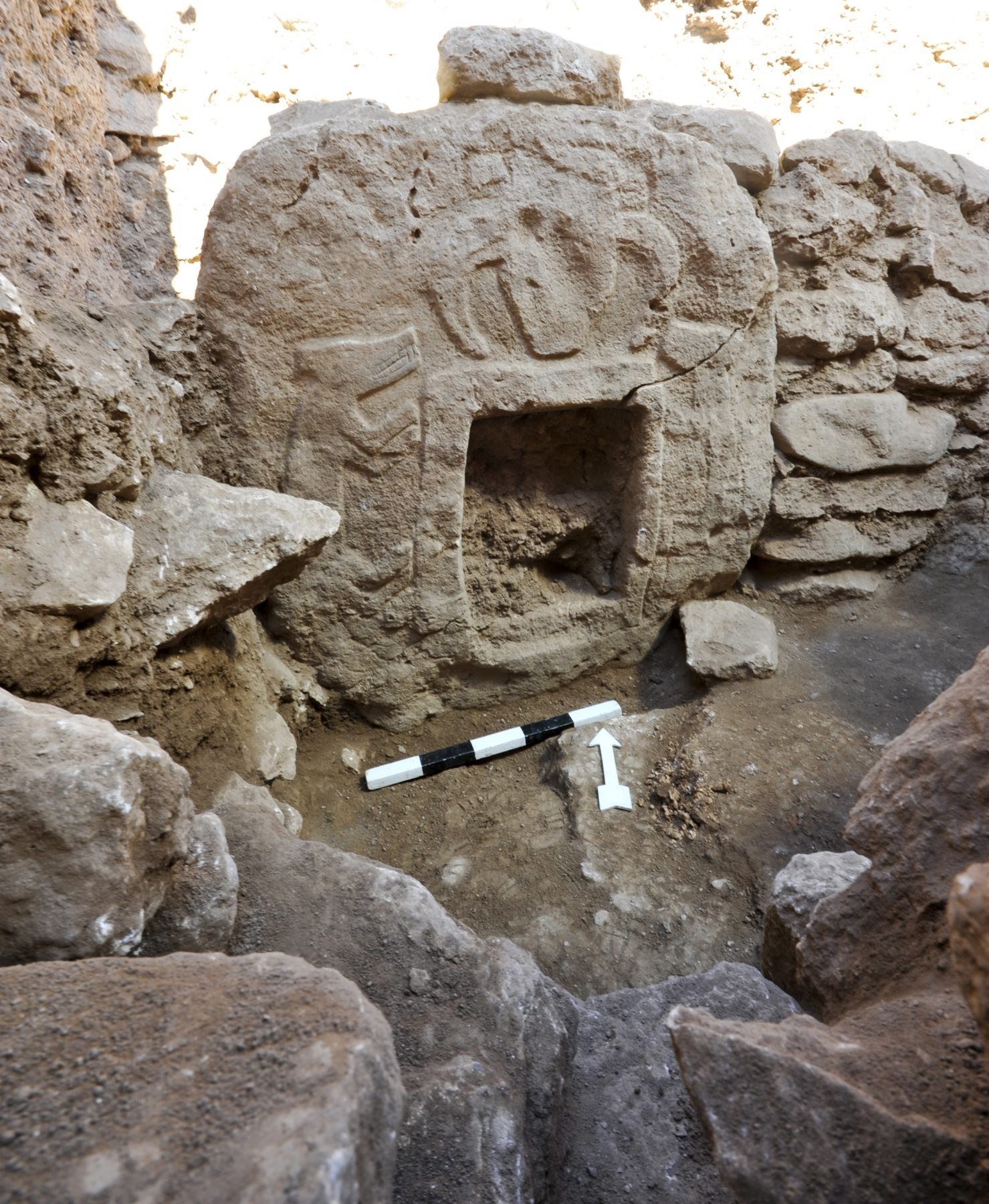
porthole stone found lying on terrazzo floor located south of central pillars slightly off center porthole stone lying on terrazzo floor position south of central pillars object belongs to a category of megalithic workpieces with one or two openings A porthole stone was found lying on the terrazzo floor in Enclosure B. It was south of the central pillars and slightly off the enclosure's center. Porthole stones are described as roughly quadrangular megalithic workpieces with one or two central openings.
What to notice
A porthole stone was found lying on the terrazzo floor south of Enclosure B's central pillars. Porthole stones are megalithic stone pieces with one or more openings, and an in situ example north of Enclosure B supports an entrance comparison. The central object's original placement, however, remains unresolved. The Enclosure B porthole stone is a powerful object, but it needs careful handling. The main source overview places it south of the central pillars, lying on the terrazzo floor and slightly off the centre of the building. Porthole stones are described as roughly quadrangular megalithic pieces with one or two central openings. A richly decorated example found in situ in a wall north of Enclosure B supports the idea that some porthole stones may have worked as entrances or threshold elements. But for the porthole stone found inside Enclosure B, the original placement is not known. It may once have belonged to a wall, or perhaps another architectural context. Public wording should keep the object vivid but unresolved. A porthole stone lay on the terrazzo floor south of the central pillars. Porthole stones are carved stone pieces with openings. A nearby in situ example supports an entrance comparison. This object's original placement is not settled.
What's carved on it
- thresholds and entrances
- architectural uncertainty
- carved stone objects